
When Do Problems Surface: Incorrect Barrel Temperature Zone Settings?
When Do Problems Surface: Incorrect Barrel Temperature Zone Settings?
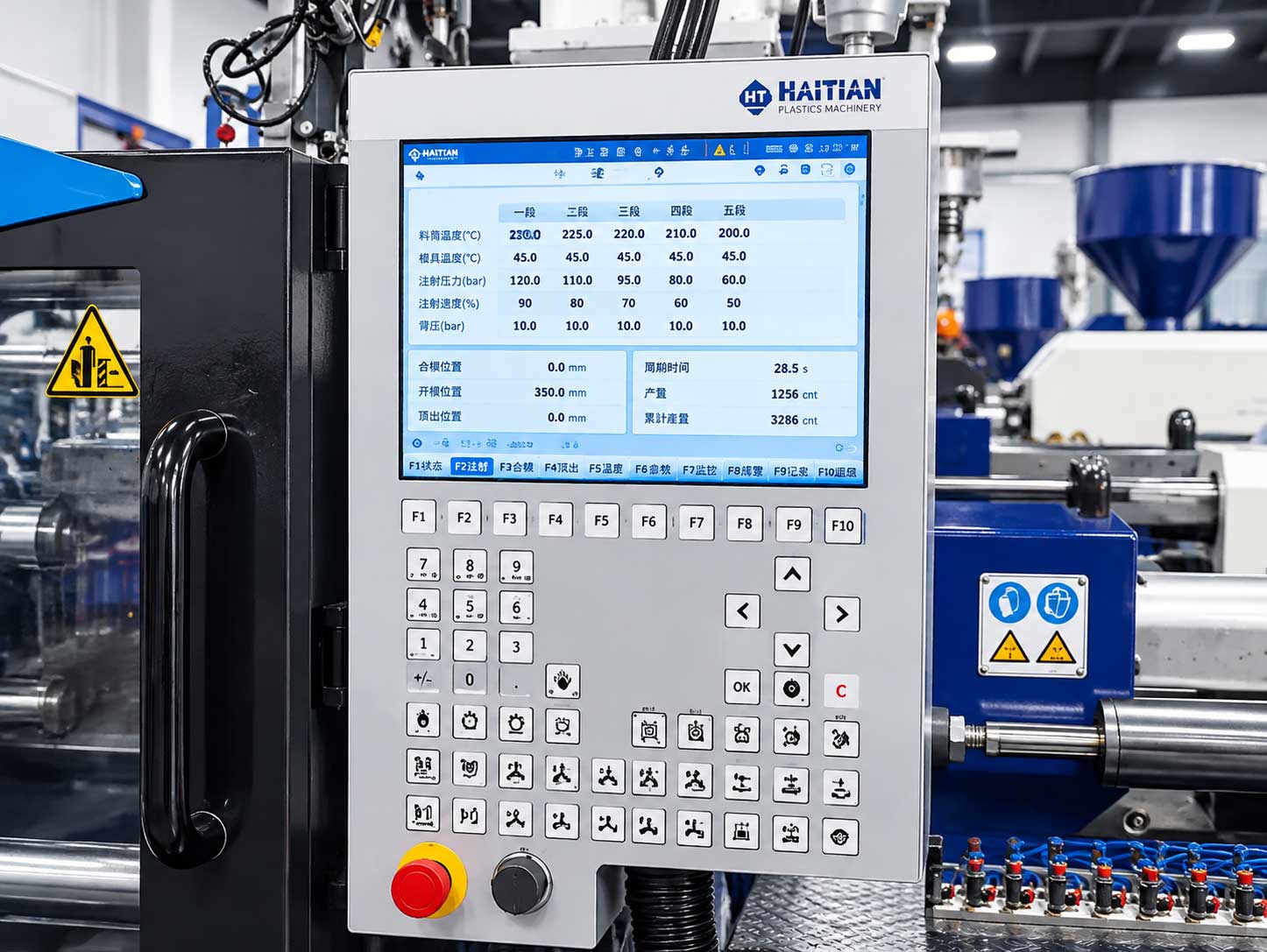
Incorrect barrel temperature zone settings are a problem in injection molding that is "neither too big nor too small." Not too big, because unlike mold cracking or screw breakage, it does not stop production immediately. Not too small, because the defects it causes often do not reveal themselves at the moment the wrong setting is made—they emerge one after another only after the product comes out, reaches quality inspection, and arrives at the customer.
The troublesome aspect of incorrect barrel temperature zone settings is this: the timing of exposure depends on the "direction" and "degree" of the error. Set the temperature too low, and the problem may appear on the very first shot of trial molding. Set it too high, and the problem may only gradually surface after thousands of parts have been produced. And if the zone gradient is set wrong, the problem may suddenly become a major headache when changing materials or machines.
Errors Exposed at the Trial Molding Stage: Temperature Set Too Low, Melt "Cannot Flow"
Setting the barrel temperature zones too low is the error most easily caught at trial molding. The plastic is not fully melted in the barrel, viscosity is high, flowability is poor, and the melt "cannot flow" in the cavity.
The most direct manifestation is short shot. The melt cools and solidifies before filling the end of the cavity, and the product comes out incomplete. If the temperature is set particularly low, the plastic in the rear stages may even be carried into the cavity by the screw in the form of granules or unmelted lumps, embedding cold slugs inside the product. An Indonesian study on injection molding defects explicitly points out that excessively low barrel temperature leads to insufficient plasticization, excessive viscosity, and overly rapid cooling, thereby causing short shots and weld lines.
Weld lines also become very obvious at the trial molding stage. The melt front temperature is insufficient, the two melt streams cannot fully fuse when they meet, and the strength at the weld is greatly reduced. Researchers analyzing short shot defects in PP material found that the actual barrel temperature reached only 180-190°C, far below the set standard of 230°C. A sensor fault caused the melt temperature to fall short, and the product ultimately could not be filled.
Warpage caused by low temperature can also be observed at trial molding. When melt temperature is low, the melt is forced to form at high speed, residual shear stress is high, and there is not enough time for it to relax. The product is prone to warping and deformation after demolding. In addition, low temperature in the front barrel zone or nozzle may cause the melt's viscosity to rise sharply due to mold cooling before it even enters the cavity, hindering filling of the far end.
The advantage of low melt temperature problems exposed at the trial molding stage is that they are discovered early. The disadvantage is that if the operator misjudges the problem as "not enough pressure" and increases injection pressure, it may mask the problem and turn a short shot into flash.
Errors Exposed Only at the Mass Production Stage: Temperature Set Too High, Material Suffers "Chronic Poisoning"
Setting the barrel temperature zones too high will not reveal itself on the first shot. When melt temperature is on the high side, flowability is actually better, filling is smoother, and the product appearance at trial molding may even look better. The real trouble is a "chronic poisoning" that the material undergoes inside the barrel.
Thermal degradation is the core problem. If barrel temperature exceeds the plastic's decomposition temperature, molecular chains begin to break, and material properties decline irreversibly. Different materials have different "red lines": PE will discolor and become brittle above 300°C, ABS is prone to yellowing and silver streaks above 270°C, and PC releases toxic gases above 320°C. PVC is especially sensitive, with a suitable temperature range of only 160-190°C; above that, it burns and yellows.
The problem is that this degradation does not happen instantly. There is always a portion of melt in the barrel that is "residual"—left at the front of the barrel after the previous shot, waiting for the next shot. If barrel temperature is on the high side, this residual melt continues to be heated while waiting, gradually coking and carbonizing. On the next shot, these carbonized particles are carried into the cavity, and silver streaks or charred streaks appear on the product surface.
This is why high melt temperature problems often surface only at the mass production stage: they need "time" to accumulate degradation products. During trial molding, only a few dozen shots are made, and the residence time of residual melt is not long enough for the problem to be obvious. After thousands of shots in mass production, carbonized particles accumulate, and silver streaks and black spots begin to appear regularly. More insidiously, this degradation is a chain reaction—once it starts, degradation products catalyze further degradation, and the problem accelerates.
High melt temperature also reduces melt viscosity, making the melt flow front thinner and more likely to trap gas at the end of filling, causing burning or poor filling. At the same time, high-viscosity melt (at low melt temperature) is prone to over-packing and sticking, while the thin melt front at high melt temperature is prone to flash.
Exposure When the Zone Gradient Is Set Wrong: "Crashing" Only When Changing Materials, Machines, or Products
The barrel is not an isothermal tube. It is divided into multiple heating zones from rear to front, and the temperature usually follows the gradient principle of "low at the rear, high at the front, and nozzle slightly lower than the front." The purpose of this gradient is to let the plastic gradually heat and plasticize, avoiding localized overheating.
But if the operator takes a shortcut and sets all zones to the same temperature, or sets the rear zone temperature too high, problems arise. Rear zone temperature too high causes the plastic to begin melting prematurely in the feed zone, generating additional heat through shear friction with the screw and causing localized overheating and degradation. Front zone temperature insufficient results in uneven plasticization, with incompletely melted particles embedded in the melt.
The exposure of this type of problem requires a "triggering condition." Under stable production conditions, even if the gradient is not ideally set, the mold and process parameters may have already "adapted" to this state, and the product barely passes. But once materials are changed (the new material has different melting characteristics), machines are changed (different screw compression ratios and shear heat), or products are changed (different wall thicknesses and flow length ratios), the original balance is broken, and the problem is exposed.
Research indicates that the temperature setting of the first barrel zone (feed zone) is extremely critical: if it is below the polymer melting point, it delays the formation of the melt film, actually shortening the effective melting length and reducing output; if it is far above the melting point, it reduces melt film viscosity and shear stress, likewise reducing melting speed. This means that a gradient setting that "works" on product A may completely fail on product B.
When Problems Surface Depends on Whether the Error Is "Not Hot Enough" or "Too Hot"
Summarizing the exposure timing of incorrect barrel temperature zone settings, the pattern is clear:
Temperature set too low affects "whether it can be produced at all." Short shots, weld lines, cold slugs, warpage—these problems can be found by appearance and dimension inspection on the very first shot of trial molding. They surface earliest, and the repair cost is lowest—simply raising the temperature.
Temperature set too high affects "how well and how long it can be produced." Silver streaks, burning, black spots, material property decline—these problems need time to accumulate degradation products and often appear regularly only at the mass production stage. They surface late, and troubleshooting is difficult, because operators tend to blame material batches or mold contamination while ignoring barrel temperature as the "chronic cause."
Gradient set wrong affects "whether it can still be used after conditions change." It barely runs under stable conditions, but is exposed once materials, machines, or products are changed. The root cause is that the barrel temperature distribution did not leave margin for change.
The particularity of incorrect barrel temperature zone settings is this: unlike clamping force or mold temperature, setting it wrong does not "punish" you immediately. When temperature is set high, it may even "reward" you in the short term—better flowability, more beautiful appearance. But every excess degree of temperature the material experiences in the barrel accumulates irreversible damage. By the time the problem surfaces, batches of defective products have often already been produced.
