


Personalized Home Stool Mold | Custom Small Square Plastic Design with Dedicated Molding Service
Plastic Injection Household Low Stool Mold — Product Introduction (Motek Furniture Mold Series)
Product Positioning
Motek introduces dedicated injection mold solutions for household plastic low stools. These products feature a low seat height, no backrest, and four-leg or round-base construction—balancing dining table pairing, temporary extra seating, children's use, and daily household task assistance, widely used in home dining rooms, living rooms, bedrooms, and balconies. Compared with high stools or folding stools, the core challenges of low stool molds lie in four-leg dimensional consistency and placement stability under a low center of gravity, load-bearing reinforcement at the seat-to-leg connection, and appearance surface quality control of the seat. Motek configures dedicated solutions around four-leg structure forming, load-bearing rib layout, and multi-cavity balance, helping customers achieve stable mass production of household low stools.
Core Specifications
| Item | Specification |
|---|---|
| Applicable Plastics | PP (copolymer, good toughness, impact-resistant, preferred for low stools) / HDPE (high rigidity) / ABS (high-gloss appearance optional) |
| Mold Material | P20 / 718H / NAK80 for cavity and core; 718H / 2316 for sliders and inserts |
| Number of Cavities | 1×1 primarily; 1×2 or 1×4 evaluable for small low stools |
| Mold Life | 300,000–1,000,000 shots (depending on steel selection and maintenance) |
| Cycle Time | 25–45 seconds (depending on stool type and cooling design) |
| Mold Base Standard | LKM / HASCO / DME or customer-specified |
| Runner System | Hot runner recommended (balanced multi-cavity filling) / Cold runner optional |
| Ejection Method | Ejector pins + stripper plate composite ejection; air-blow assistance for deep-cavity legs |
| Load-Bearing Structure | Reinforcement ribs/gradual wall thickness at leg-to-seat connections integrally formed |
| Anti-Slip Design | Seat anti-slip textures/foot pad mounting positions integrally formed |
Product Features
Four-Leg Dimensional Consistency and Placement Stability Control.
The four legs of a low stool must have consistent dimensions and angles to ensure stable placement without wobbling. Motek produces same-size stool bodies using multi-cavity molds or shared mold base + interchangeable insert solutions, optimizing runner balance across cavities through mold flow analysis to ensure consistent seat height, leg spacing, and foot bottom flatness across all cavity positions. Foot bottom flatness receives dedicated tolerance control to prevent stool wobbling caused by a single elevated leg. For 1×2 or 1×4 multi-cavity molds, hot runner systems with balanced gate layouts ensure consistent product weight and dimensions across all cavities.
Load-Bearing Reinforcement at Seat-to-Leg Connections.
The load of a low stool concentrates at the seat-to-leg connection areas. Motek forms reinforcement rib networks and gradual wall thickness structures in these areas to avoid cracking caused by stress concentration. Seat underside reinforcement rib thickness is controlled at 50%–60% of main wall thickness to enhance rigidity while avoiding sink marks on the seat appearance surface. Mold flow analysis evaluates filling completeness at connection areas, preventing weak points caused by trapped gas. Industry experience shows that load-bearing testing for low stools must cover both static load and dynamic stepping conditions.
Seat Anti-Slip and Appearance Quality Control.
Low stool seats require anti-slip functionality. Motek forms anti-slip textures (rib/grid/protrusion patterns) directly in the cavity, with texture depth and spacing design-verified to balance slip resistance with cleaning convenience. Seat edges are rounded to enhance seating comfort. Cavity surfaces can receive mirror polishing (high-gloss models) or fine-texture etching (matte/scratch-resistant models) according to product positioning, with texture uniformity subject to consistency control. Gate positions avoid seat appearance areas to prevent gate marks from affecting appearance.
PP Material Forming Process Adaptation.
PP copolymer has relatively high shrinkage (approximately 1.0%–2.0%), and uneven cooling can easily cause seat warpage or leg deformation. Motek evaluates PP shrinkage distribution across stool body regions through mold flow analysis, applies pre-deformation compensation to the cavity, and adopts zoned cooling channels to equalize cooling rates between seat and legs. PP material has good flowability; gate positions and runner layouts are optimized to prevent weld lines from appearing on seat appearance surfaces.
Stacking and Storage Convenience Design.
Household low stools often require stacking for space-saving storage. Motek designs stacking positioning structures on the stool body, ensuring stable stacking without tipping and smooth retrieval. Stacking position angles and spacing are design-verified to accommodate household and restaurant storage requirements.
Demolding Mechanism Optimized for Deep-Cavity Legs.
Low stool legs are deep cavity structures prone to deformation or scratching from vacuum adhesion during demolding. Motek adopts a stripper plate with ejector pin composite ejection solution, with ejection points preferentially located at leg bottoms or non-appearance areas of the seat. For deep-cavity legs, air-blow assistance can be coordinated to release vacuum adhesion, preventing leg side walls from being scratched.
Applications
Motek plastic injection household low stool molds are suitable for:
- Household dining table matching low stools
- Living room/bedroom temporary extra seating low stools
- Children's low stools/small benches
- Balcony/courtyard leisure low stools
- Restaurant/food stall low stools
Service Process
After the customer provides 3D product drawings, seat height, load-bearing requirements, and appearance requirements, Motek completes mold flow analysis (including PP shrinkage compensation, four-leg load-bearing structural analysis, and multi-cavity balance verification) and mold structure confirmation; cavity steel and hot runner systems are procured according to agreed specifications; progress and key milestones are regularly reported during processing. During trial molding, emphasis is placed on verifying stool placement stability, seat-to-leg connection strength, multi-cavity dimensional consistency, and appearance surface quality, with samples provided for confirmation. Before shipment, molds undergo anti-rust treatment and action testing, with water circuit diagrams, hot runner wiring diagrams, consumable parts lists, and maintenance instructions provided. Technical support is available during the warranty period, with lifetime maintenance consultation.


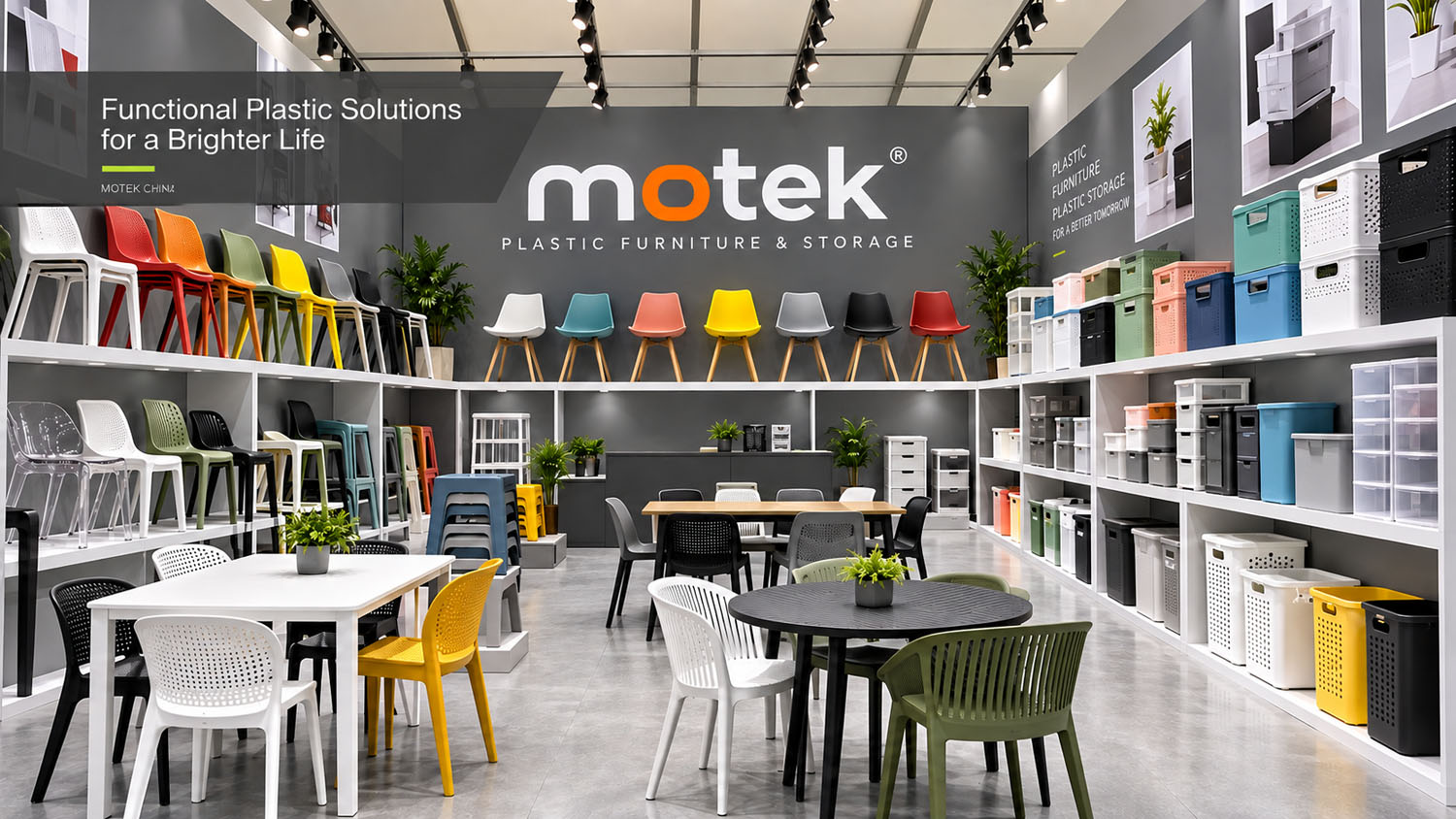

Motek — From household low stools to four-leg high stools, providing reliable mold solutions for injection molding and load-bearing structures of plastic seating.
