


Household Foldable Small Stool Mold — Product Introduction (Motek Furniture Mold Series)
Household Foldable Small Stool Mold — Product Introduction (Motek Furniture Mold Series)
Product Positioning
Motek introduces dedicated injection mold solutions for household foldable small stools. These products feature foldable storage and lightweight portability, balancing temporary extra seating, outdoor picnics, children's use, and small-unit space utilization. Compared with fixed stools, the core challenges of foldable small stool molds lie in fatigue life assurance of folding hinges, reliability of the unfolded locking structure, and compactness in the folded state plus load-bearing stability in the unfolded state. Motek configures dedicated solutions around hinge forming processes, locking structure design, and load-bearing rib layout, helping customers achieve stable mass production of foldable small stools.
Core Specifications
| Item | Specification |
|---|---|
| Applicable Plastics | PP (copolymer, good toughness, folding fatigue resistant) / HDPE (high rigidity) / ABS (high-gloss appearance optional) |
| Mold Material | P20 / 718H / NAK80 for cavity and core; 718H / 2316 with nitriding recommended for hinge area inserts |
| Number of Cavities | 1×1 primarily; 1×2 evaluable for small foldable stools |
| Mold Life | 300,000–800,000 shots (depending on steel selection and maintenance) |
| Cycle Time | 25–45 seconds (depending on stool size and cooling design) |
| Mold Base Standard | LKM / HASCO / DME or customer-specified |
| Runner System | Hot runner recommended (reduces cold slugs and stress) / Cold runner optional |
| Ejection Method | Ejector pins + stripper plate composite ejection; air-blow assistance for deep-cavity legs |
| Folding Structure | Integrally formed thin-film hinge/hinge bridge, unfolded locking snap-fits integrally formed |
Product Features
Fatigue Life Assurance of Folding Hinges.
The core function of foldable small stools lies in the hinges, which must withstand repeated unfolding/folding without cracking. Motek integrally forms thin-film hinge or hinge bridge structures in the mold, using gradual wall thickness design and localized thinning at hinge areas to distribute folding stress. Industry experience shows that PP copolymer is the preferred material for folding hinges due to its excellent folding fatigue resistance; hinge cross-section dimensions must be confirmed with customers based on folding cycle requirements and material characteristics. Hinge area steel uses tough 718H or 2316 with nitriding treatment, balancing forming precision, wear resistance, and demolding smoothness.
Reliability Design of the Unfolded Locking Structure.
Foldable stools require locking via snap-fits, slot-in features, or support structures after unfolding to maintain a flat and stable seat. Motek integrally forms locking snap-fits and support positioning structures in the mold, applying dedicated tolerance control to snap-fit dimensions, slot-in depth, and locking angles, ensuring secure locking without loosening after unfolding while maintaining smooth unlocking operation during folding. Locking structures are verified through repeated open-close cycles to prevent locking force degradation from wear.
Compactness in the Folded State and Load-Bearing Stability in the Unfolded State.
Foldable stools must store compactly when folded and bear human weight when unfolded. Motek applies tolerance control to folding positioning structures and seat edge contours, ensuring tight fit without interference after folding. In the unfolded state, reinforcement ribs and gradual wall thickness structures are formed at the seat-to-leg connection areas to avoid cracking caused by stress concentration. Widened support feet or anti-slip foot pad mounting positions are designed at leg bottoms to enhance anti-tip stability in the unfolded state.
Seat Anti-Slip and Edge Safety Treatment.
Foldable stool seats require anti-slip functionality. Motek forms anti-slip textures (rib/grid/protrusion patterns) directly in the cavity, with texture depth and spacing design-verified to balance slip resistance with cleaning convenience. Seat edges are rounded to prevent injury during children's use. For children's foldable stools, cartoon patterns or colored anti-slip strip mounting positions can be added.
Lightweight and Portable Design.
Household foldable small stools must balance portability with load-bearing capacity. Motek determines reasonable wall thickness distribution through mold flow analysis, arranging reinforcement ribs at leg and seat load-bearing areas, with rib thickness controlled at 50%–60% of main wall thickness to enhance rigidity while avoiding sink marks on appearance surfaces. Folded volume is reduced for easy household storage and outdoor carrying.
Demolding Mechanism Optimized for Folding Structures.
The hinge areas and locking snap-fits of foldable stools have undercut features requiring constraint release before demolding. Motek adopts a slider and ejection linkage demolding solution: during mold opening, sliders and positioning inserts are first moved away to release the product from constraints, then ejection is performed, preventing hinge areas from being scratched or deformed during demolding.
Applications
Motek household foldable small stool molds are suitable for:
- Household portable foldable small stools
- Outdoor picnic/camping foldable stools
- Children's foldable small stools
- Small-unit/rental apartment foldable extra seating
- Queue/event portable foldable stools
Service Process
After the customer provides 3D product drawings, folding structure plans, load-bearing requirements, and appearance requirements, Motek completes mold flow analysis (including hinge area filling evaluation, folding dimension compensation, and locking structure verification) and mold structure confirmation; cavity steel and hot runner systems are procured according to agreed specifications; progress and key milestones are regularly reported during processing. During trial molding, emphasis is placed on verifying hinge forming quality, folding/unfolding action smoothness, locking structure reliability, and seat load-bearing stability, with samples provided for confirmation. Before shipment, molds undergo anti-rust treatment and action testing, with water circuit diagrams, hot runner wiring diagrams, consumable parts lists, and hinge maintenance notes provided. Technical support is available during the warranty period, with lifetime maintenance consultation.


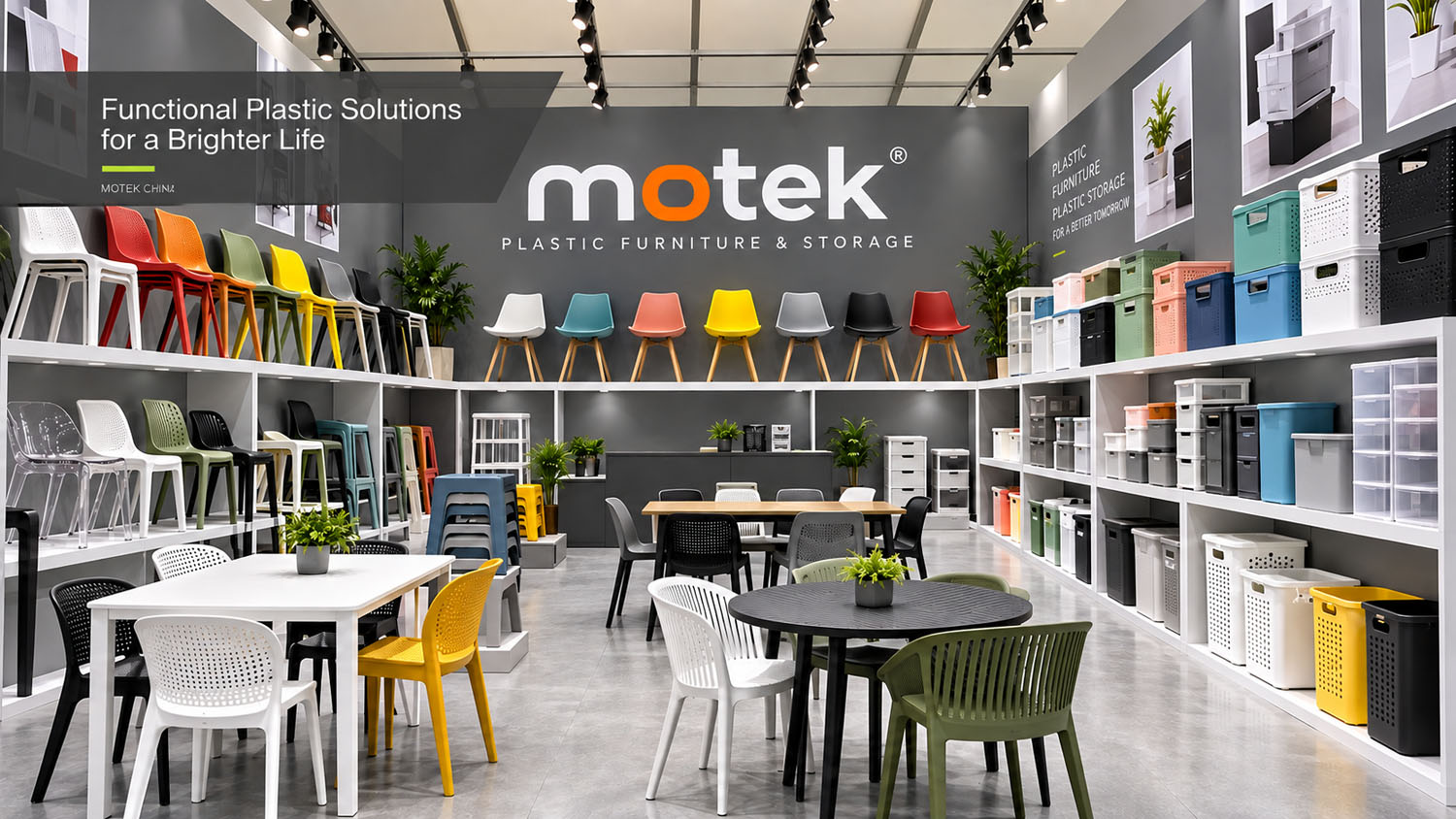

Motek — From fixed low stools to foldable small stools, providing reliable mold solutions for folding formation and stable mass production of household seating.
