

Traffic Safety Barrier Blow Mold
Product Introduction: Blow Molded Traffic Safety Barrier Mold – The Sturdy Defense Line for Road Safety
In the fields of highways, urban traffic, and municipal engineering, Traffic Safety Barriers are critical facilities for ensuring driving safety, guiding traffic flow, and preventing vehicle crossovers. As a professional blow mold manufacturer, our traffic safety barrier blow molds utilize high-strength mold steels and precision manufacturing processes to provide reliable mold solutions for producing lightweight, durable, easy-to-install barrier products that meet international safety standards.
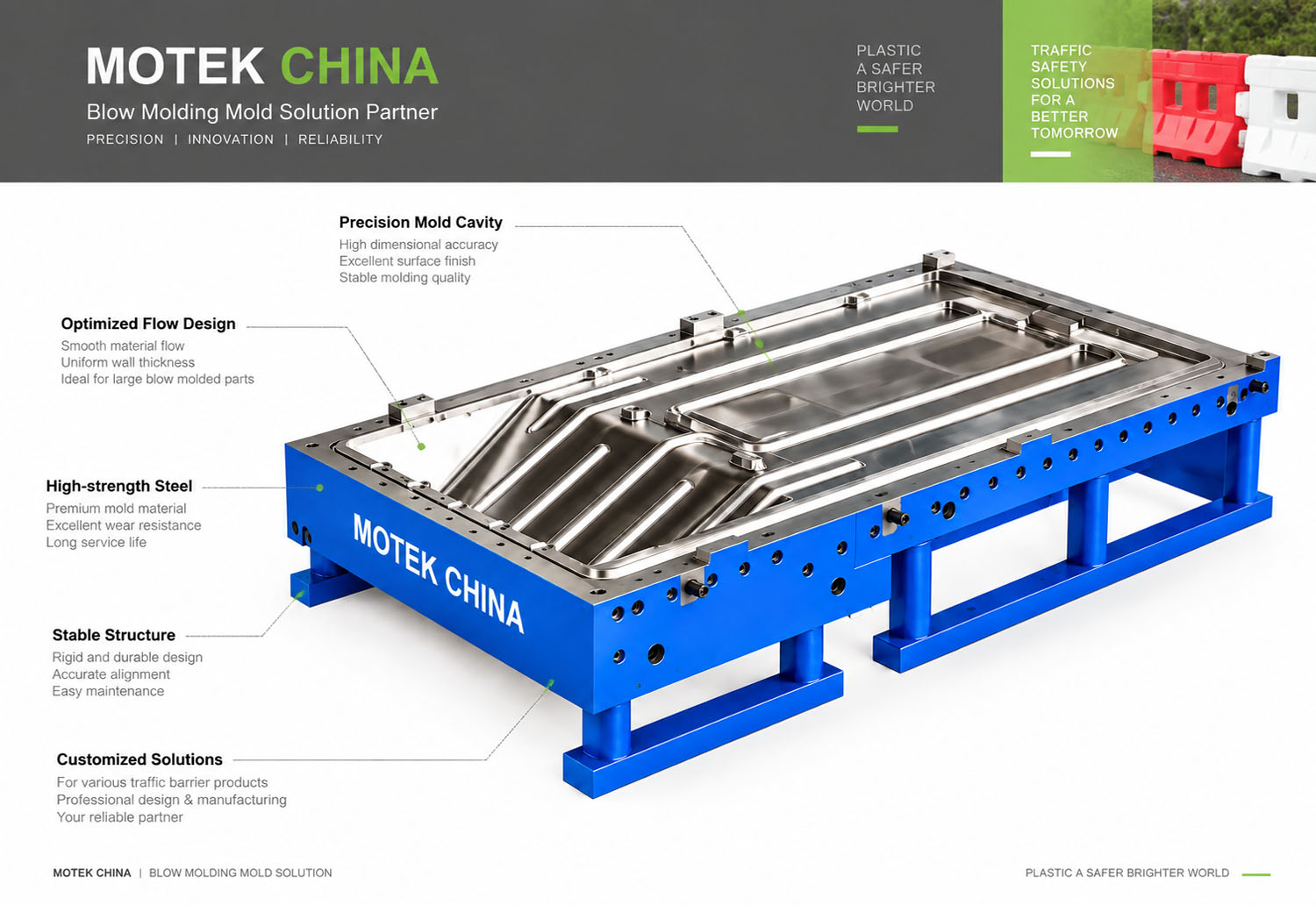
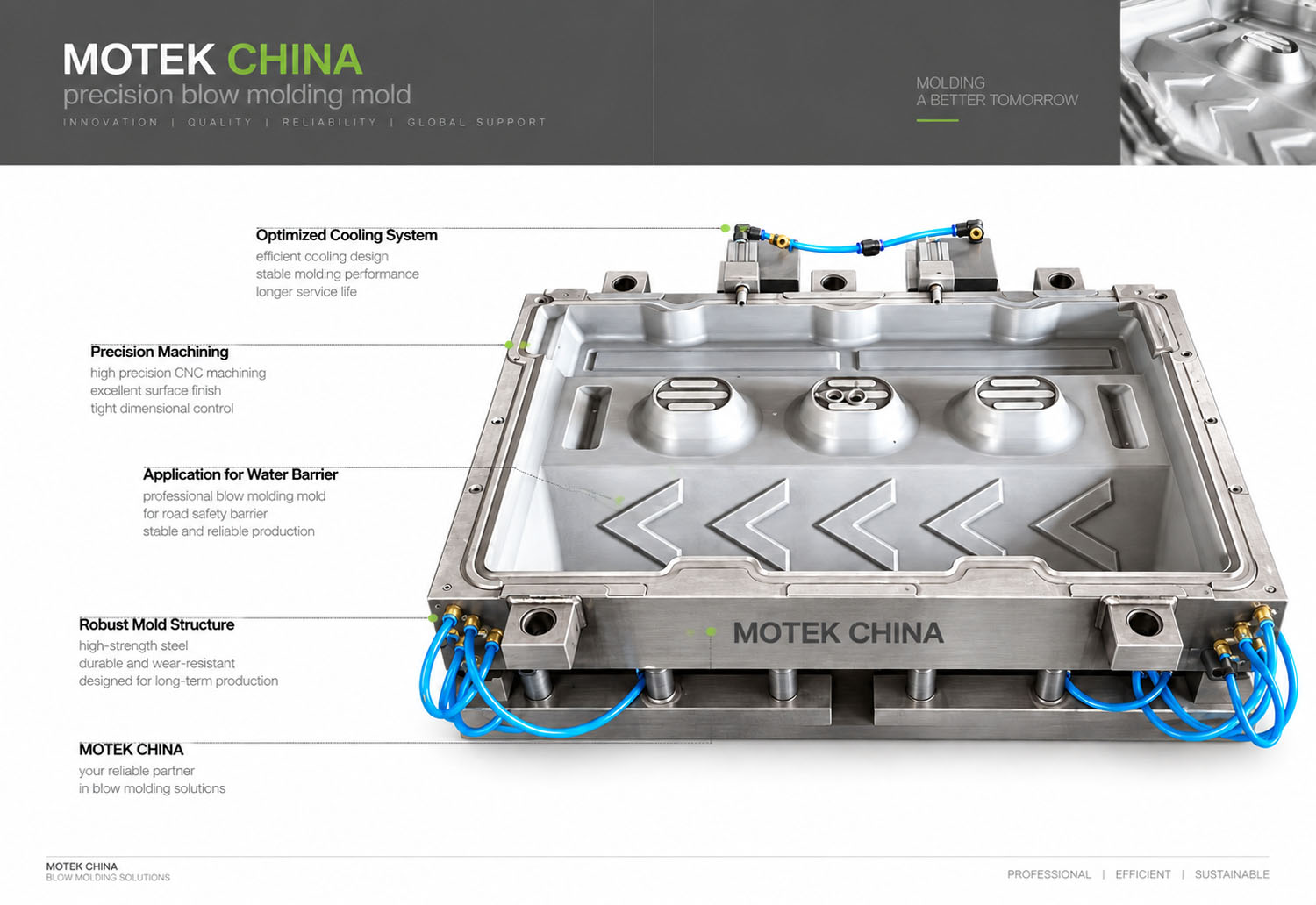
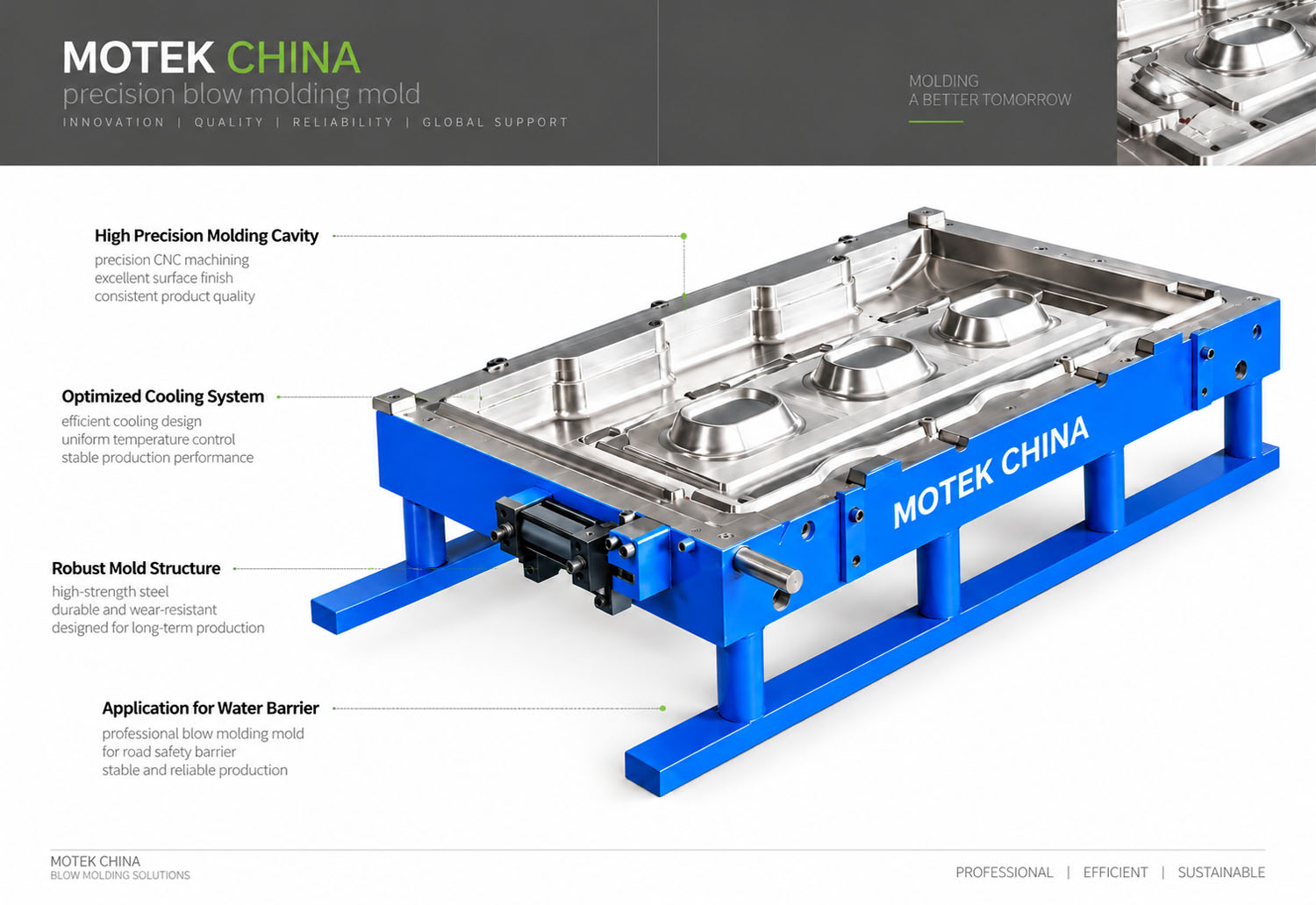
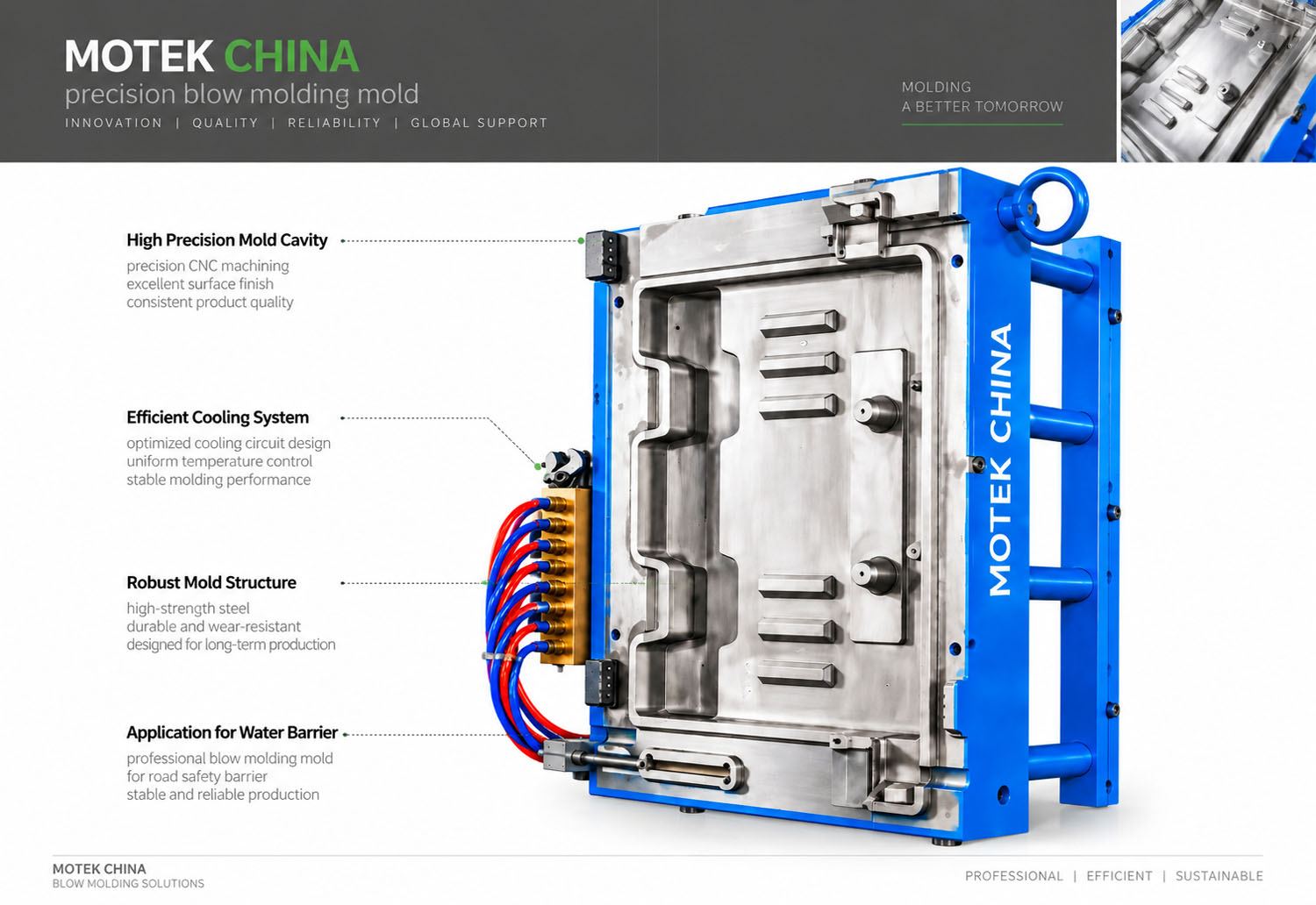
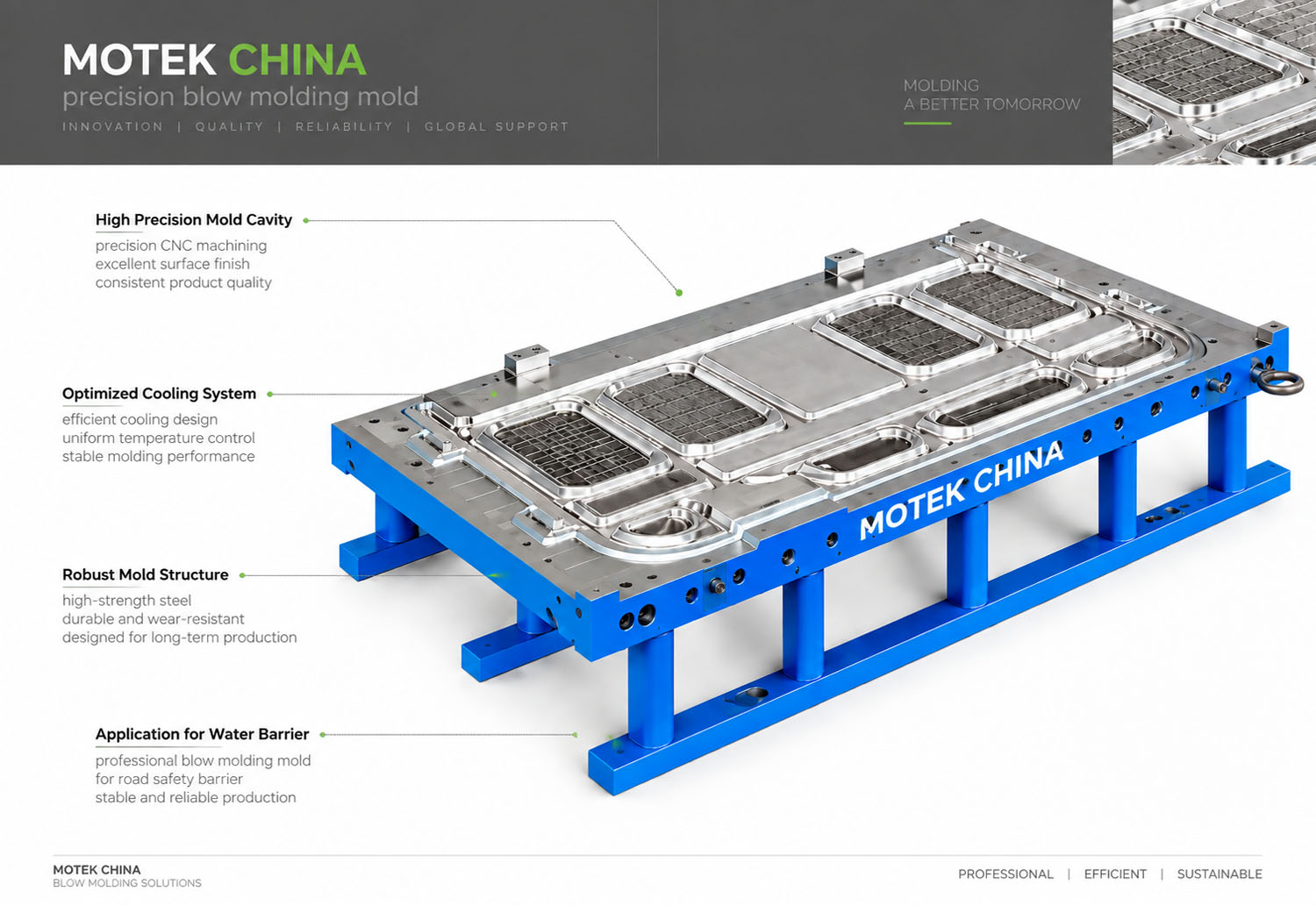
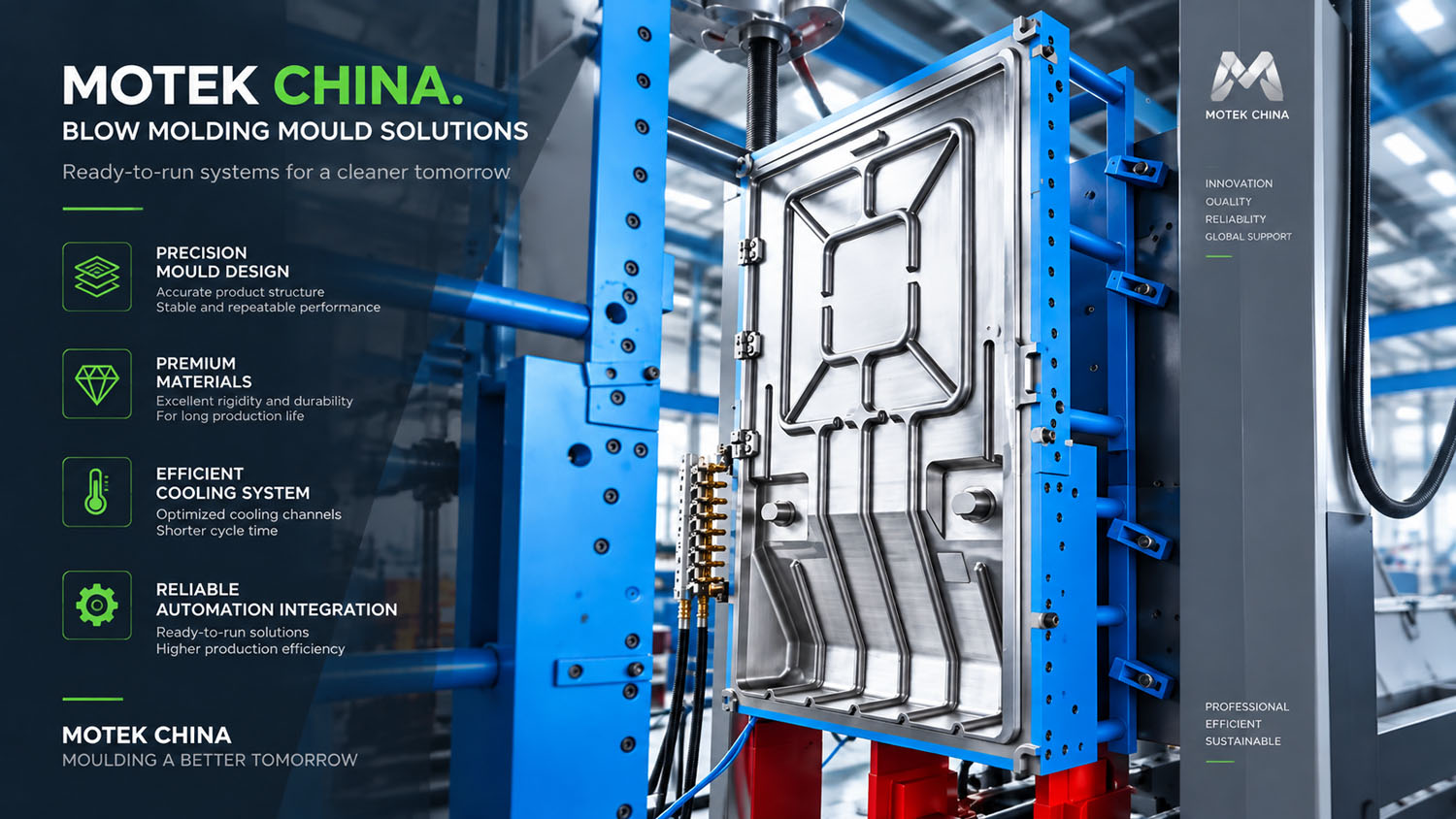
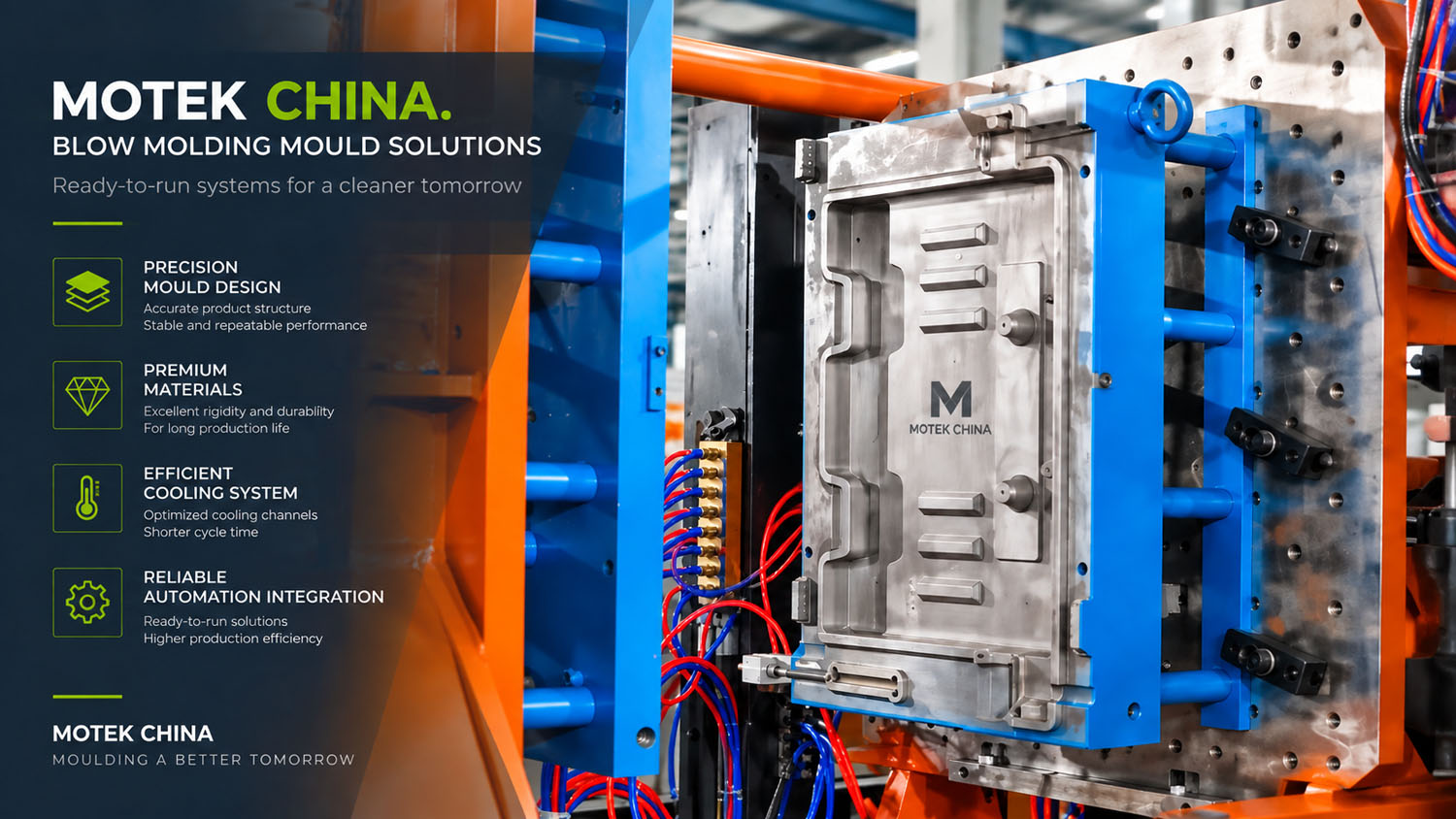
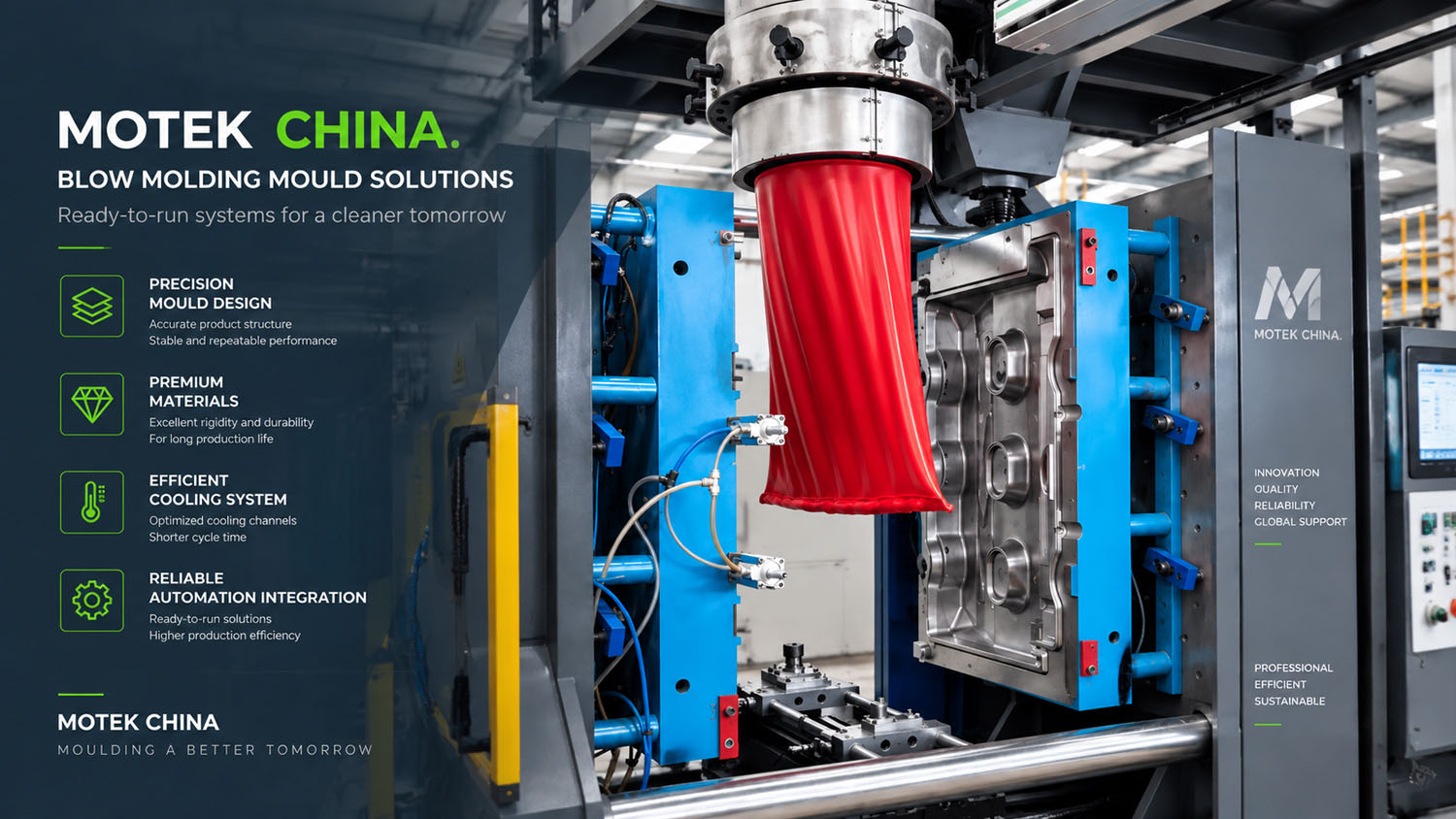

Modular Structural Design
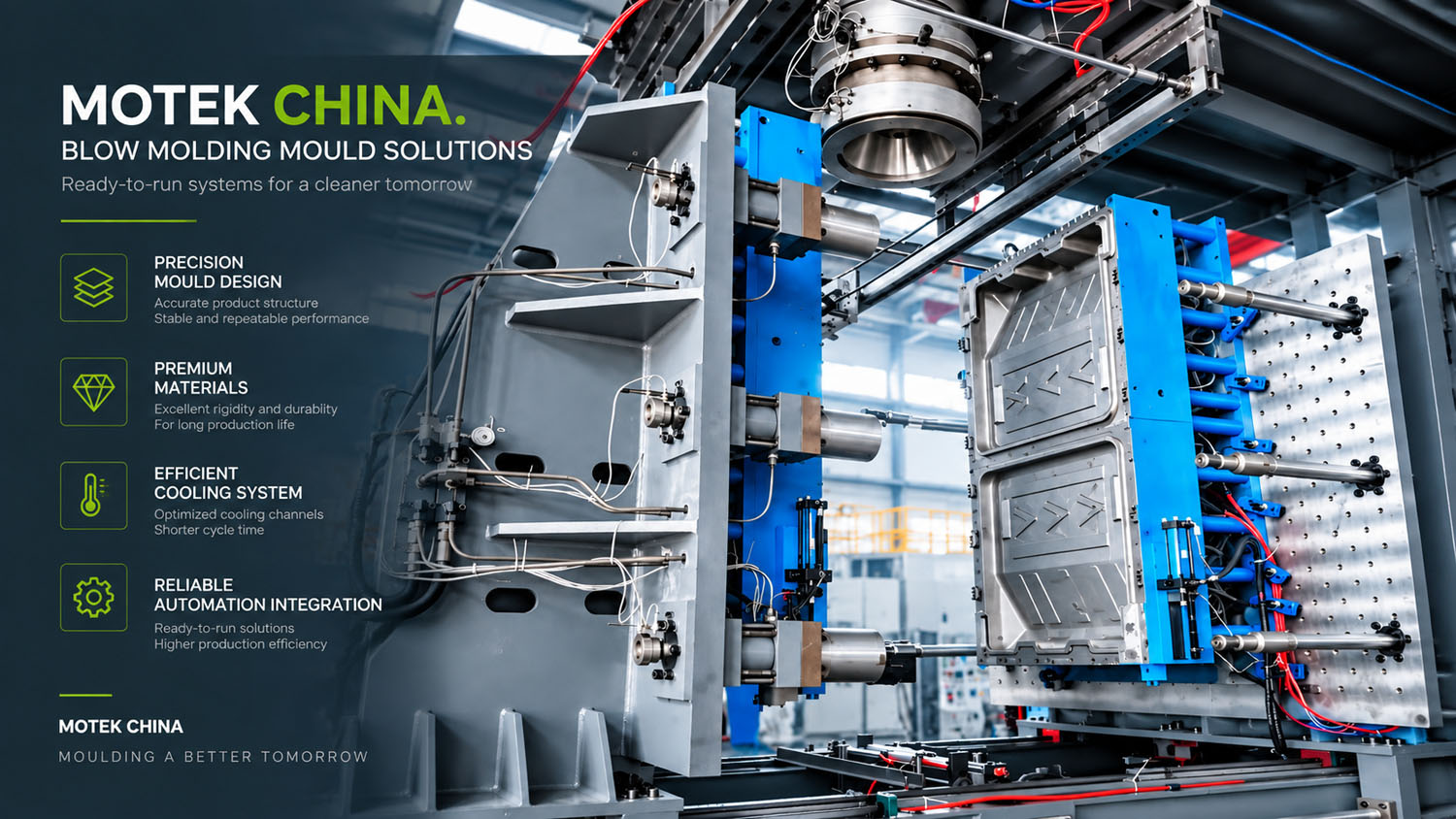
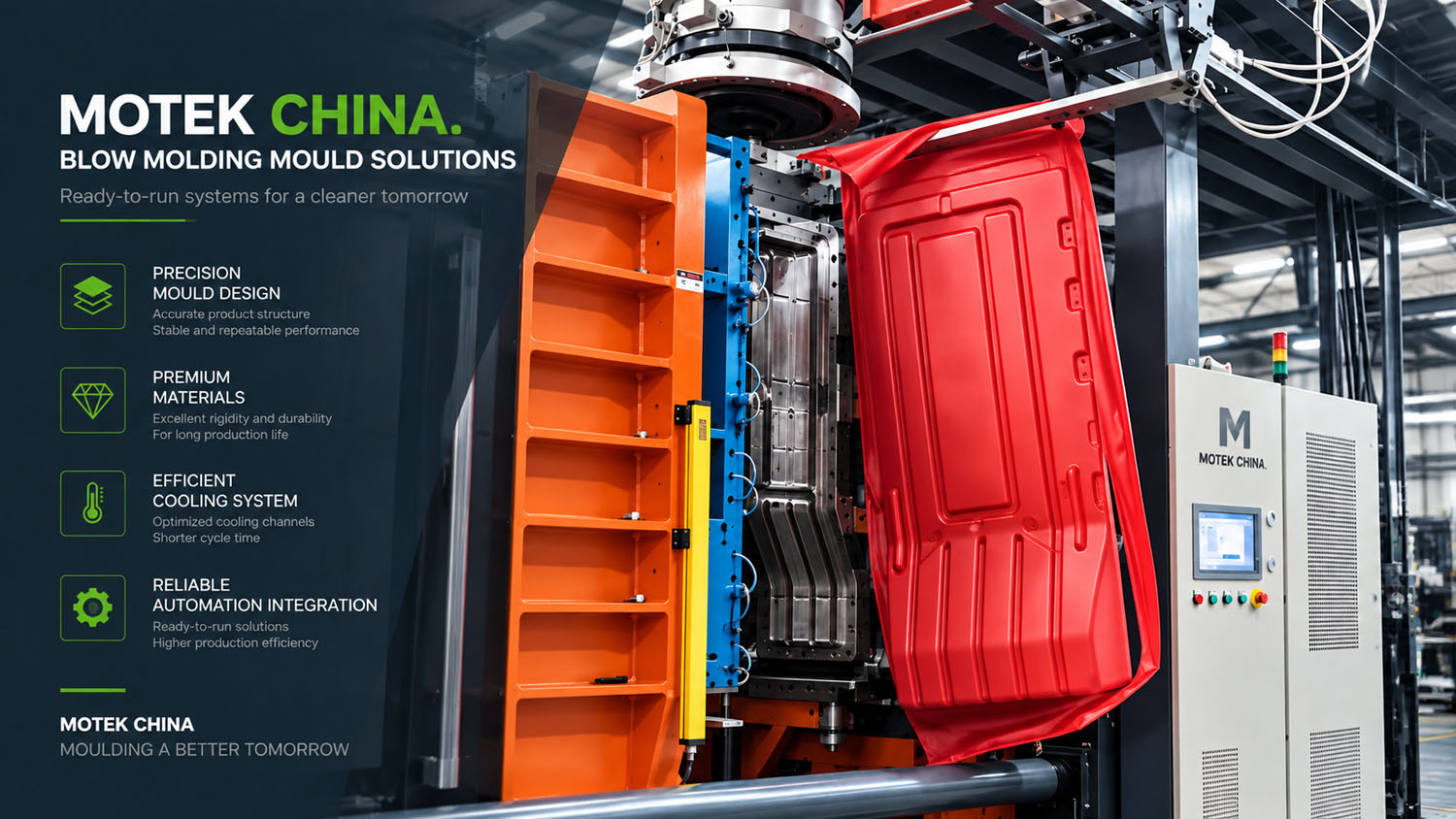
The mold adopts a modular design concept, capable of producing barrier units in various lengths, heights, and functional configurations. Individual units can be quickly assembled through pre-designed connection structures to form continuous protective barriers, adapting to various complex road conditions and temporary control requirements.HDPE-Specific Mold Optimization
Optimized design specifically for the blow molding characteristics of HDPE materials ensures uniform material flow within the mold, resulting in products with consistent wall thickness and balanced strength. The mold venting system is precisely calculated to prevent molding defects such as gas marks or short shots.Imported Mold Steel, Long-Lasting Durability
Mold cores are manufactured from imported high-strength mold steels such as P20, 2738, or 718H, quenched and tempered for uniform hardness and excellent wear resistance. This ensures dimensional stability during long-term high-volume production, reducing maintenance costs and extending service life.Impact-Resistant Structure Optimization
Through CAE analysis, critical stress areas of the barrier are structurally reinforced. Design elements such as reinforcing ribs, buffer grooves, and anti-collision bosses are seamlessly integrated into the product design, providing molded barriers with excellent impact resistance and energy absorption capabilities.Precision Connection System
The mold incorporates precision-formed connection structures, enabling quick and secure connections between barrier units. Whether pin-type, slot-type, or bolted connection methods, the assembled barriers maintain overall stability and resistance to loosening.Integrated Reflective Marking Mounting Positions
The mold design incorporates mounting positions for reflective film, reflective sheeting, or LED warning lights. These features eliminate secondary operations, allowing direct installation of reflective markings after molding, improving visibility at night and in adverse weather conditions, and enhancing safety warning effectiveness.Handling Convenience Design
The mold integrates ergonomically designed handles, forklift pockets, and lifting points, facilitating easy handling, loading and unloading, and on-site deployment of barriers. Lightweight when empty for easy movement, yet stable and reliable when water-filled or ballasted.Customizable Filling and Drainage System
For water-filled barriers, the mold can integrate functional features such as filling ports, drain valves, and water level observation windows, enabling quick on-site deployment and retrieval. The filling and drainage system design thoroughly considers sealing performance to prevent leakage during use.Compliance with International Safety Standards
Mold designs can reference various national traffic safety facility standards, including MASH, EN 1317, and GB/T 31439, ensuring that the molded barrier products meet market access requirements in different regions.
Performance Characteristics
Modular design for flexible configuration into continuous protective barriers
Specifically optimized for HDPE material blow molding
Imported P20/2738/718H mold steel for long service life
CAE-optimized impact-resistant structure with excellent energy absorption
Precision connection system for secure and stable assembly
Integrated reflective marking mounting positions for enhanced nighttime visibility
Handling convenience features including handles and forklift pockets
Customizable filling and drainage systems for on-site deployment
Compliance with MASH, EN 1317 and other international safety standards
Application Scenarios
Blow molded traffic safety barrier molds are widely used for:
Temporary highway construction zone separation
Urban road pedestrian-vehicle segregation
Large-scale event site crowd control
Safety protection around schools and hospitals
Sports event track barriers
Temporary channel guidance at airports and train stations
Vehicle management in industrial parks and logistics centers
We Can Also Provide for You
If you have requirements for traffic safety barrier molds or other road safety product molds, our experienced engineering team can provide comprehensive services from product concept design and structural optimization to mold manufacturing. We understand traffic safety, and we understand blow molding.
Contact us for selection assistance, quotations, and technical solutions.
