


Vegetable-Specific Plastic Logistics Crate Mold — Product Introduction (Motek Turnover Box Mold Series)
Vegetable-Specific Plastic Logistics Crate Mold — Product Introduction (Motek Turnover Box Mold Series)
Product Positioning
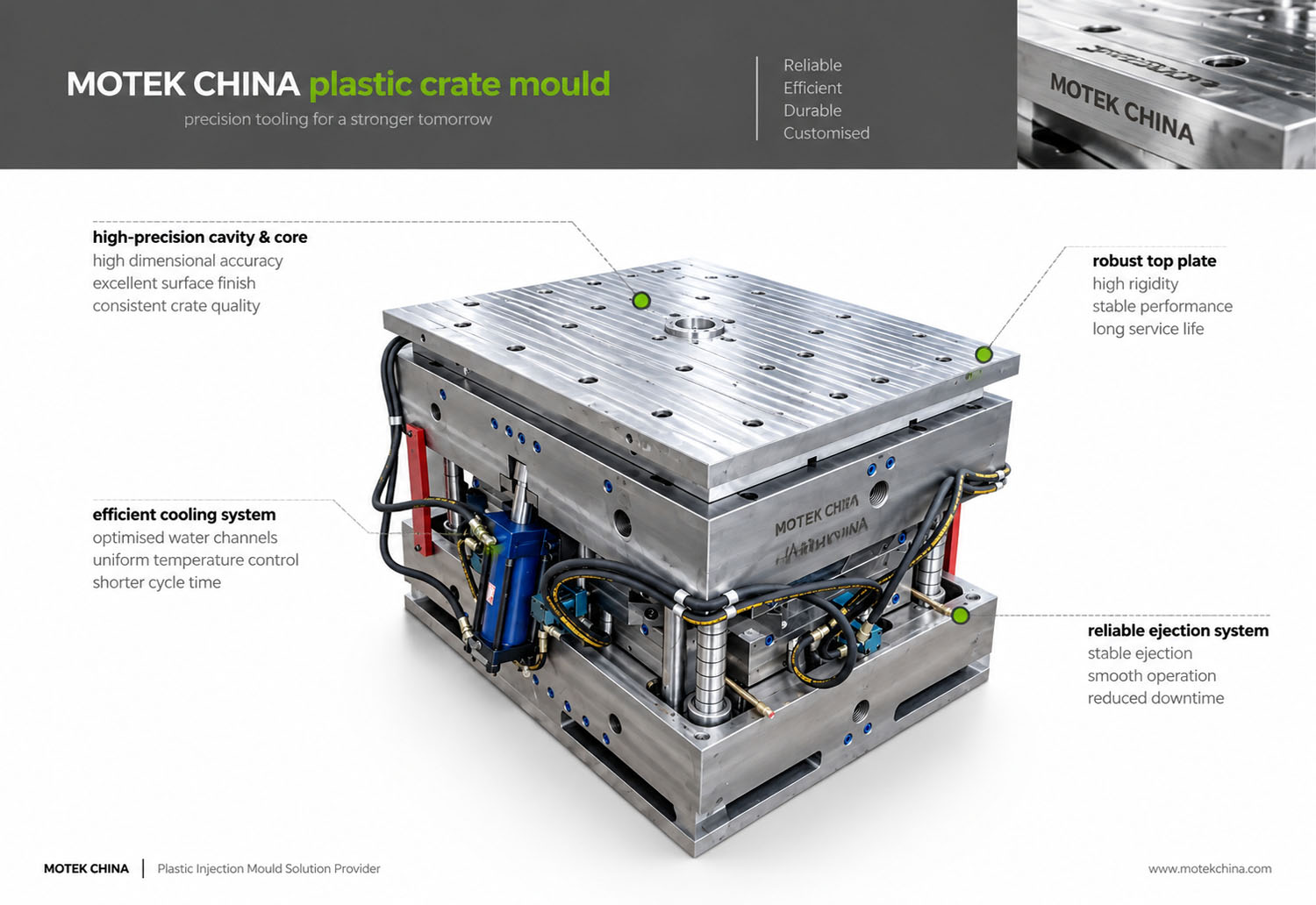
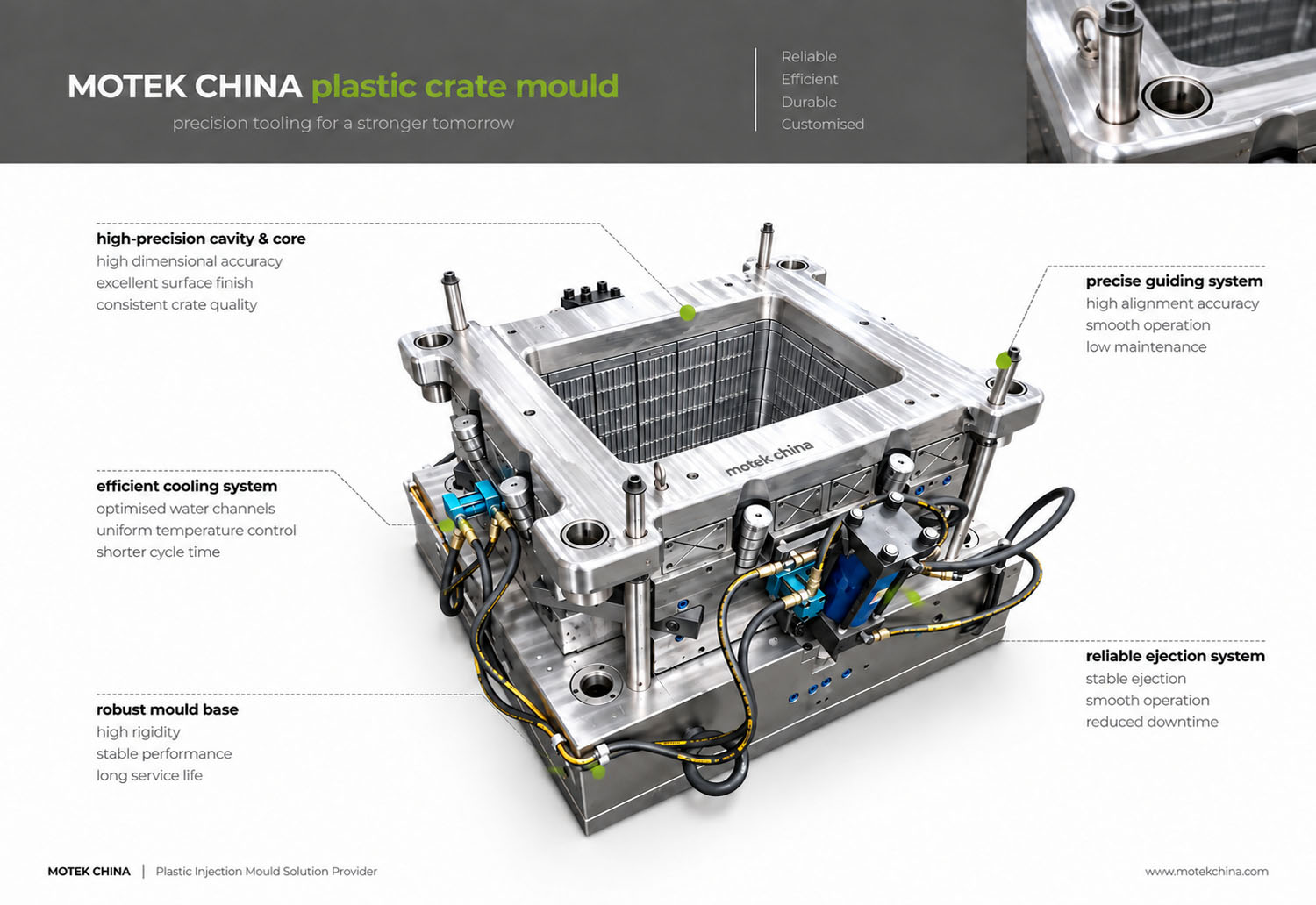
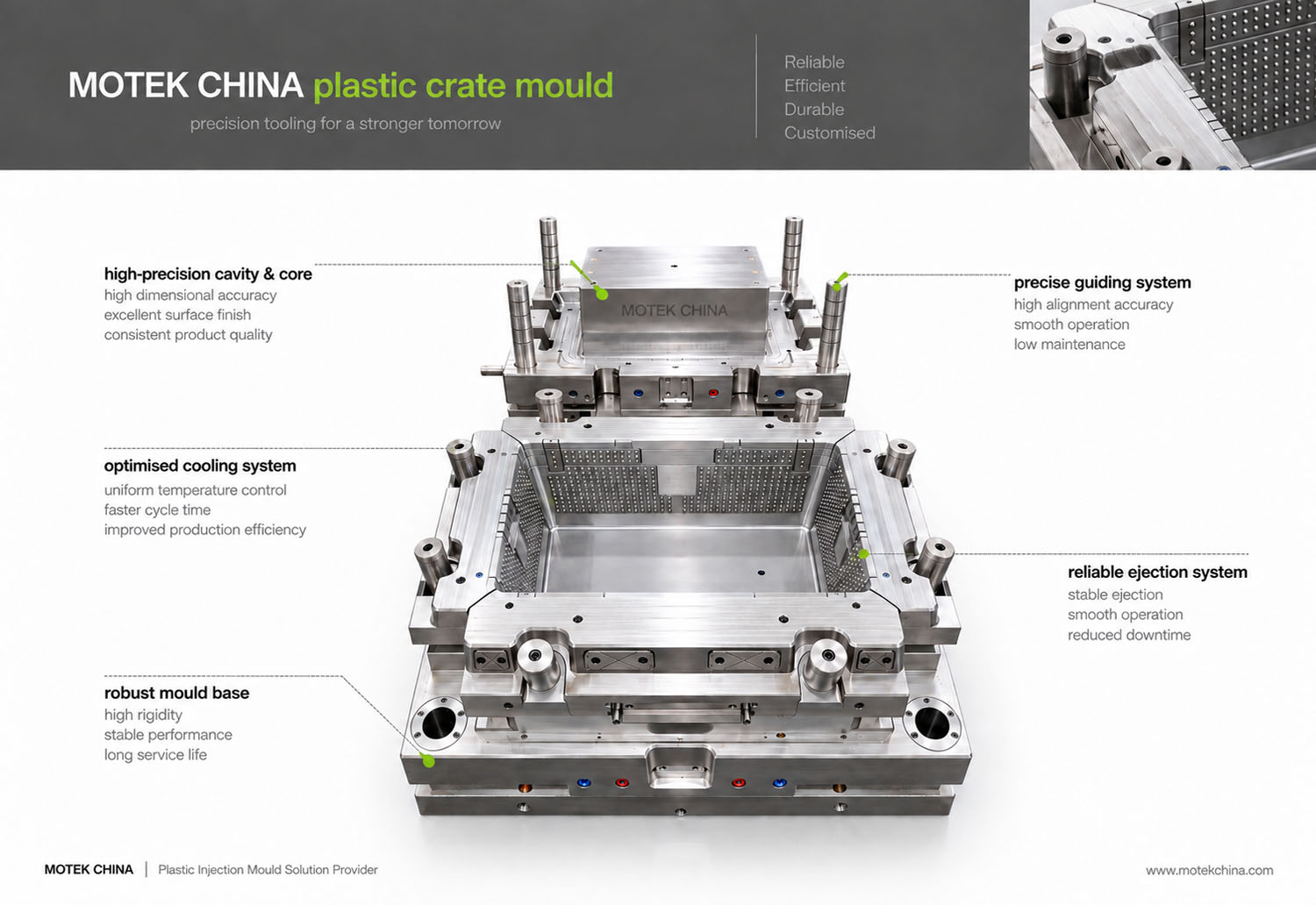
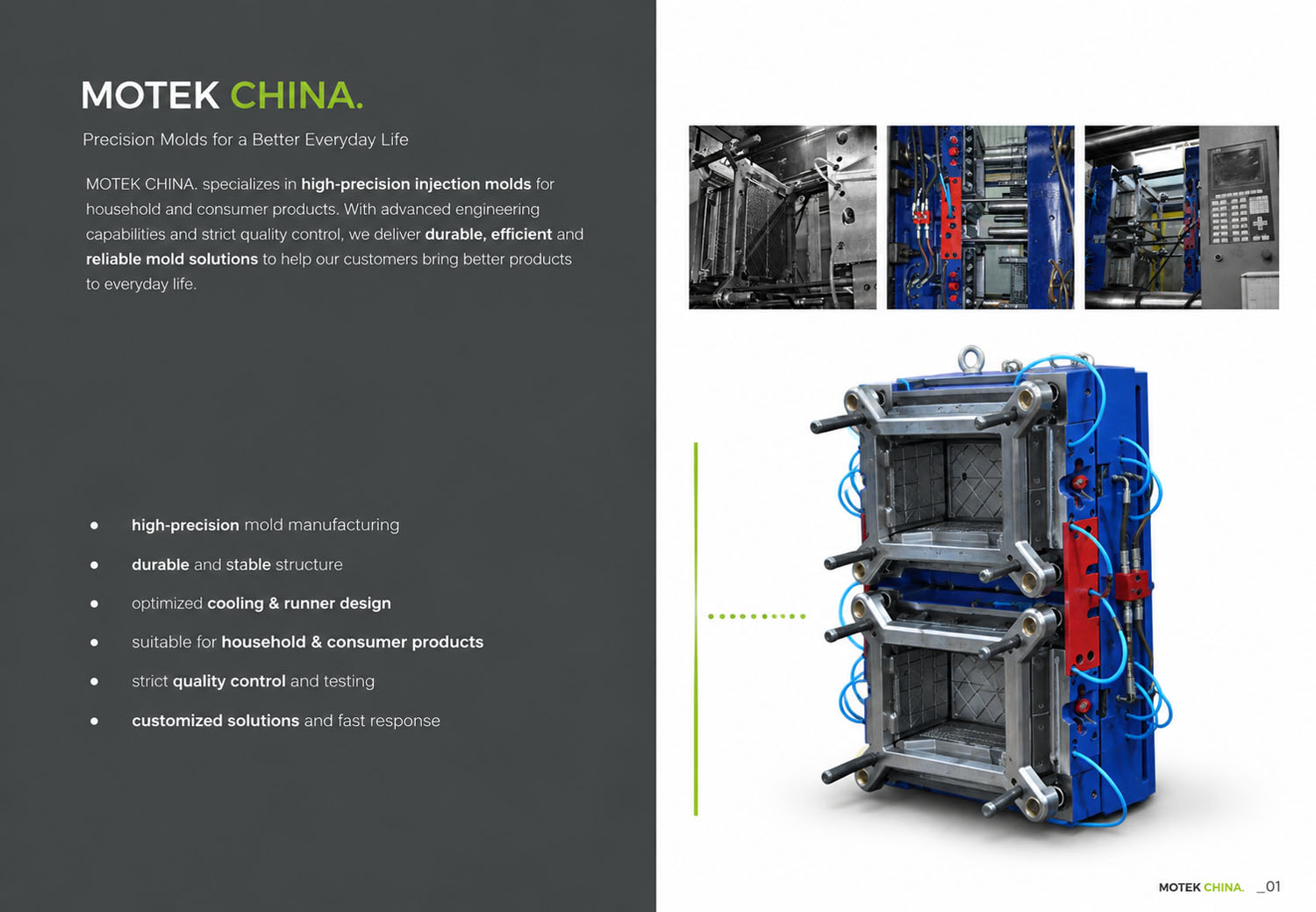
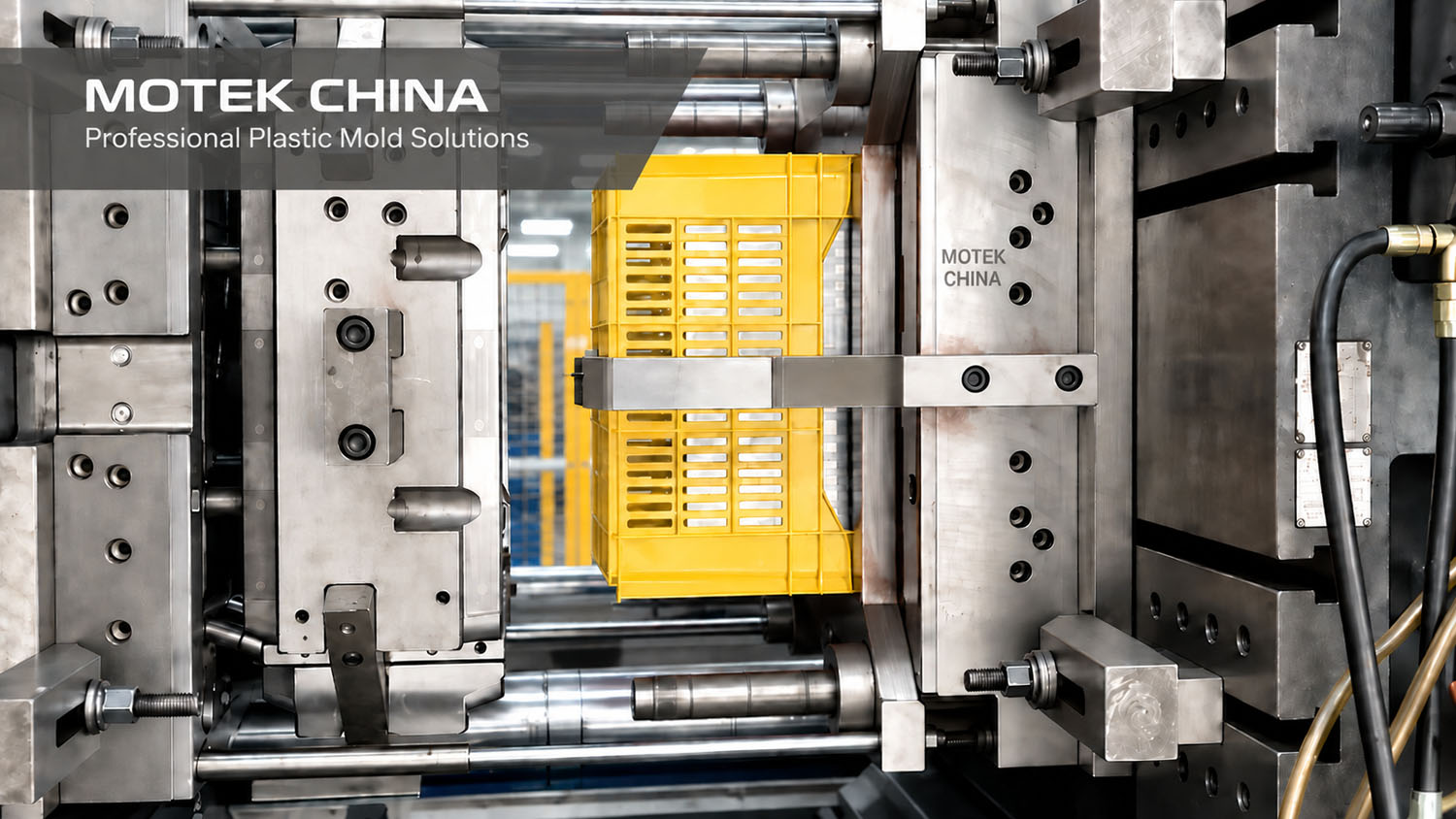
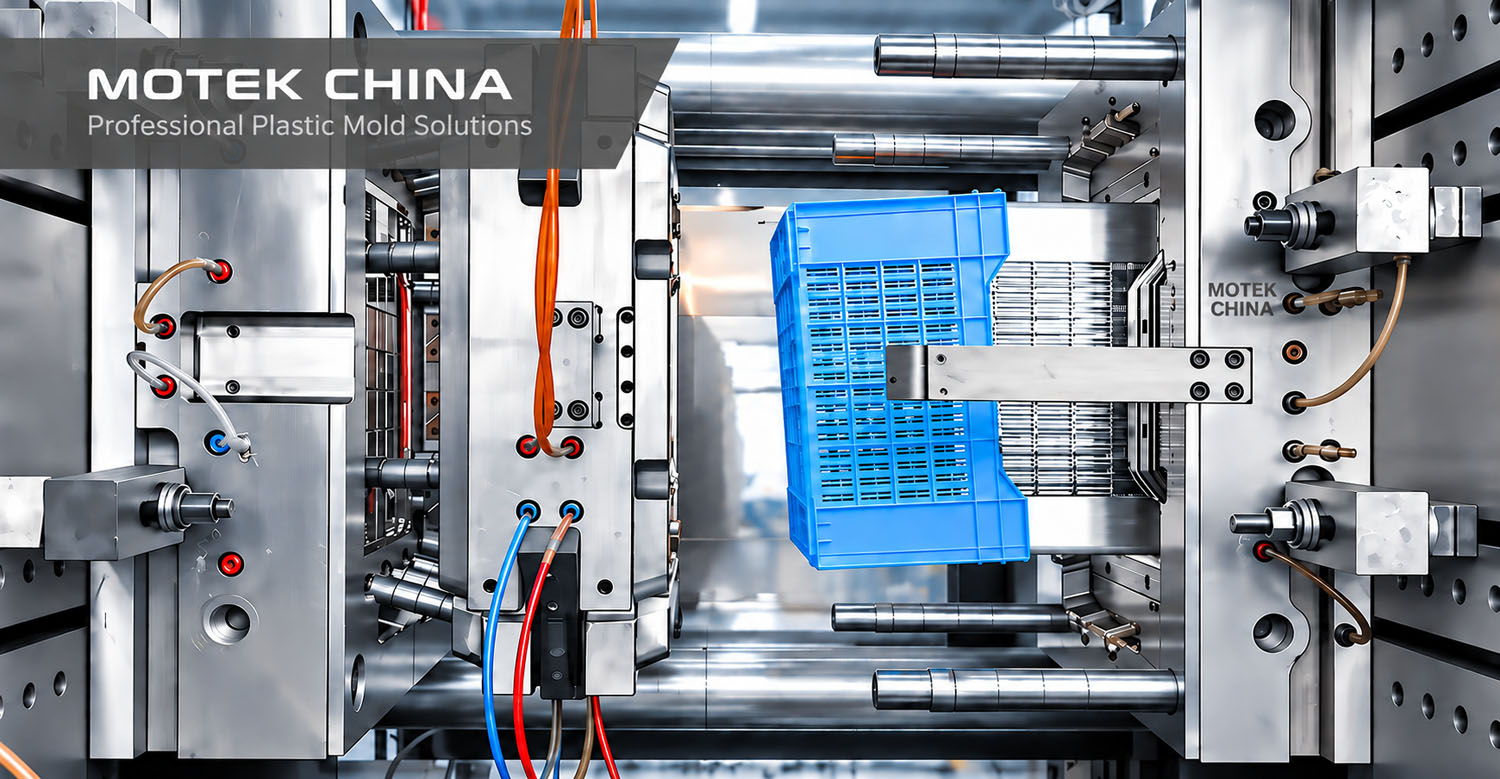
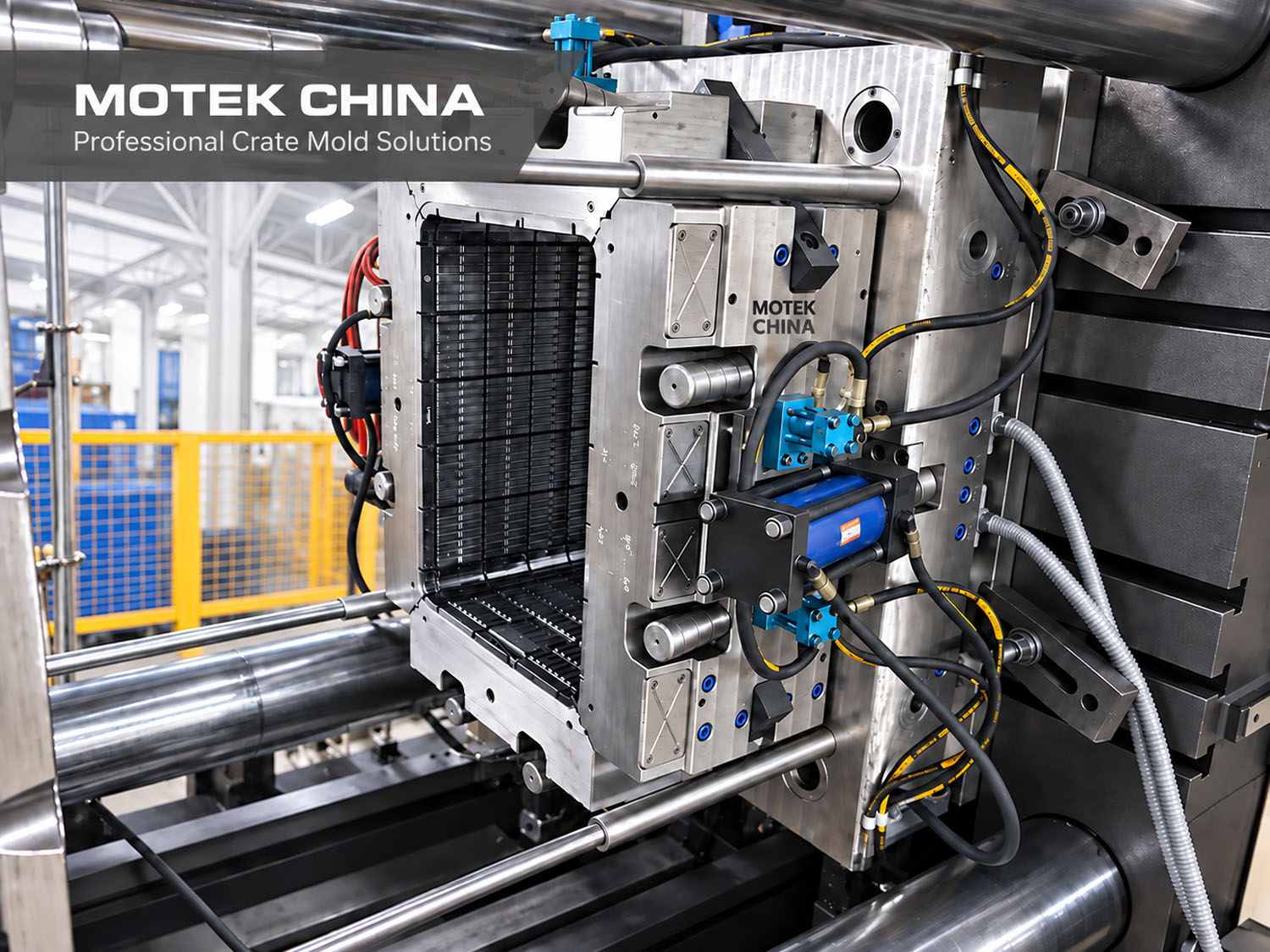
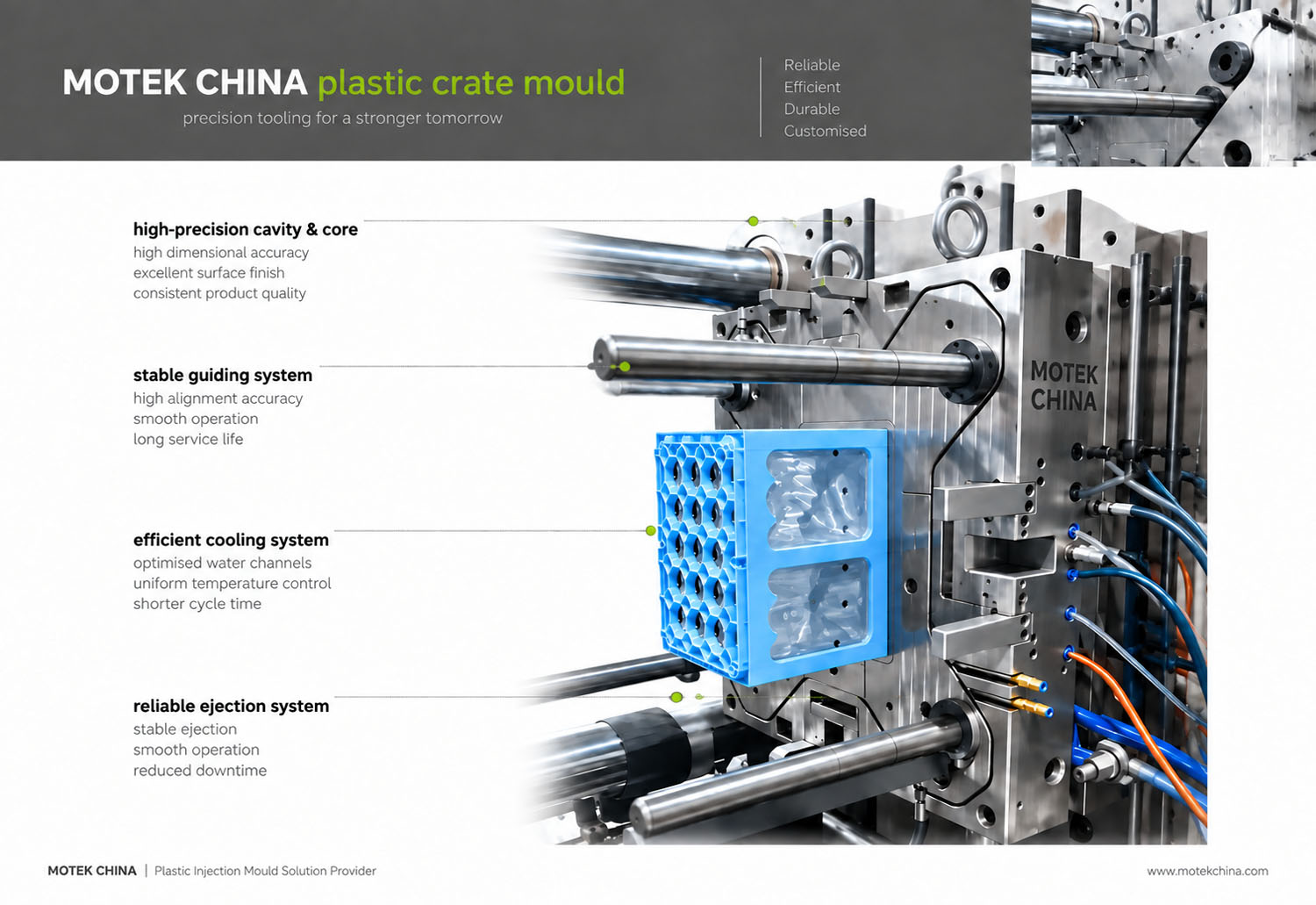
Motek introduces dedicated injection molds for vegetable-specific plastic logistics crates. Unlike general-purpose turnover boxes, vegetable crates must address the unique demands of fresh produce logistics: ventilation for respiration, drainage for washing and condensation, stackability under load, and resistance to low temperatures and moisture during cold-chain transport. These crates typically feature slotted side walls, reinforced corners, and nesting or stacking designs. The core challenges in mold development lie in ventilation slot forming with clean edges, warpage control of large flat panels with high open-area ratios, and structural strength at load-bearing corners and base. Motek addresses these through cavity layout, cooling design, and demolding mechanisms, helping customers achieve stable mass production of vegetable logistics crates.
Core Specifications
| Item | Specification |
|---|---|
| Applicable Plastics | PP / HDPE (food-contact grade, low-temperature resistant) |
| Mold Material | P20 / 718H / 2738 (cavity and core), H13 optional for slider inserts |
| Number of Cavities | 1×1 / 1×2 (multi-cavity evaluable based on output requirements) |
| Mold Life | 500,000–1,000,000 shots |
| Cycle Time | 35–55 seconds (depending on crate size and cooling design) |
| Mold Base Standard | LKM / HASCO / DME or customer-specified |
| Runner System | Hot runner recommended (reduces material waste and cycle time) / Cold runner optional |
| Ventilation Design | Slotted side walls and base integrally formed, with dedicated venting inserts |
Product Features
Ventilation Slot Forming with Clean Edges.
Vegetable crates require extensive ventilation slots on side walls and bases to allow air circulation and prevent condensation buildup. Motek forms these slots directly in the cavity through core inserts, ensuring clean edges without flash or sharp burrs that could damage produce. Slot dimensions and spacing are designed to balance ventilation efficiency with structural rigidity—too much open area weakens the crate, while too little impedes airflow. Venting inserts are positioned at slot-forming areas to prevent trapped gas during injection.
Drainage and Washability Design.
Fresh vegetables generate moisture, and crates are frequently washed. Motek forms drainage holes and sloped base features that allow water to drain completely, preventing standing water that promotes bacterial growth. The mold design ensures drainage channels are smooth and free of dead corners where debris could accumulate. Surface finish on interior surfaces is controlled for easy cleaning.
Warpage Control for High Open-Area Panels.
Crates with extensive slotting have reduced structural continuity, making them prone to warpage during cooling. Motek evaluates shrinkage distribution through mold flow analysis, applies pre-deformation compensation to the cavity, and adopts balanced cooling channels to equalize cooling rates across the crate body. Reinforcement ribs are integrated at corners and base edges to maintain dimensional stability while preserving ventilation.
Structural Strength at Load-Bearing Corners and Base.
Vegetable crates are stacked several layers high and must withstand compression without cracking. Motek reinforces corner posts and base runners through optimized wall thickness and rib layout, ensuring the crate maintains rigidity under stacked loads. Mold flow analysis verifies filling completeness at corner nodes where wall sections converge.
Stacking and Nesting Functionality.
Vegetable crates typically feature stacking shoulders for stable vertical stacking and nesting features for empty crate storage. Motek forms these features with tight tolerance control, ensuring crates stack securely without shifting and nest compactly when empty. Stacking shoulder dimensions are verified for compatibility with industry-standard pallet and logistics systems.
Food-Contact Safety and Material Compliance.
Crates contacting fresh produce must meet food-contact safety requirements. Motek coordinates with customers on food-grade PP/HDPE material selection and ensures mold surfaces are free of contaminants. Cavity surfaces are polished to prevent material buildup that could harbor bacteria.
Applications
Motek vegetable-specific plastic logistics crate molds are suitable for:
- Fresh vegetable harvesting and transport crates
- Cold-chain vegetable logistics crates
- Agricultural produce turnover boxes with ventilation slots
- Washable vegetable storage and display crates
- Stackable/nestable vegetable logistics containers
Service Process
After the customer provides 3D product drawings, load-bearing requirements, and ventilation specifications, Motek completes mold flow analysis (including slot-forming evaluation, warpage compensation, and corner strength verification) and mold structure confirmation; cavity steel and hot runner systems are procured according to agreed specifications; progress and key milestones are regularly reported during processing. During trial molding, emphasis is placed on verifying slot edge quality, crate dimensional accuracy, stacking/nesting functionality, and load-bearing performance, with samples and inspection reports provided. Before shipment, molds undergo anti-rust treatment and action testing, with water circuit diagrams, consumable parts lists, and maintenance instructions provided. Technical support is available during the warranty period, with lifetime maintenance consultation.
Motek — From general turnover boxes to vegetable-specific logistics crates, providing reliable mold solutions for fresh produce packaging and cold-chain logistics.
