
Why Use Hot Runners? How Can Mold Costs Be Reduced?
Why Use Hot Runners? How Can Mold Costs Be Reduced?
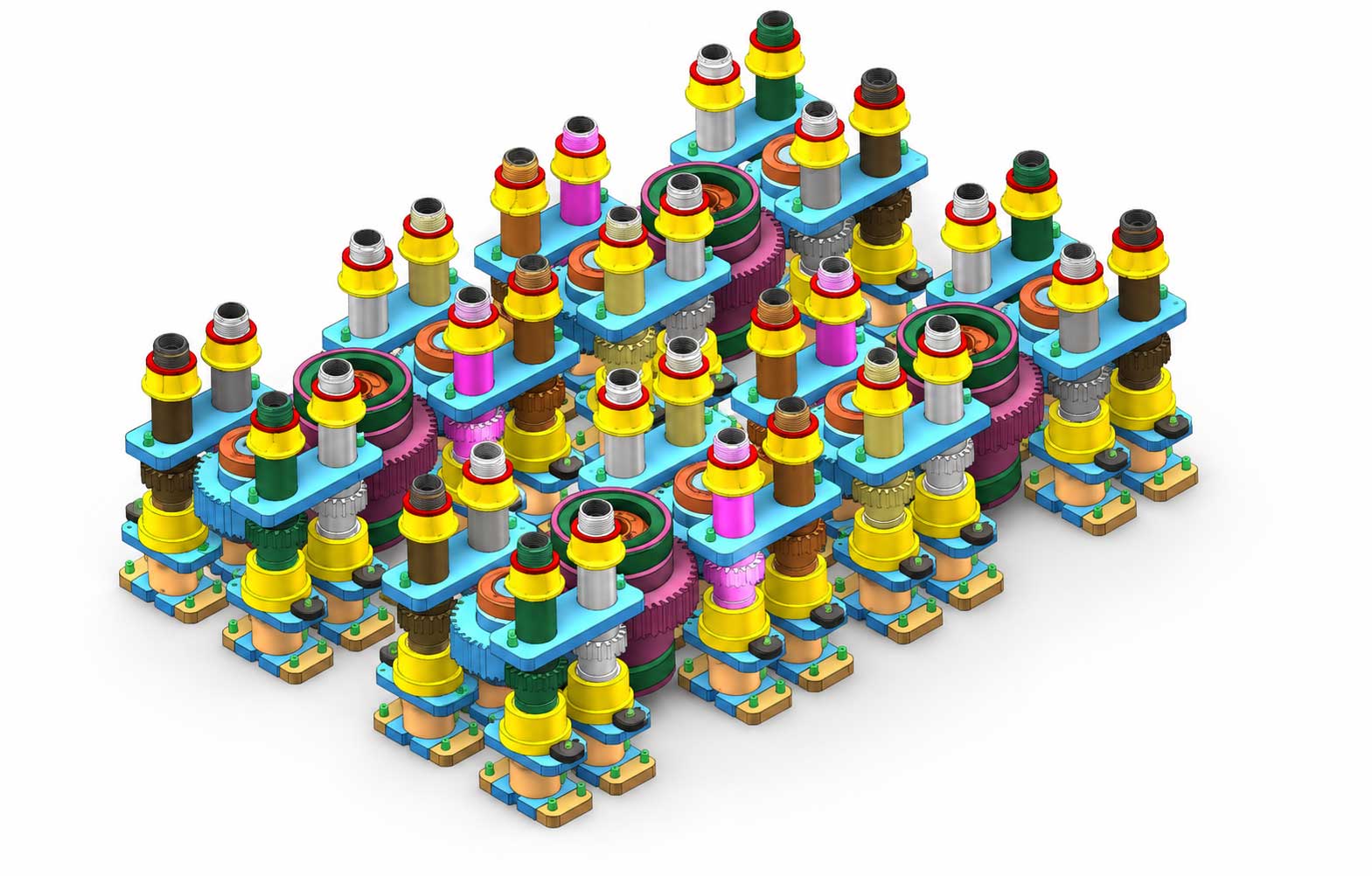
In mold development, "hot runners" and "mold costs" are often discussed together. A common understanding is: hot runners save material, so they save money. This statement is only half true. Hot runners do reduce runner waste, but they themselves increase the mold's manufacturing cost—heating elements, temperature control systems, and more complex structures all mean higher upfront investment.
So the question becomes: is a hot runner worth using? And if it is used, where should the mold cost savings come from?
To answer this question, we need to separate two things clearly: "what problem does a hot runner solve" and "what makes up mold cost."
What Hot Runners Solve Are Several Structural Problems Inherent to Cold Runners
The feeding logic of a cold runner mold is simple: plastic melt enters the mold from the injection molding machine nozzle, passes through the runner system, reaches the gate, and then enters the cavity. During this process, the plastic in the runner cools together with the plastic in the cavity. When the mold opens, the product is ejected, and the solidified runner material is ejected along with it, then needs to be separated from the product manually or by a robot.
This logic seems fine, but it comes with three unavoidable costs.
First, a portion of the material injected each time is destined to become waste. The plastic in the runner will not become part of the product; after cooling, it is solidified runner material. For multi-cavity molds, the weight of the runner waste may exceed the product itself. If expensive materials such as polycarbonate or PEEK are used, this waste accumulates into a considerable figure during mass production. Data shows that an eight-cavity cold runner mold produces about 4 grams of waste per cycle; after switching to a hot runner, annual material savings can reach 250,000 euros.
Second, the cooling time of the runner may slow down the entire molding cycle. In a cold runner mold, the runner cools together with the product, and the runner cross-section is often larger than the product wall thickness, so cooling takes longer. This means the entire injection cycle is "held up" by the runner's cooling time, and the machine waits for the runner to solidify before the mold can open.
Third, the separation of runner waste adds a post-processing step. After the product is ejected, the runner still needs to be cut or broken off. For production lines with high automation requirements, this is an additional "break point."
The basic idea of a hot runner is to keep the plastic in the runner in a molten state at all times, so it does not participate in cooling and ejection. The runner is maintained at a certain temperature by heating elements and insulation structures, and the melt remains flowable along the entire path from the injection molding machine nozzle to the gate. When the mold opens, only the product is ejected; the plastic in the runner remains in the mold, waiting for the next injection.
Starting from this basic principle, the benefits brought by hot runners are structural: runner waste is eliminated, the molding cycle is no longer dragged down by runner cooling, post-processing steps are reduced, and filling consistency in multi-cavity molds is easier to control.
But a Hot Runner Itself Is a Cost Item, Not a Cost Reduction Item
These advantages of hot runners are exchanged for higher mold costs. A hot runner system includes heated manifolds, nozzles, temperature controllers, thermocouples, and other components, and its structure is far more complex than a cold runner. The upfront manufacturing cost of the mold rises significantly, and maintenance requirements are also higher—heating elements may fail, nozzles may clog, and the temperature control system requires ongoing management.
Therefore, discussing "how hot runners save mold costs" is more accurately stated as: hot runners save material costs and molding costs during mass production, but they do not save the mold's manufacturing cost itself. If the product volume is very small, the material savings from a hot runner may never cover its upfront investment.
This leads to the real question: beyond deciding whether to use a hot runner, how should mold costs themselves be controlled?
Mold Cost Control Begins at the Product Drawing Stage
Most of a mold's cost is already determined before the mold is cut. Mold structure, materials, machining processes, and trial molding frequency—these key cost factors all depend on decisions made during product design and mold design.
The first thing is to conduct a thorough structural review of the plastic part. If the product design itself has problems that hinder the mold structure or affect molding quality—such as severely uneven wall thickness, excessively deep undercuts, or insufficient draft angle—the mold design and machining will require repeated modifications, and costs will rise significantly. Finding and solving these problems before the mold is cut is the most effective means of controlling mold cost.
The second thing is optimizing the mold structure design. The size of the mold base, the thickness of the plates, the form of the feed system, and the layout of cooling channels—these design decisions directly determine machining workload and material usage. A reasonably designed mold is machined right the first time and passes trial molding on the first attempt; a mold with design flaws requires repeated machining and multiple trial runs, and costs multiply.
The third thing is the design of the cooling system. Cooling time typically accounts for a large proportion of the injection cycle. If the cooling channel layout is unreasonable and cooling is uneven, not only is the molding cycle long, but the product may also develop defects such as warping and sinking. Using mold flow analysis to optimize cooling channel design allows hot spots to be identified at the design stage and adjusted in advance, rather than discovering problems only after trial molding.
For projects where conditions allow, conformal cooling is a direction worth considering. Traditional cooling channels are straight drilled holes and can hardly conform to complex product shapes. Conformal cooling uses additive manufacturing technology to route channels along the product contour, resulting in more uniform cooling and shorter cycles. Although the manufacturing cost of conformal cooling inserts themselves is higher, in large-volume production, the shortened molding cycle and reduced scrap rate can recover this investment.
The fourth thing is the adoption rate of standard components. Extensive use of standard mold bases, standard ejector pins, standard sprue bushings, and other standard components in mold design can shorten design and machining cycles and reduce the probability of errors. The more non-standard components there are, the greater the design workload, the more complex the machining, and the higher the cost.
The fifth thing is controlling the number of trial molding runs. Trial molding is an easily underestimated part of mold cost. Each trial run means machine occupancy, labor input, and material consumption. For large molds, the cost of a single trial run is considerable. Striving for "first-time pass" or keeping it within three runs requires sufficient verification at the design stage, quality control at the machining stage, and a standardized trial molding process.
Whether a Hot Runner Is Worth It Depends on Product Volume, Material Cost, and Appearance Requirements
Returning to the hot runner question, the decision logic is actually not complicated: compare the upfront investment of the hot runner with the material costs it saves, the cycle time it shortens, and the post-processing labor it reduces during mass production.
The situations suitable for hot runners are fairly clear: production volume is large enough, material cost is relatively high (such as engineering plastics and high-temperature polymers), product appearance requirements are high (runner marks near the gate are not allowed), or multi-cavity molds require consistent filling performance. In these scenarios, the material savings and improved production efficiency from a hot runner can cover its upfront cost within a reasonable period.
Situations requiring caution also exist: when production volume is small, material is cheap, and the product structure is simple, the advantages of a hot runner cannot be brought into play, and the upfront investment becomes a burden instead. In addition, hot runners place very high demands on temperature control management. If the mold maker does not have the corresponding design and maintenance capabilities, hot runners may bring new problems such as nozzle clogging, material degradation, and uneven flow, which instead push up the total cost.
Ultimately, a hot runner is a change in feeding logic, not simply an "upgraded accessory." It uses higher mold complexity and upfront cost in exchange for material savings, cycle time reduction, and consistency improvement during mass production. And the core of mold cost control does not lie in the hot runner itself, but in the basic stages of product review, structural design, cooling optimization, standard component adoption, and trial molding management. Do these stages well, and mold costs will naturally come down; whether to use a hot runner is simply a choice made on this basis according to the specific project.
