


Classic Automatic Flip-Top Trash Can Mold — Product Introduction (Motek Daily Necessities Mold Series)
Classic Automatic Flip-Top Trash Can Mold — Product Introduction (Motek Daily Necessities Mold Series)
Product Positioning
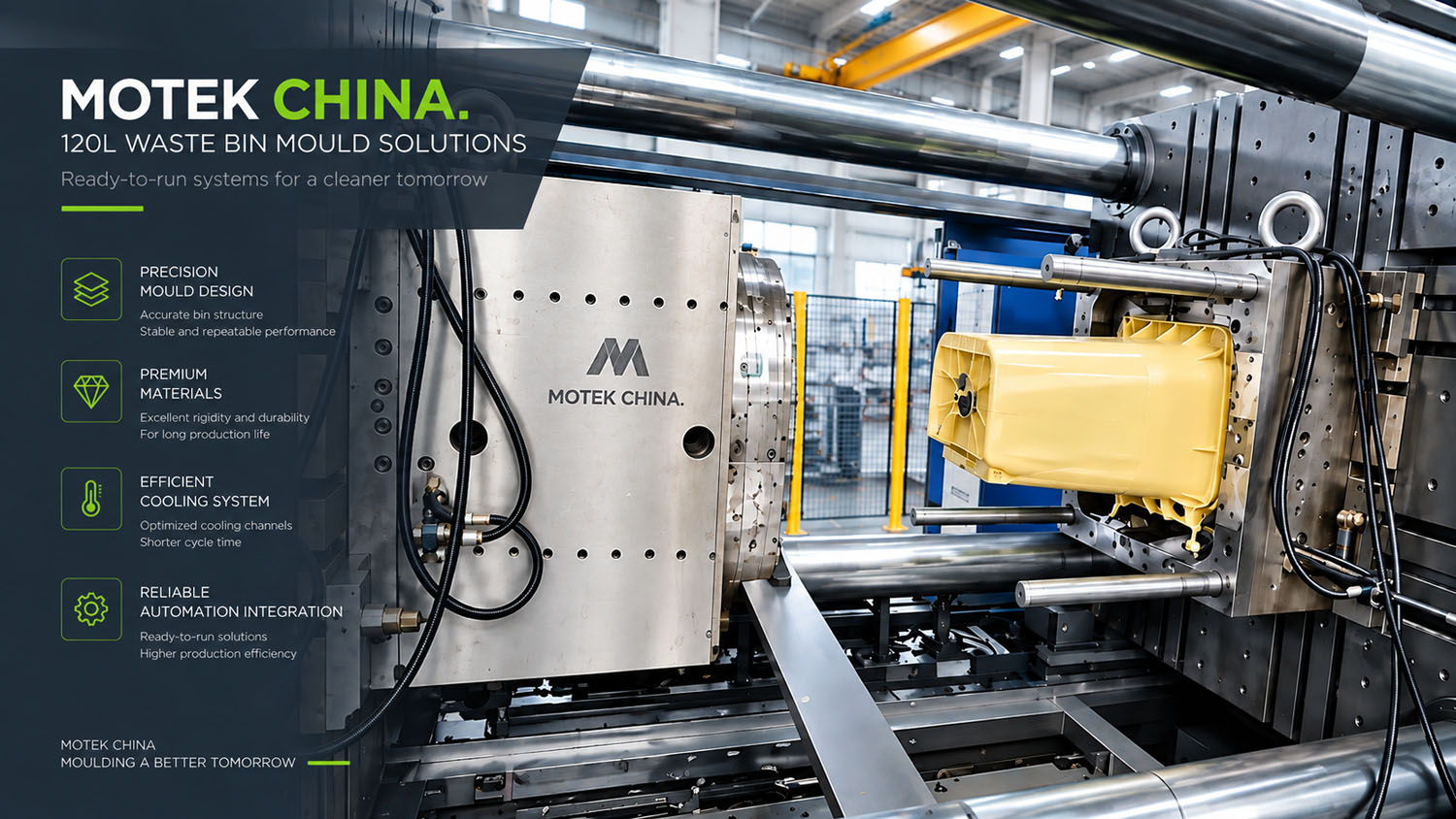
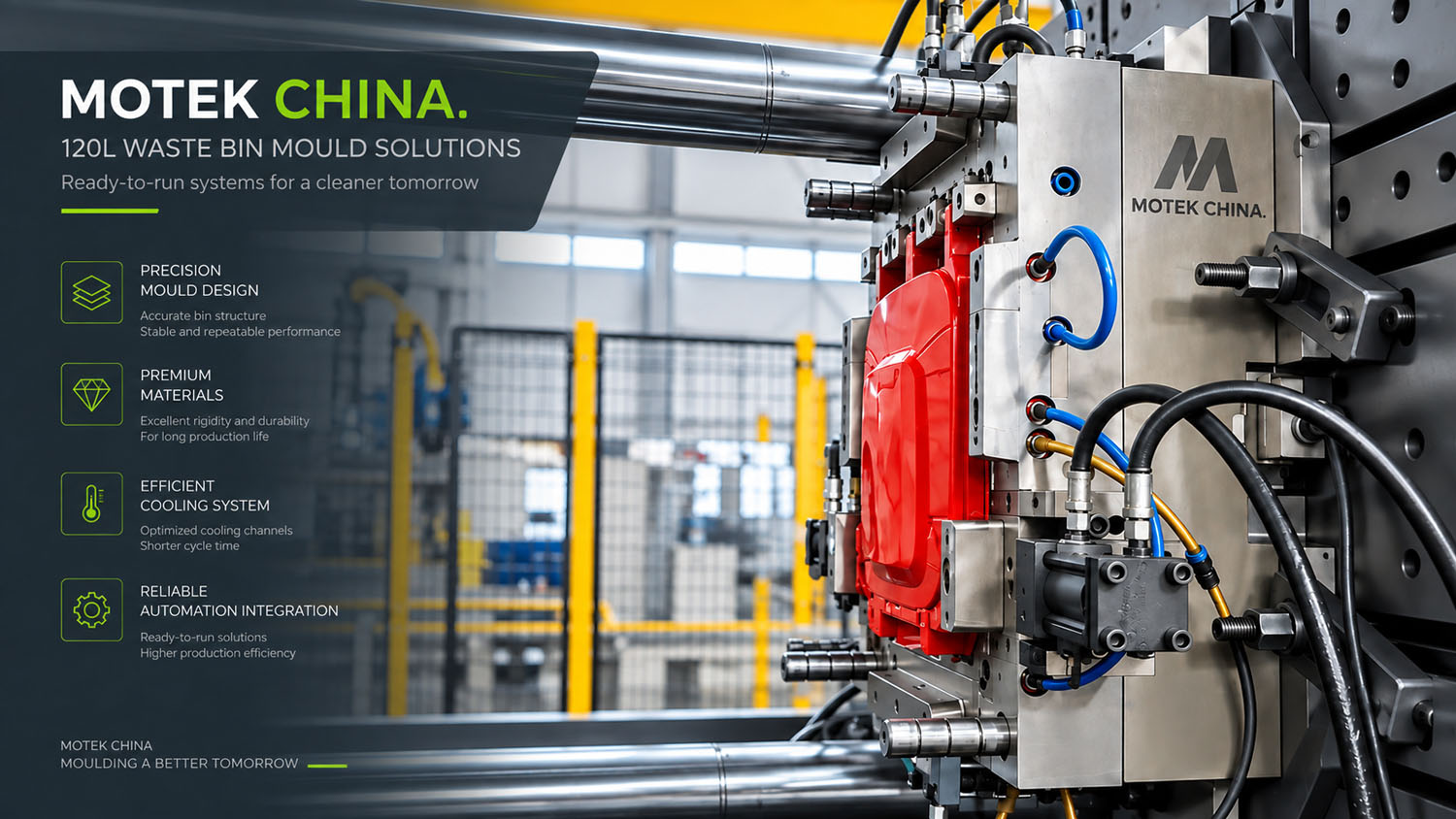
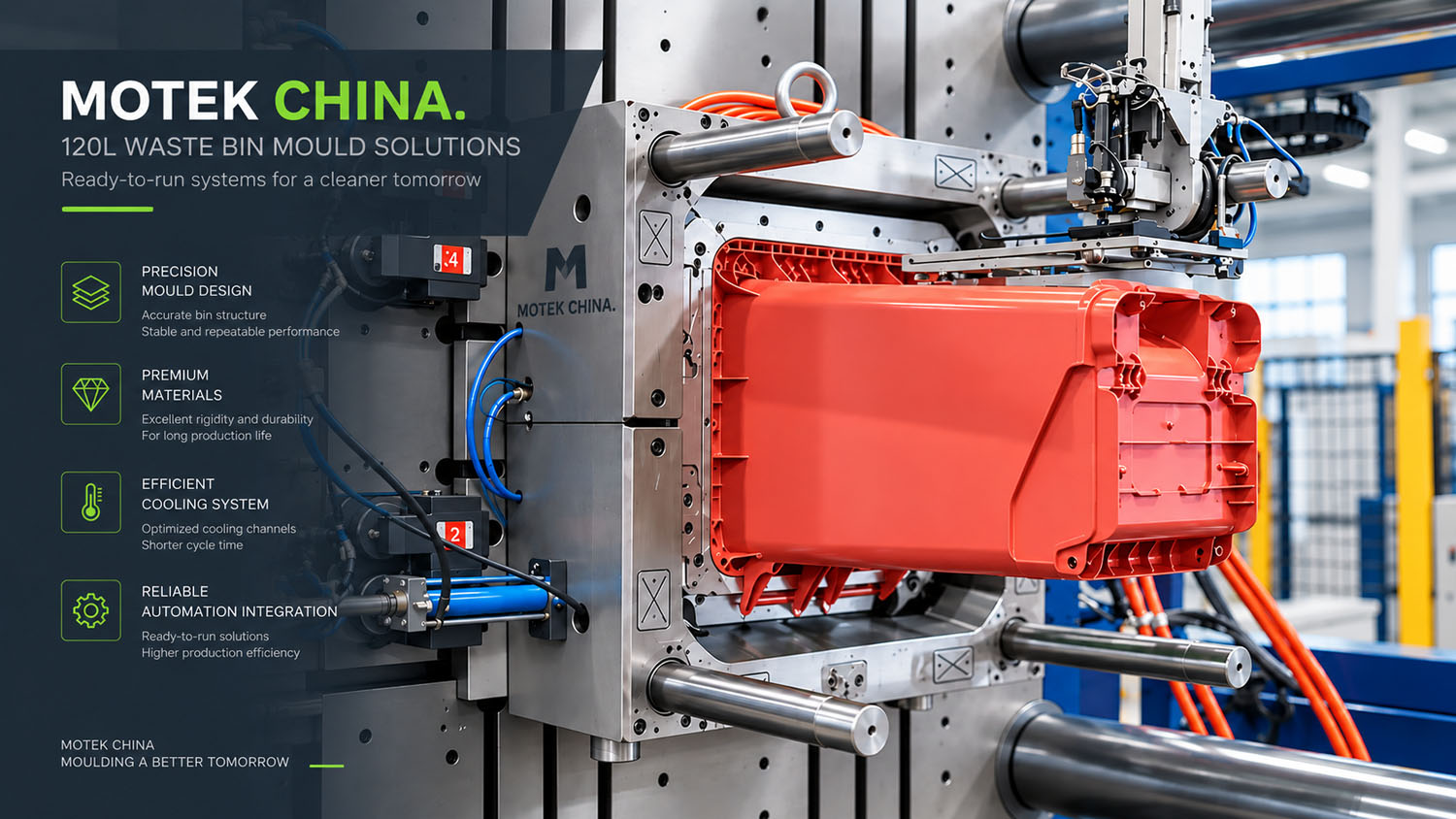
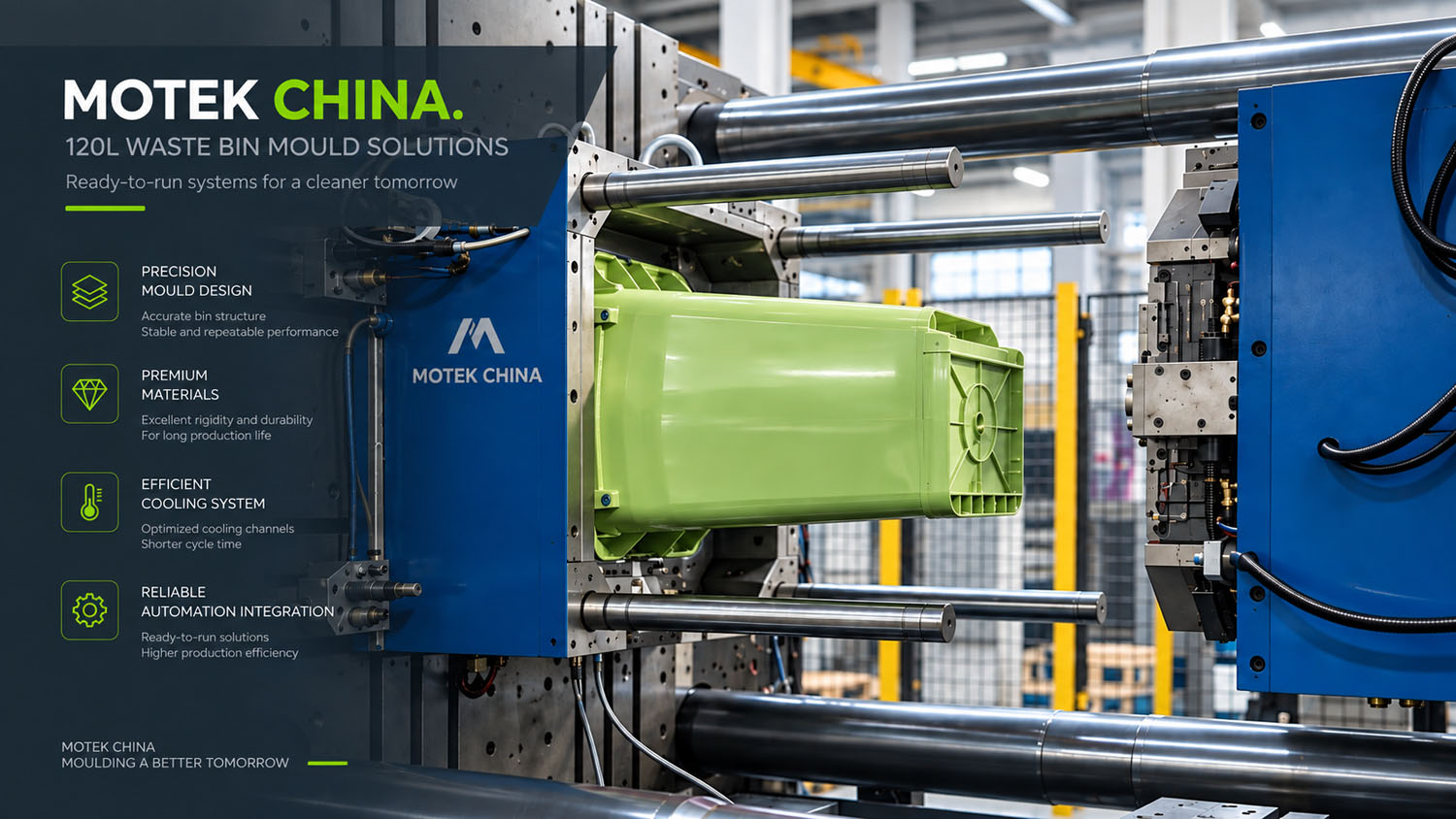
Motek introduces dedicated injection molds for classic automatic flip-top trash cans. These products use sensor or mechanical triggers to open and close the lid automatically, avoiding hand contact with the bin body, and are widely used in home kitchens, bathrooms, offices, and commercial settings. Compared with standard lidded trash can molds, the core challenges of automatic flip-top trash can molds lie in precision fit between lid and body, forming accuracy of the flip hinge structure, and cooling and demolding efficiency of the deep-cavity body structure. Motek configures dedicated solutions around cavity layout, hinge forming, and cooling systems, helping customers achieve stable mass production of automatic flip-top trash cans.
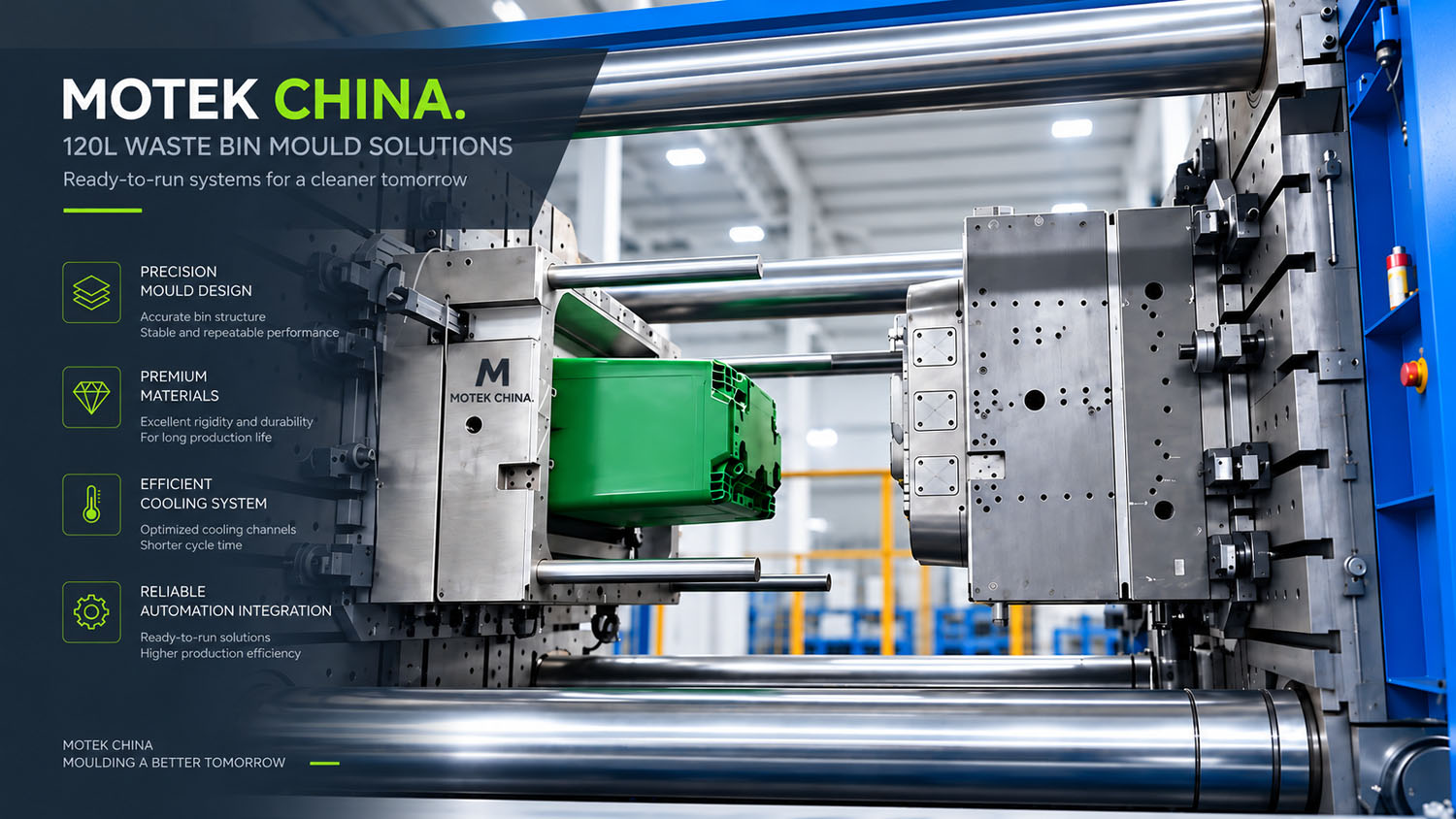
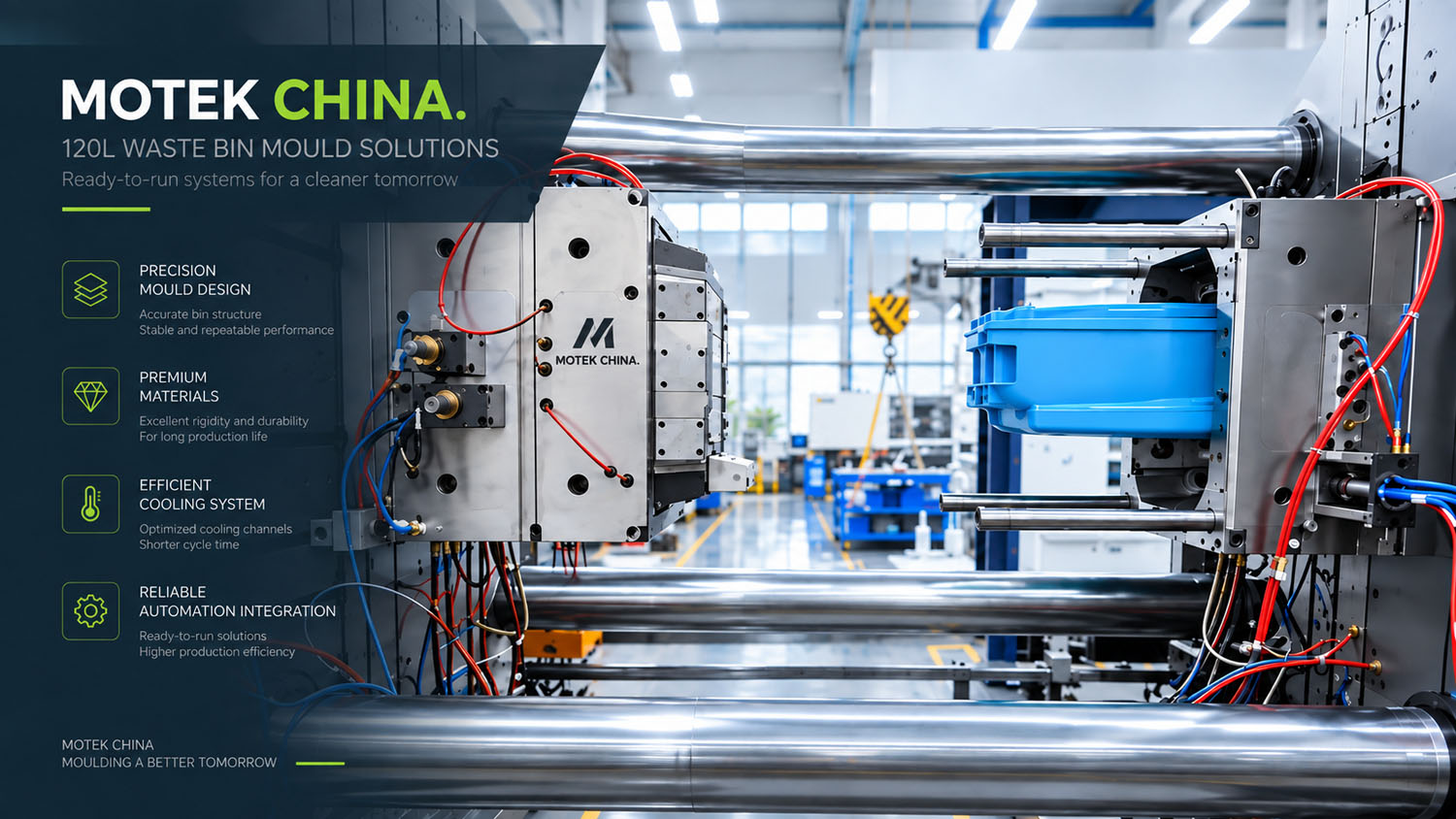
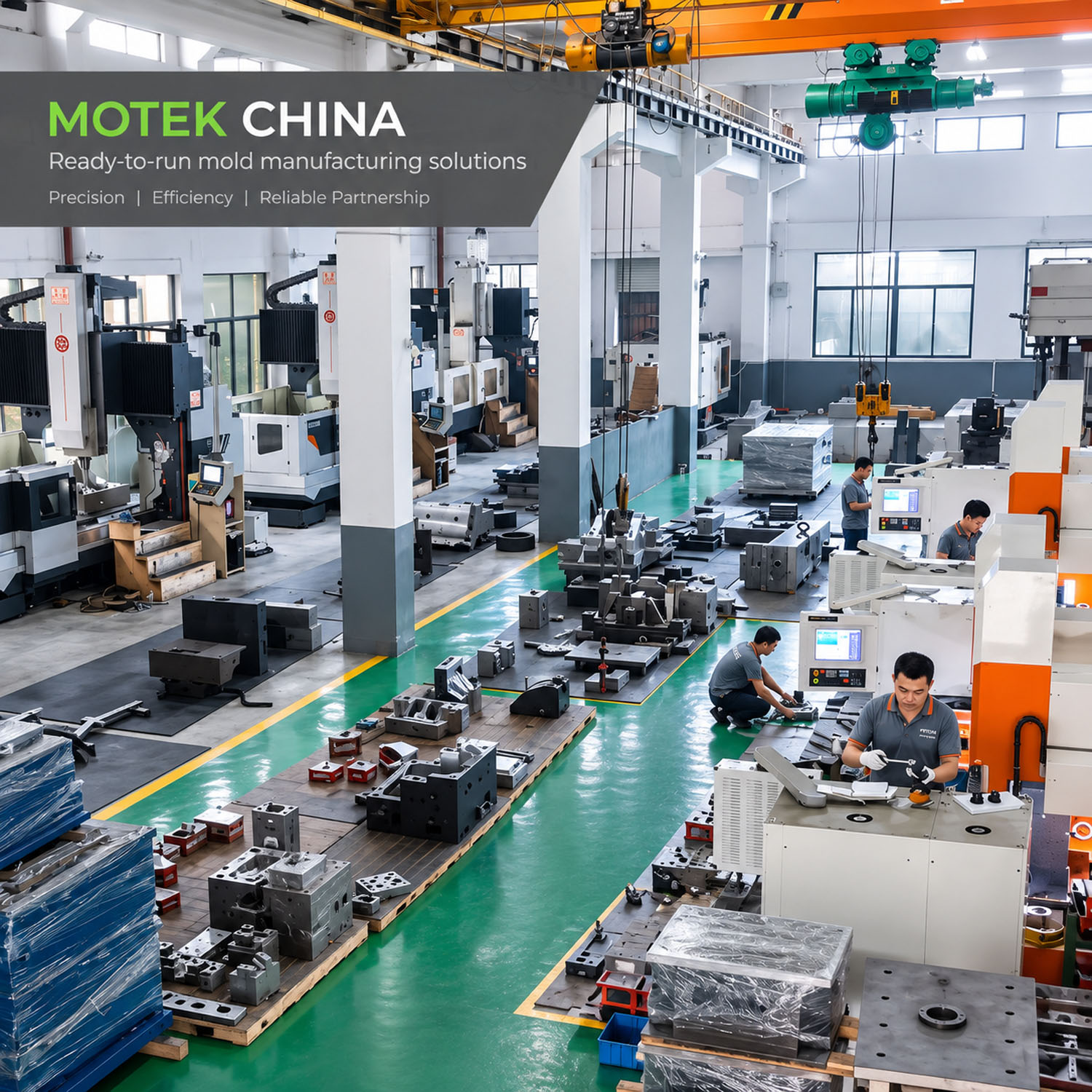
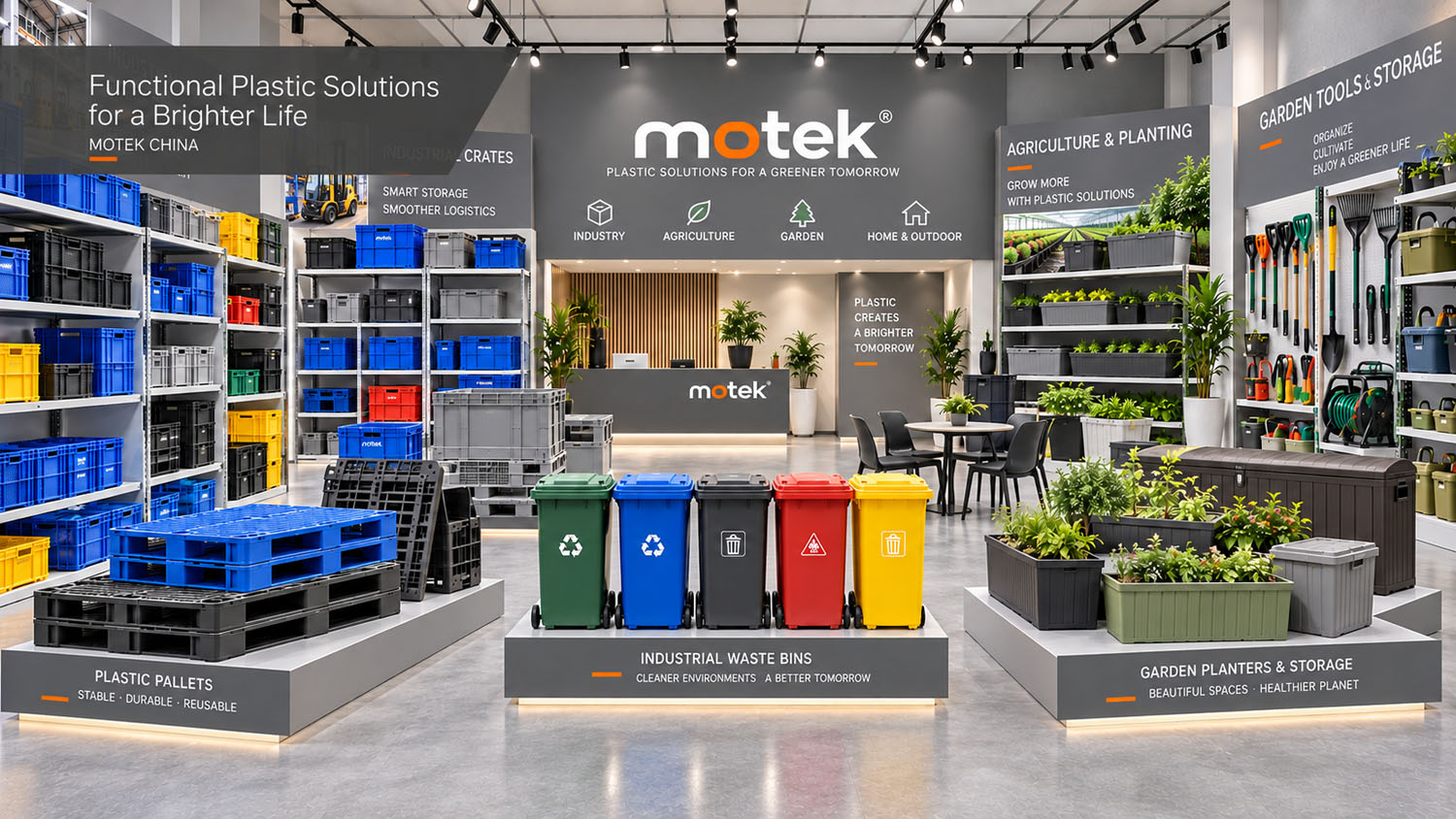

Core Specifications
| Item | Specification |
|---|---|
| Applicable Plastics | PP / HDPE (food-contact grade optional; PP commonly used for household applications) |
| Mold Material | P20 / 718H / NAK80 for cavity and core; 45# pre-hardened mold base >30 HRC |
| Number of Cavities | 1×1 for large parts; 1×2 or 1×4 evaluable for small parts |
| Mold Life | 300,000–500,000 shots (P20 configuration); up to 1,000,000 shots with 718H/nitriding |
| Cycle Time | 25–45 seconds (depending on body size and cooling design) |
| Mold Base Standard | LKM / HASCO / DME or customer-specified |
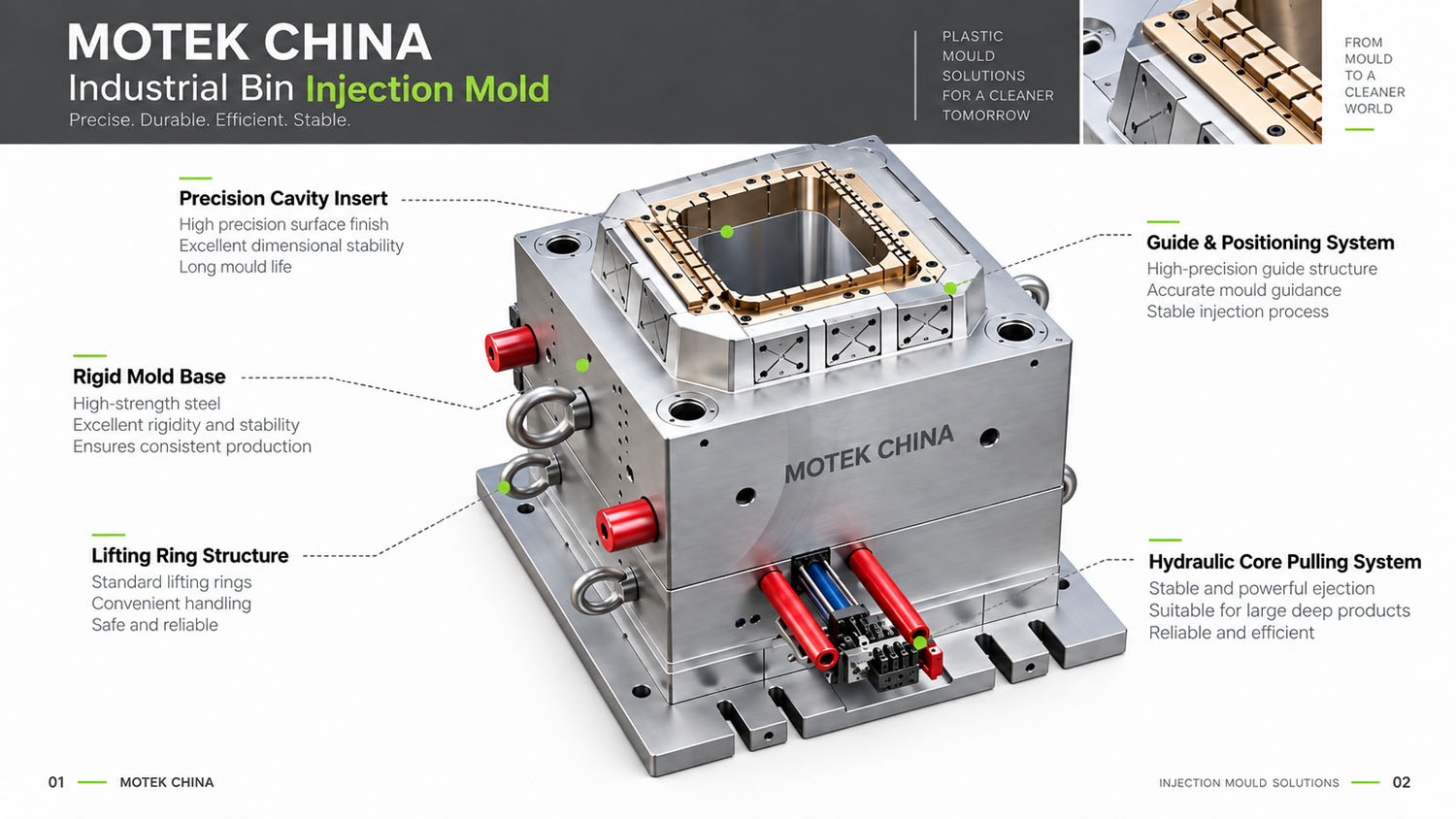
| Runner System | Hot runner recommended (reduces cold slugs and stress) / Cold runner optional |
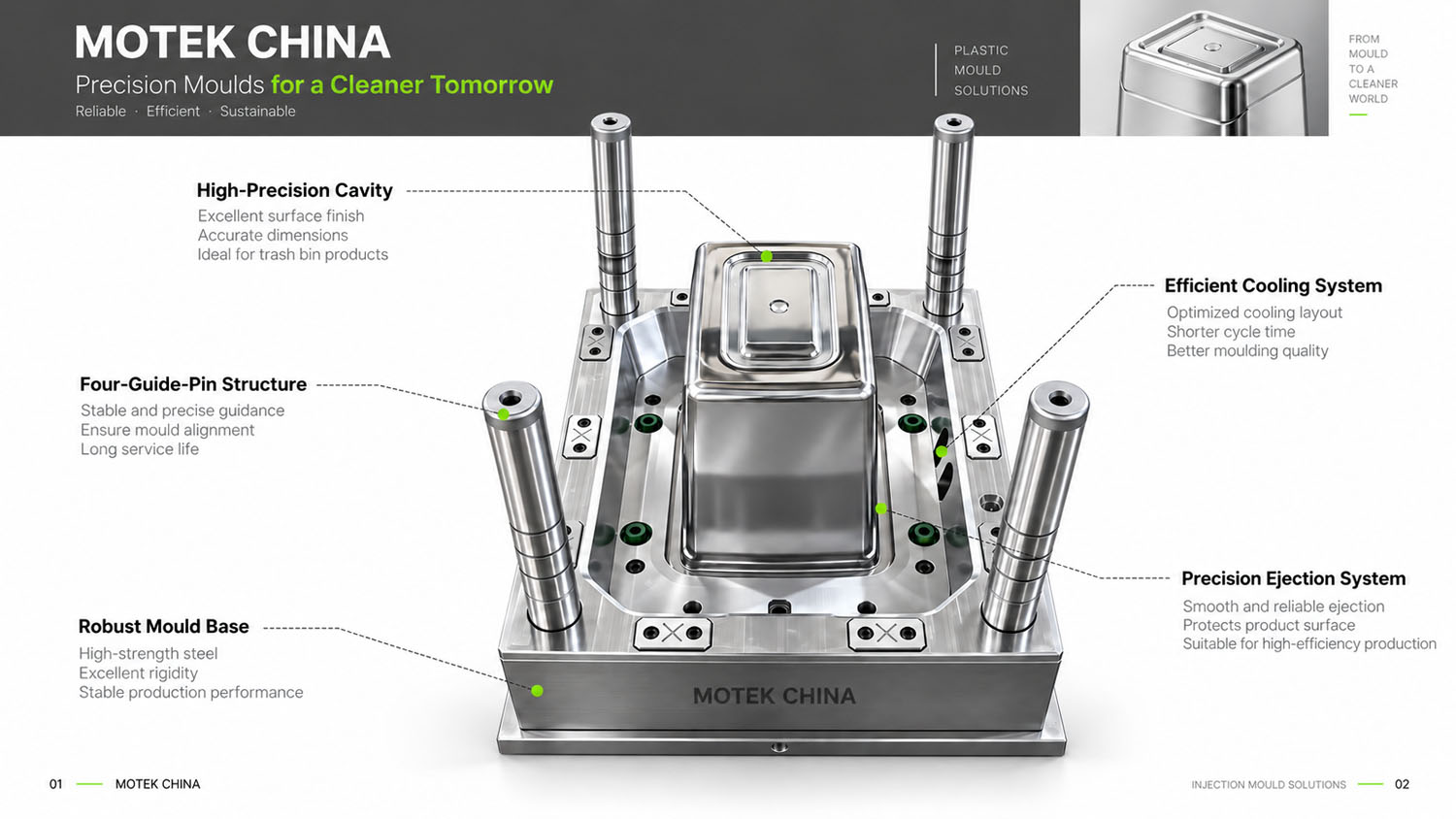
| Ejection Method | Stripper plate + ejector pins + air ejection composite ejection |
Product Features
Precision Fit Control Between Lid and Body.
The core function of automatic flip-top trash cans lies in the sealing fit and smooth opening/closing between lid and bin opening. Motek applies dedicated tolerance control to lid snap-fits, hinge positions, and mating surfaces at the bin opening, ensuring good sealing after closing and smooth opening/closing action, preventing lid misalignment or incomplete closure caused by fit deviations. For products with inner bucket structures, the mold also controls assembly clearance between inner and outer buckets.
Integral Forming of Flip Hinge Structure.
The lid of automatic flip-top trash cans is typically connected to the body via a hinge shaft. Motek forms hinge positions, shaft holes, and limit structures in the mold, ensuring flexible rotation without jamming after hinge shaft assembly. For flip-top designs using spring or damping mechanisms, the mold reserves mechanism mounting positions and ensures dimensional accuracy meets mechanism action requirements.
Cooling and Demolding Optimization for Deep-Cavity Bodies.
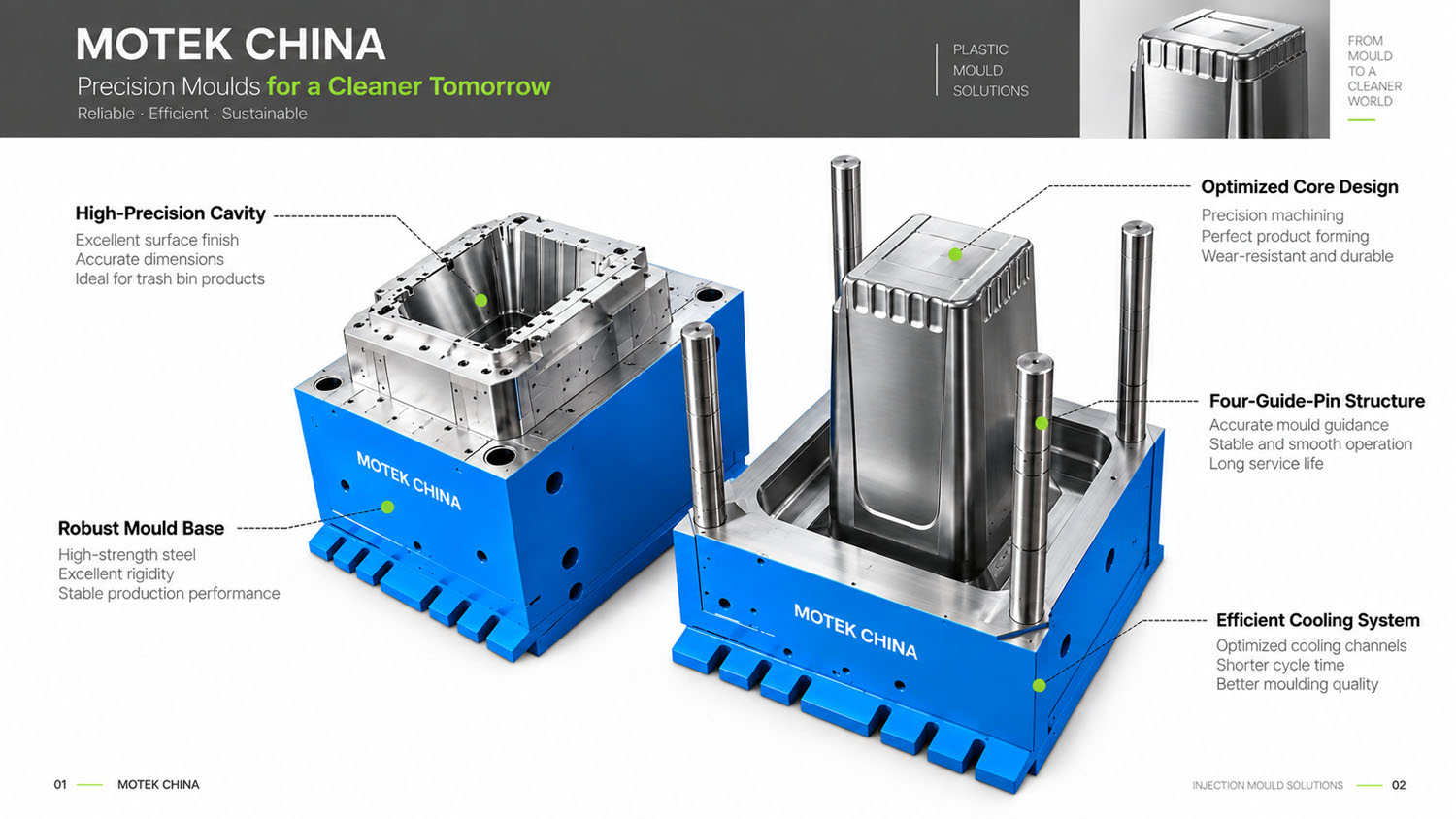
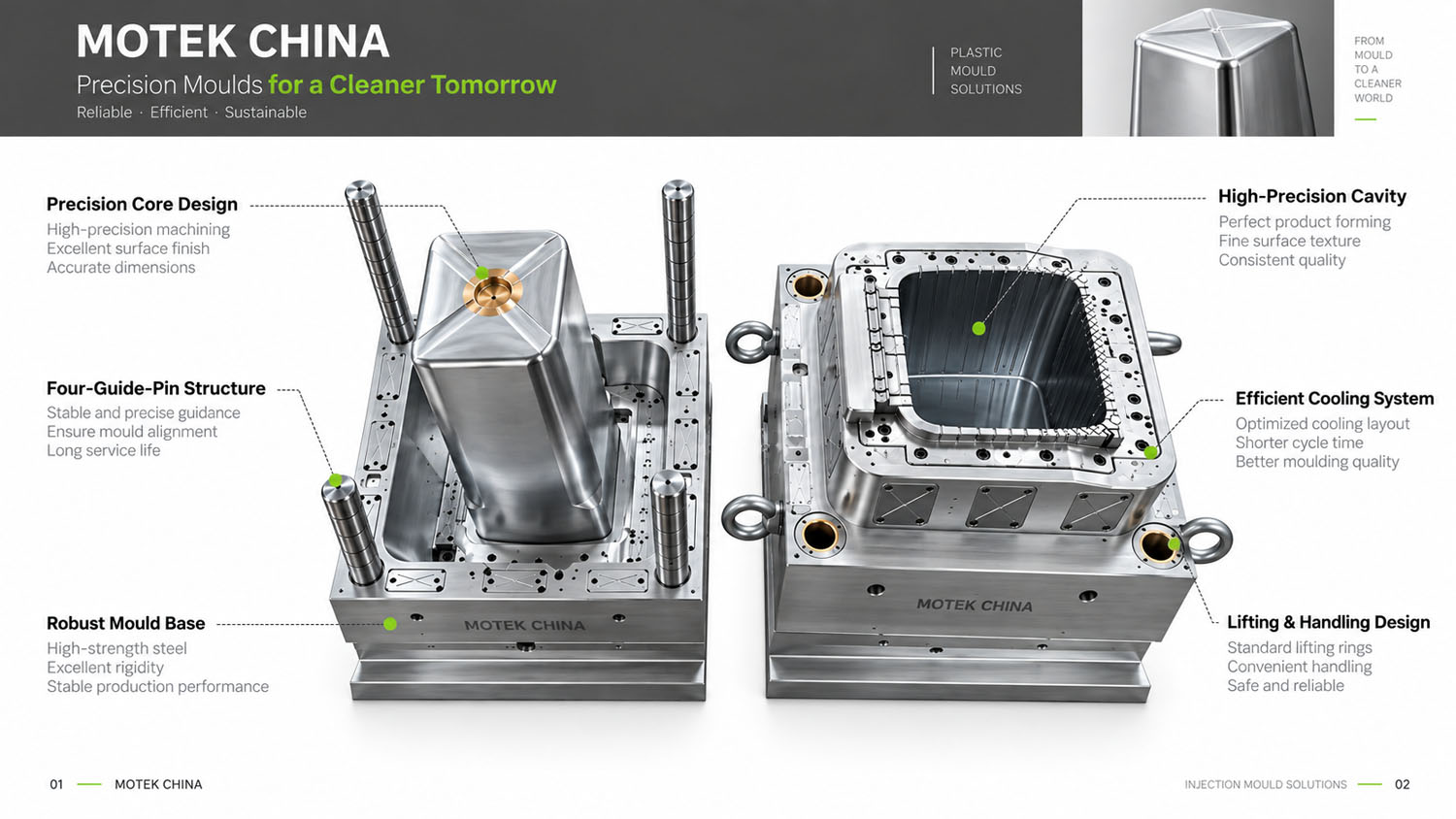
Trash can bodies are deep-cavity structures where uneven cooling can easily cause warpage or demolding difficulties. Motek adopts conformal cooling channels focusing on the bin bottom and side wall transition areas to equalize cooling rates across regions. Referencing mature industry solutions, the demolding system uses a stripper plate combined with ejector pins and air ejection for composite ejection, ensuring deep-cavity bodies release smoothly after constraints are fully released, preventing scratching or deformation.
Appearance Surface Quality and Surface Treatment.
Household automatic flip-top trash cans have certain appearance requirements, with body exterior walls requiring smooth, mark-free surfaces. Motek positions gates at the bin bottom or non-appearance surfaces, using hot runners or submarine gates to conceal gate marks. Cavity surfaces can receive mirror polishing (high-gloss models) or fine-texture etching (matte/scratch-resistant models) according to product positioning, with texture uniformity subject to consistency control.
Reserved Mounting Positions for Sensor/Mechanical Structures.
Automatic flip-top trash cans typically require sensor modules, motors, or mechanical transmission mechanisms. Motek reserves corresponding mounting positions and wiring spaces in mold design, confirming mechanism dimensional interfaces with customers to ensure smooth subsequent assembly. For purely mechanical flip-top products, focus is on forming accuracy of hinge positions and limit structures.
Cooling System and Production Efficiency.
Trash can molds are large-size, deep-cavity structure molds where cooling efficiency directly affects cycle time. Motek adopts optimally designed circulating cooling channels uniformly surrounding the forming areas, shortening cooling time while preventing product deformation caused by uneven cooling. For multi-cavity molds, runner balance is verified through mold flow analysis to ensure consistent product weight and dimensions across all cavities.
Applications
Motek classic automatic flip-top trash can molds are suitable for:
- Household sensor-type automatic flip-top trash cans (10L–20L)
- Bathroom/kitchen automatic flip-top trash cans
- Office/commercial automatic flip-top trash cans
- Mechanical foot-pedal/hand-press flip-top trash cans
- Automatic flip-top trash cans with inner bucket structures
Service Process
After the customer provides 3D product drawings, flip-top mechanism plans, and appearance requirements, Motek completes mold flow analysis (including deep cavity filling evaluation, cooling optimization, and lid fit verification) and mold structure confirmation; cavity steel and hot runner systems are procured according to agreed specifications; progress and key milestones are regularly reported during processing. During trial molding, emphasis is placed on verifying lid opening/closing smoothness, body demolding quality, and appearance surface finish, with samples provided for confirmation. Before shipment, molds undergo anti-rust treatment and action testing, with water circuit diagrams, hot runner wiring diagrams, consumable parts lists, and maintenance instructions provided. Technical support is available during the warranty period, with lifetime maintenance consultation.
Motek — From standard storage containers to automatic flip-top trash cans, providing reliable mold solutions for injection molding of daily plastic products.
