


Rattan-Weave Plastic Armless Chair Mold — Product Introduction (Motek Furniture Mold Series)
Rattan-Weave Plastic Armless Chair Mold — Product Introduction (Motek Furniture Mold Series)
Product Positioning
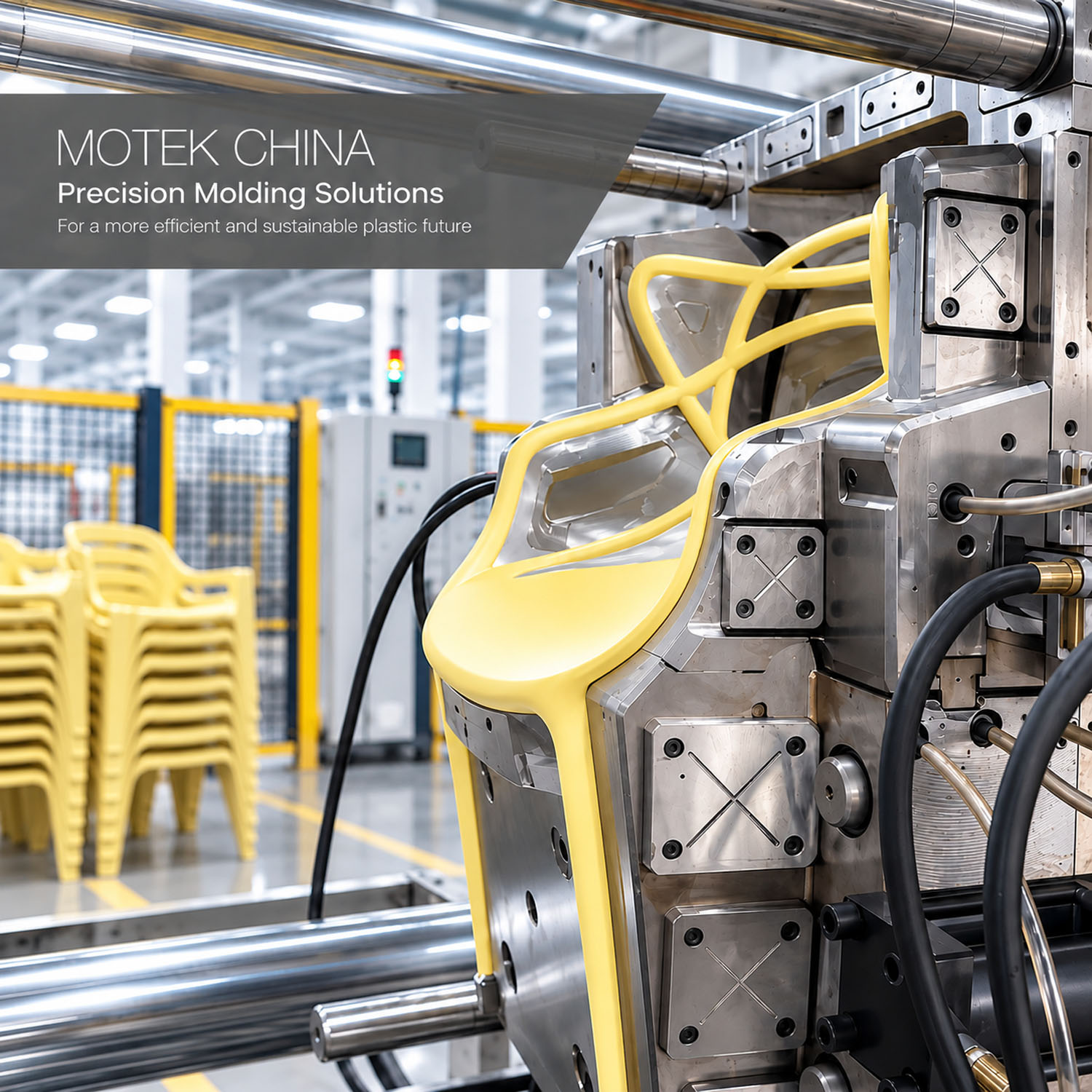
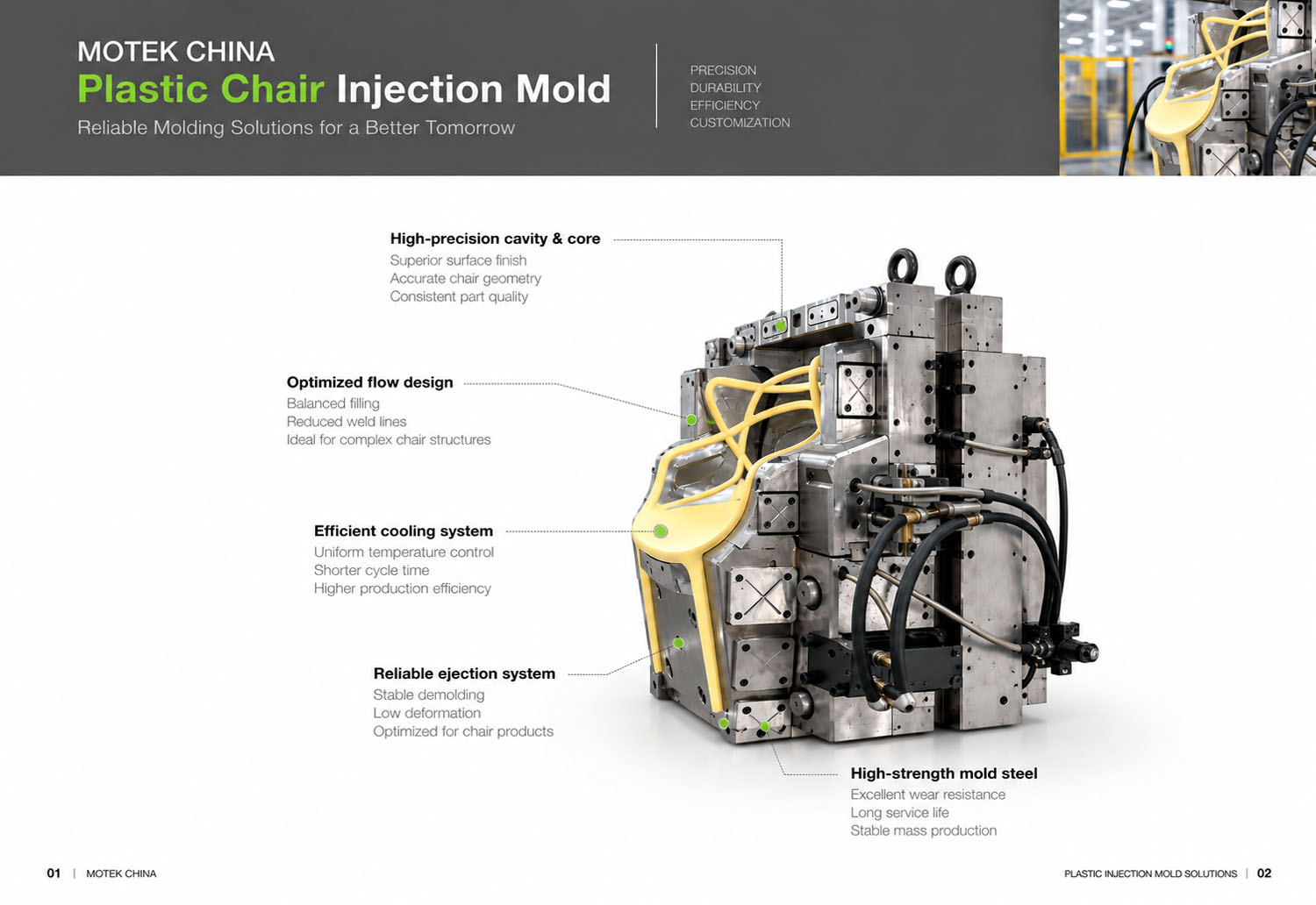
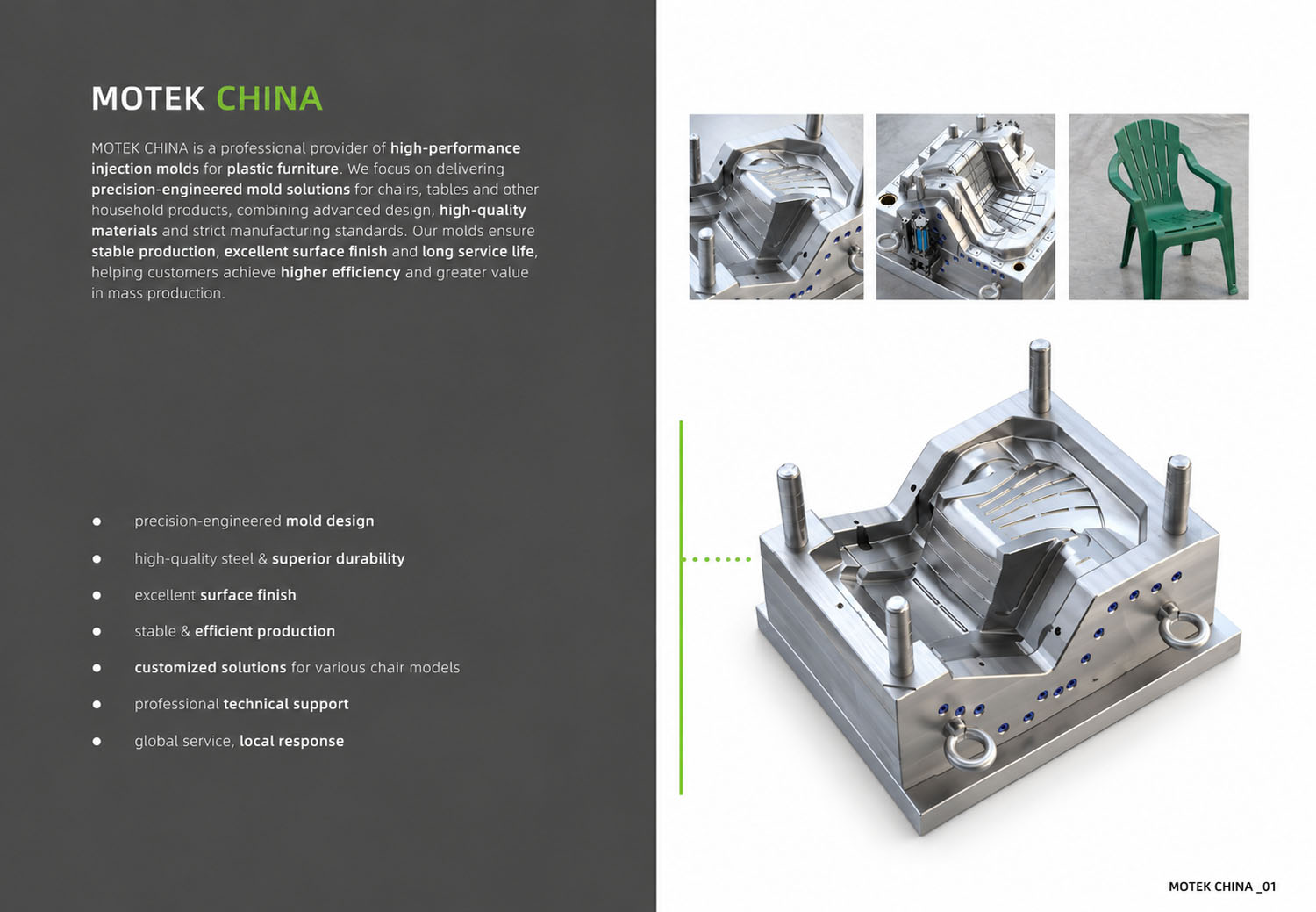
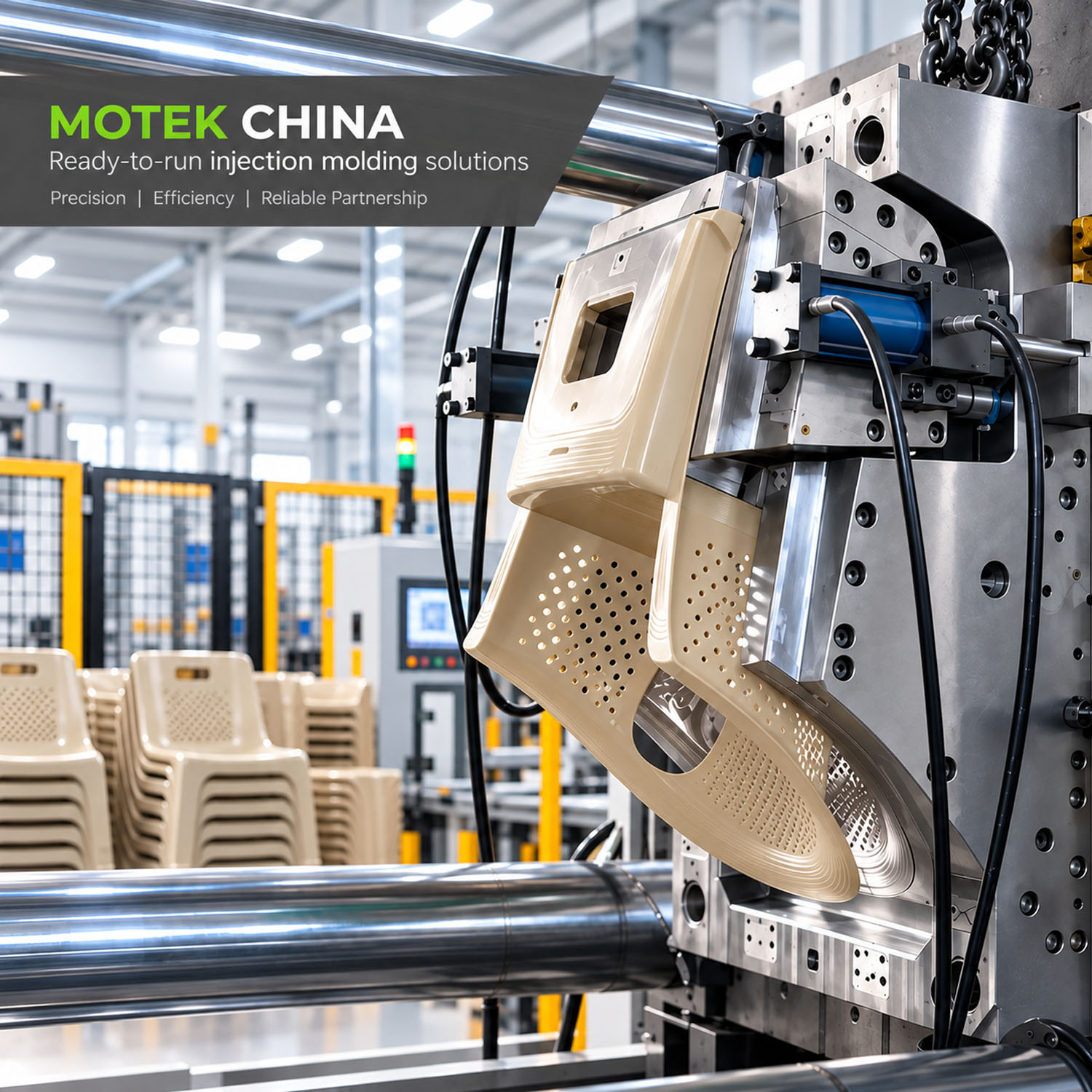
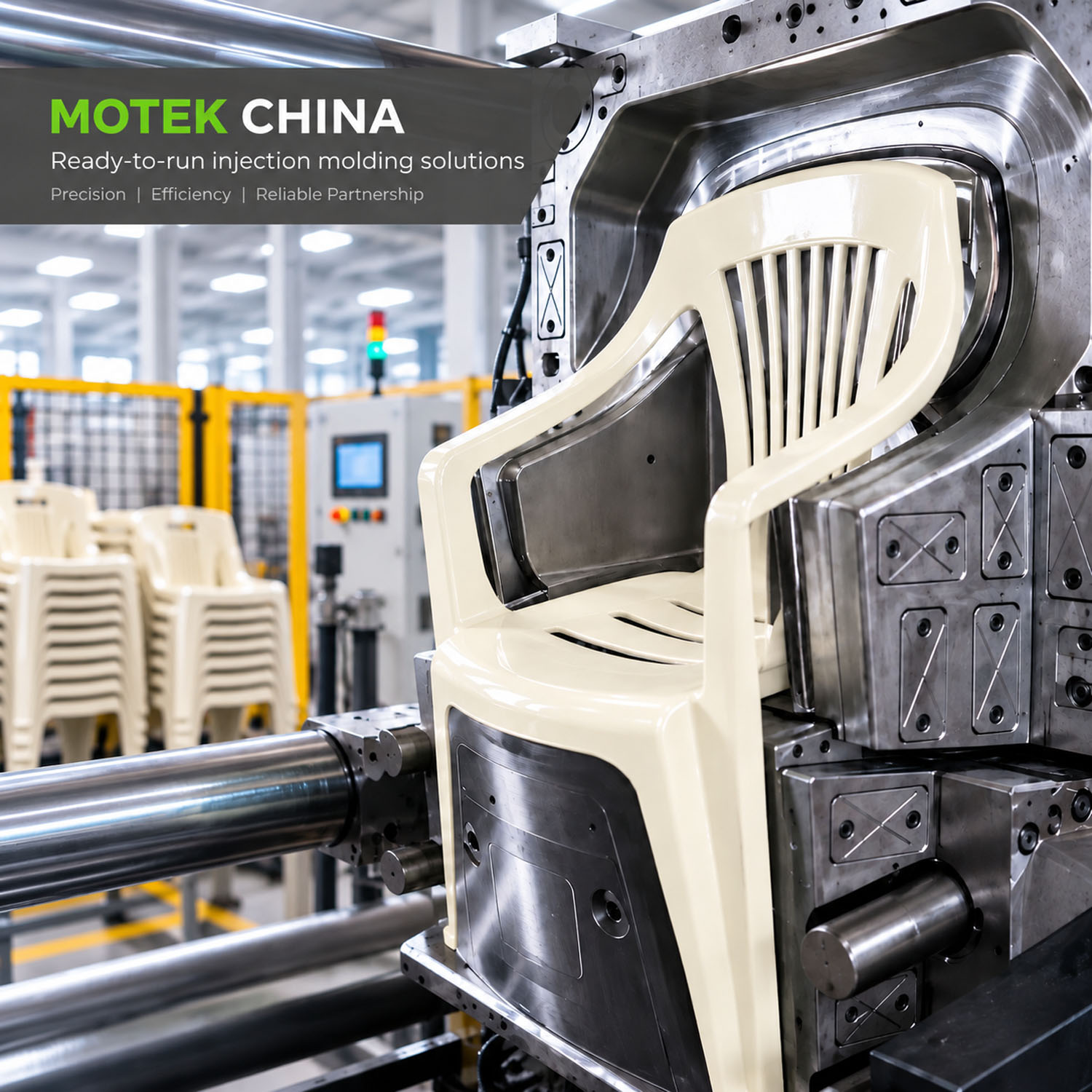
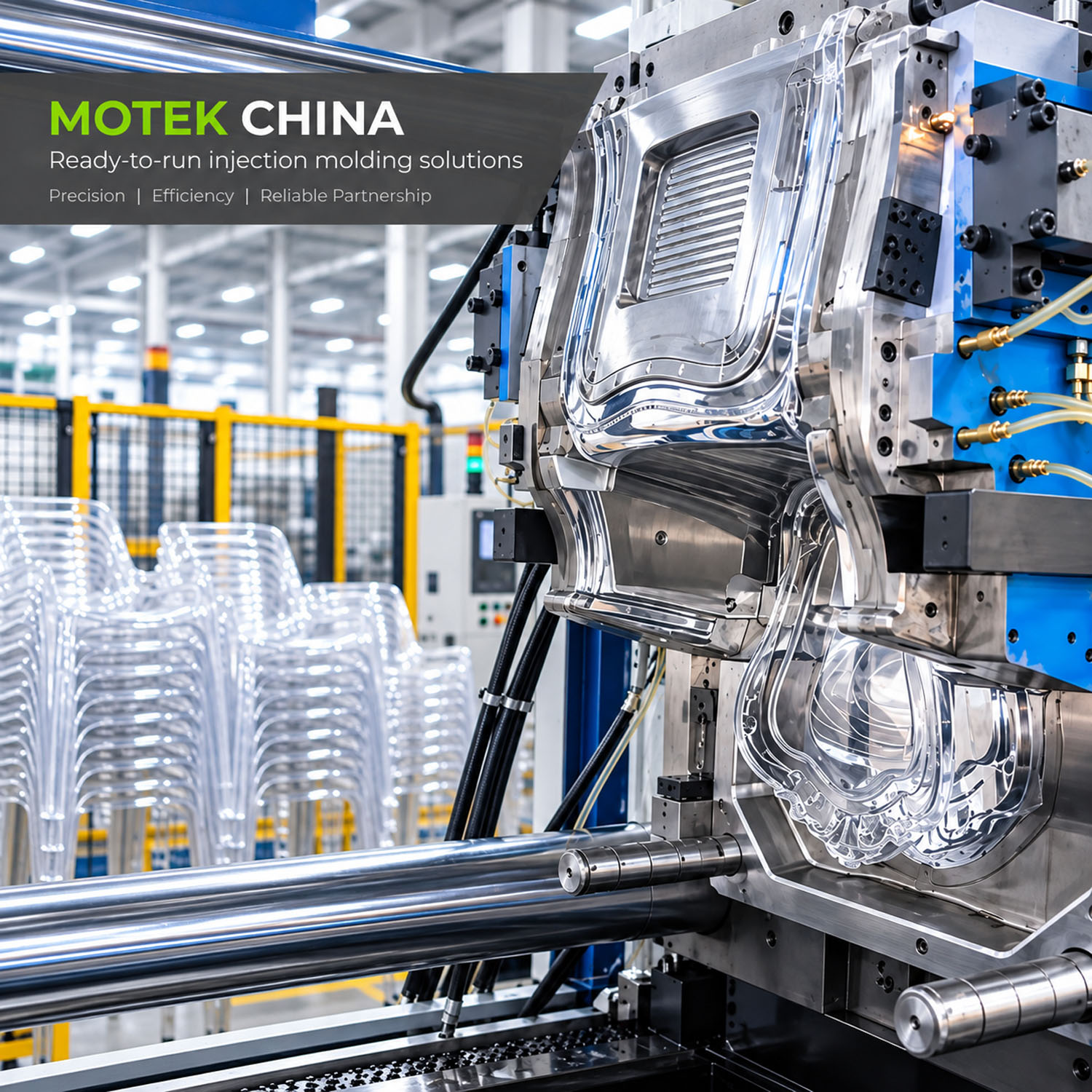
Motek introduces dedicated injection molds for rattan-weave plastic armless chairs used in restaurants, courtyards, and leisure settings. The armless design gives the chair a fully open ring structure—visually clean and easy to stack and place side by side—while the rattan-weave appearance replicates the woven texture and three-dimensional layering of natural rattan through injection molded components. The core challenges in mold development lie in precise replication of rattan-weave textures with demolding scratch protection, demolding mechanics design for the armless open structure, and load-bearing and stacking stability under high-frequency use. Motek configures dedicated solutions around texture etching processes, slider demolding mechanisms, and balanced ejection systems, helping customers achieve stable mass production of rattan-weave armless chairs.
Core Specifications
| Item | Specification |
|---|---|
| Applicable Plastics | PP / PE (PP+GF reinforced optional for imitation rattan parts, balancing texture and load-bearing) |
| Mold Material | S136 / 1.2316 corrosion-resistant steel recommended for textured areas; P20/718H/2738 for cavity and core |
| Number of Cavities | Single cavity primarily; 1×2 evaluable for small specifications |
| Mold Life | 500,000–1,000,000 shots |
| Cycle Time | 35–55 seconds (depending on chair type and cooling design) |
| Texture Treatment | Imitation rattan weave texture etching (depth customized per customer samples) |
| Surface Treatment | Anti-scratch coating on textured areas (optional); nitriding/surface hardening treatment for sliders and inserts |
| Demolding Method | Sliders first out + balanced ejector block/pin ejection |
Product Features
Precise Replication of Imitation Rattan Textures with Demolding Scratch Protection.
The quality of rattan-weave appearance depends on the three-dimensionality and continuity of the texture. Motek uses EDM etching processes to reproduce the warp-and-weft interweaving and relief layers of the weave on cavity surfaces. S136 or 1.2316 corrosion-resistant steels are selected for textured areas to ensure clear details and long-term rust-free service. Imitation rattan textures are highly susceptible to scraping by mold walls during demolding. The mature industry approach is to apply nitriding or surface hardening treatment with anti-scratch coatings to moving components such as sliders and inserts, ensuring smooth movement without damaging the texture.
Demolding Mechanism Design for Armless Open Structures.
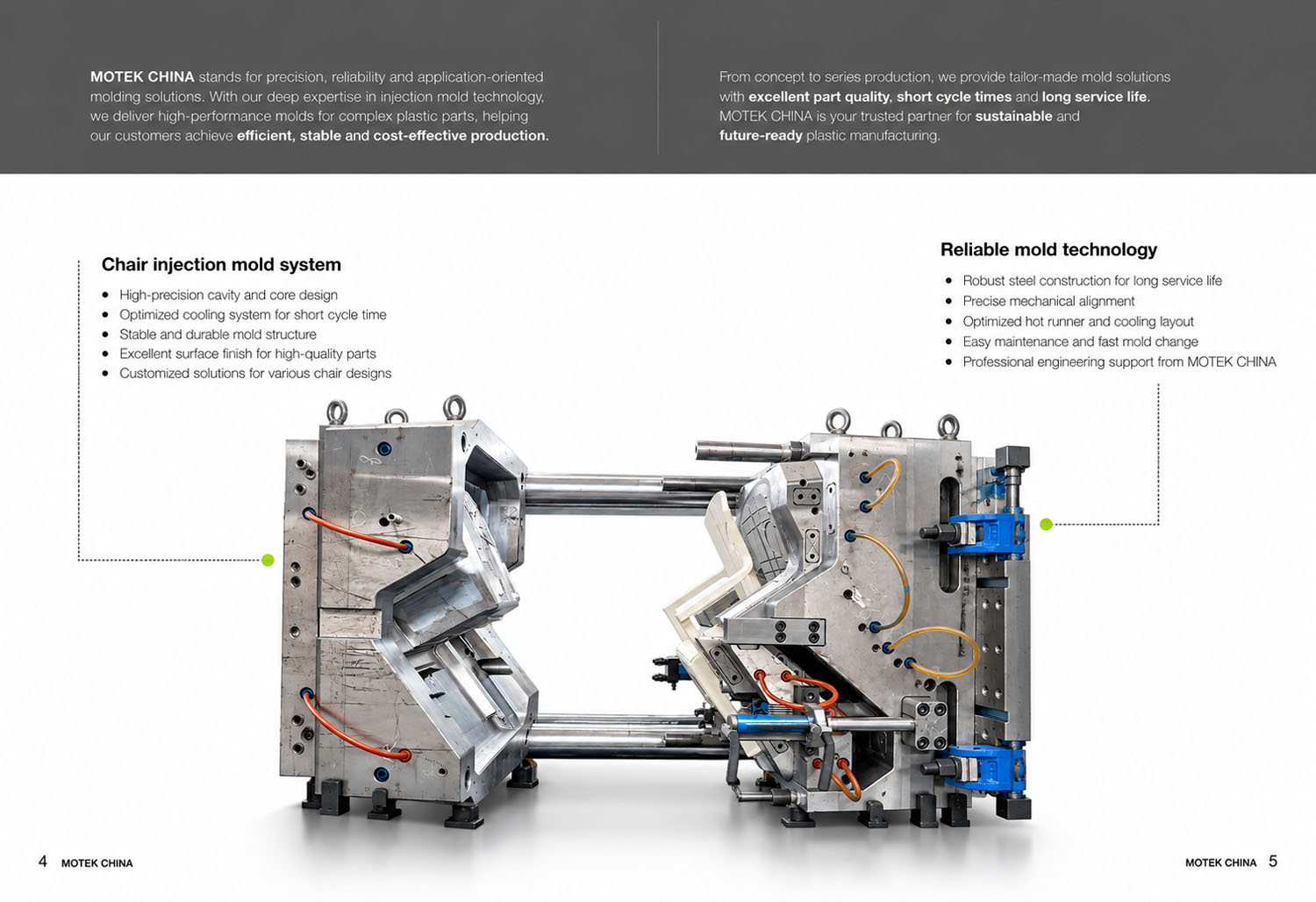
The seat of an armless chair is an open ring structure lacking the gripping points of traditional armrests or backrests, making the product prone to uneven stress, tearing, or deformation during demolding. Motek adopts a sliders-first-out + balanced ejector block ejection solution: after mold opening, sliders first move out to release constraints in the textured area, then ejection is performed through ejector blocks positioned at seat node locations, ensuring smooth product demolding. Slider stroke is equipped with limit switches for safety detection, preventing damage to sliders during ejection or mold closing.
Venting and Filling Control in Textured Areas.
Deep grooves and intersection nodes of rattan-weave textures are high-incidence areas for trapped gas. Motek provides micro venting inserts or vent grooves at mold positions corresponding to texture dead corners, preventing incomplete texture formation or burning caused by trapped gas. Mold flow analysis is used to evaluate melt filling paths in woven texture areas, with gate positions reasonably selected (such as hot runner large gates set on non-appearance surfaces at the chair bottom) to reduce the impact of weld lines on texture continuity.
Structural Reinforcement and Stacking Design for High-Frequency Use Scenarios.
Restaurant and outdoor settings require chairs with sufficient load-bearing capacity and stacking stability. Motek optimizes wall thickness transitions and reinforcement rib layout at load-bearing areas such as chair legs and seat front edges to avoid stress concentration. Stacking position angles and spacing are design-verified to ensure stable stacking without tipping and smooth retrieval when multiple chairs are stacked. For materials, PP+GF reinforced compounds can be selected to enhance load-bearing capacity while maintaining rattan texture quality.
Outdoor Weathering-Oriented Steel and Surface Treatment.
Outdoor rattan-weave chairs are exposed long-term to UV and temperature fluctuations. S136 or 1.2316 with good corrosion resistance is recommended for cavity steel, with polishing treatment in textured areas balancing demolding smoothness and texture clarity. Non-textured areas can receive fine-texture or matte treatment as required to enhance surface wear resistance and scratch resistance while maintaining texture coordination with textured areas.
Applications
Motek rattan-weave plastic armless chair molds are suitable for:
- Restaurant/cafe rattan-weave armless dining chairs
- Courtyard/terrace imitation rattan leisure chairs
- Stackable rattan-weave armless chairs
- Commercial food service rattan-weave chairs (seat + backrest integrated or split)
- Outdoor rattan-weave bar chairs/side chairs
Service Process
After the customer provides 3D product drawings and rattan texture samples or reference images, Motek completes texture etching plan confirmation, mold flow analysis (including textured area filling and venting evaluation), and mold structure design; cavity steel is selected per texture and weathering requirements, with texture samples provided for customer confirmation before etching; during trial molding, Motek cooperates with the customer on texture appearance confirmation, demolding mechanism operation testing, and stacking verification, providing samples for final sign-off. Before shipment, molds undergo anti-rust treatment and action testing, with water circuit diagrams, consumable parts lists, and texture maintenance notes provided. Technical support is available during the warranty period, with lifetime maintenance consultation.
Motek — From rattan-weave steel-tube chairs to all-plastic armless chairs, providing reliable mold solutions for injection-molded texture forming and structural demolding of restaurant and outdoor furniture.
