


Household Three-Door Multi-Layer Clothing Storage Cabinet Mold — Product Introduction (Motek Furniture Mold Series)
Household Three-Door Multi-Layer Clothing Storage Cabinet Mold — Product Introduction (Motek Furniture Mold Series)
Product Positioning
Motek introduces dedicated injection mold solutions for household three-door multi-layer clothing storage cabinets. These products feature three independent cabinet doors paired with multi-layer shelves, combining categorized clothing storage, dust protection, and space utilization—widely used in bedrooms, children's rooms, walk-in closets, and rental apartments. Compared with single-door or drawer-type storage cabinets, the core challenges of three-door storage cabinet molds lie in dimensional consistency and hinge fit precision across the three door panels, load-bearing formation of multi-layer shelf support positions, and structural stability of the large cabinet frame in assembled state. Motek configures dedicated solutions around door hinge structures, shelf support systems, and cooling layout, helping customers achieve stable mass production of three-door storage cabinets.
Core Specifications
| Item | Specification |
|---|---|
| Applicable Plastics | PP (food-grade/low-odor optional) / ABS (high-gloss appearance) / HDPE (high rigidity) |
| Mold Material | P20 / 718H / NAK80 for cavity and core; 718H / 2316 recommended for door hinge inserts |
| Number of Cavities | 1×1 for cabinet frame; 1×3 evaluable for door panels (three same-size doors sharing one mold) or 1×1 with interchangeable inserts |
| Mold Life | 300,000–800,000 shots (depending on steel selection and maintenance) |
| Cycle Time | 30–60 seconds (thin-wall door panels can reach 30–40 seconds; cabinet frame depends on size and cooling design) |
| Mold Base Standard | LKM / HASCO / DME or customer-specified |
| Runner System | Hot runner recommended (reduces cold slugs and stress) / Cold runner optional |
| Ejection Method | Ejector pins + stripper plate composite ejection; air-blow assistance for deep-cavity cabinet bodies |
| Door Structure | Hinge positions/snap-fits/magnetic catch mounting positions integrally formed, with dedicated tolerance control |
Product Features
Dimensional Consistency and Interchangeability Control of Three Door Panels.
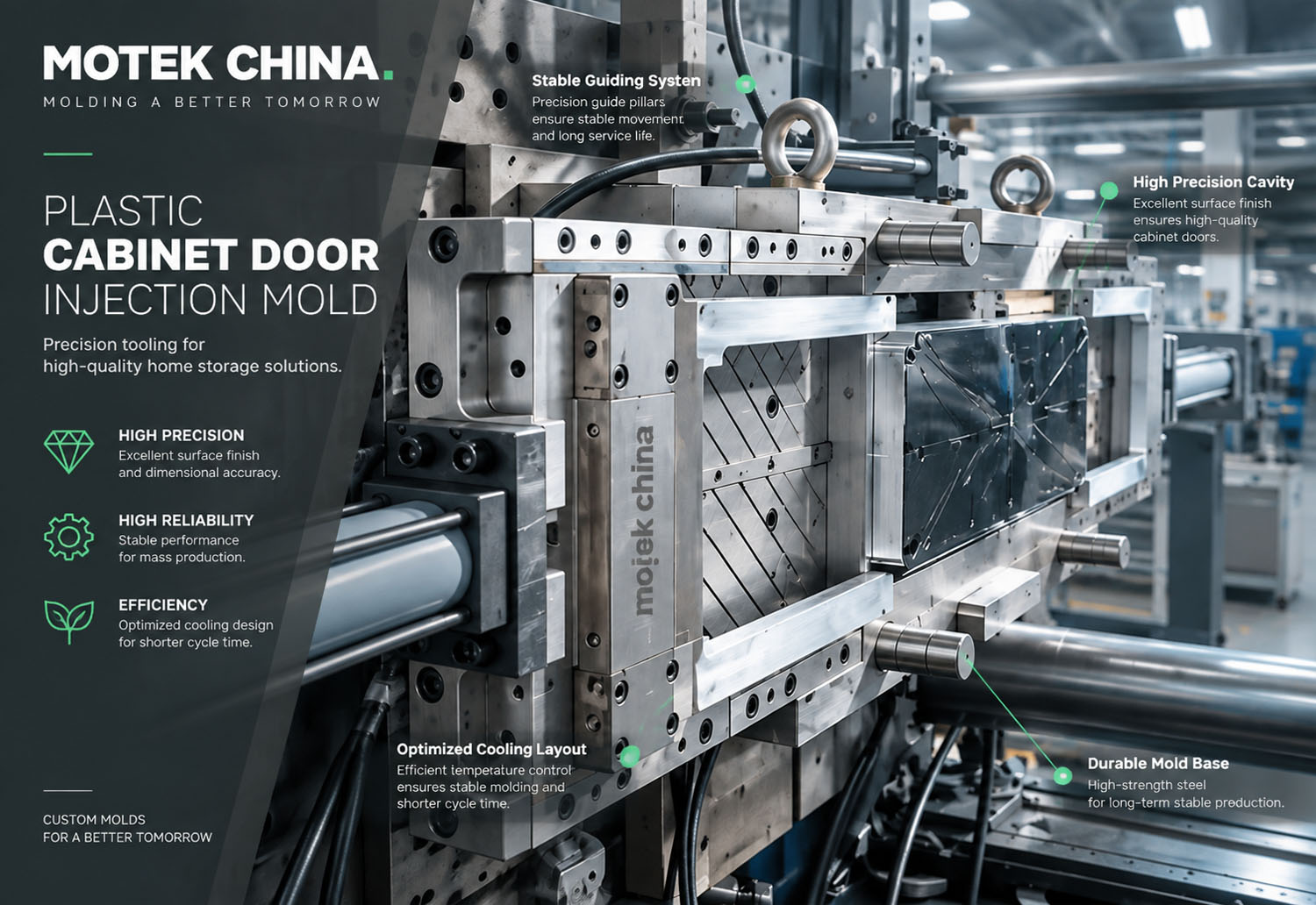
The three door panels of a three-door storage cabinet must be interchangeable, and their fit clearances with the cabinet frame must be uniform. Motek produces same-size door panels using multi-cavity molds or shared mold base + interchangeable insert solutions, optimizing runner balance across cavities through mold flow analysis to ensure consistent length, width, thickness, and hinge position dimensions across all cavity positions. Door-to-cabinet fit clearances receive dedicated tolerance control, preventing door wobbling from excessive clearance or opening/closing jamming from insufficient clearance.
Integral Forming of Door Hinge Structures.
Cabinet doors of three-door storage cabinets are typically connected to the cabinet body via hinge shafts, snap-fits, or slot-in structures. Motek integrally forms hinge mounting positions, shaft holes, and limit structures in the mold, ensuring flexible door rotation, smooth opening/closing, and accurate positioning upon closing after assembly. For doors with magnetic catch closure designs, the mold reserves magnetic catch mounting positions and controls dimensional accuracy to meet magnetic catch assembly requirements. Hinge area steel requires sufficient wear resistance; sliders and inserts are recommended in 718H or 2316 with nitriding treatment.
Load-Bearing Formation of Multi-Layer Shelf Support Positions.
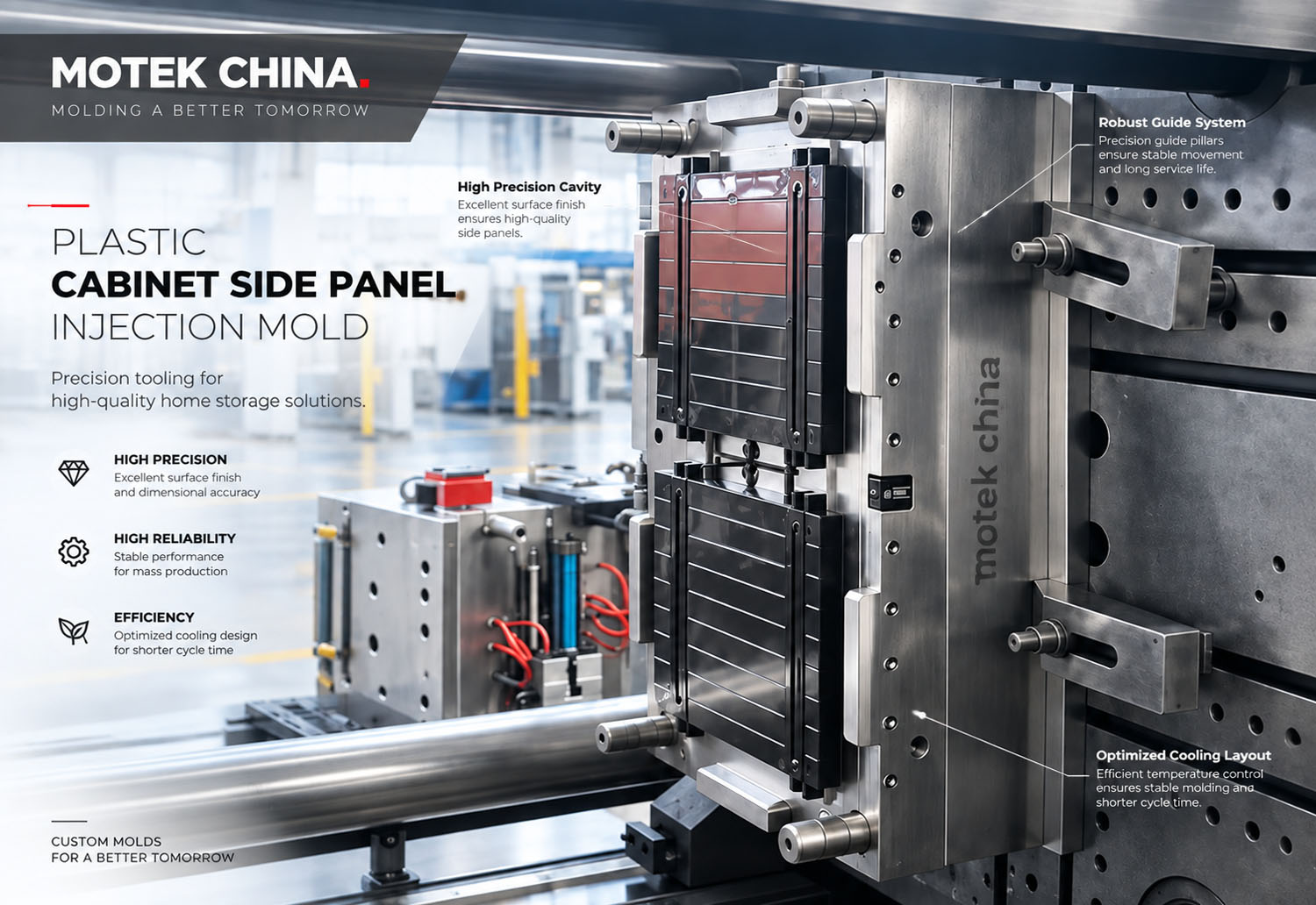
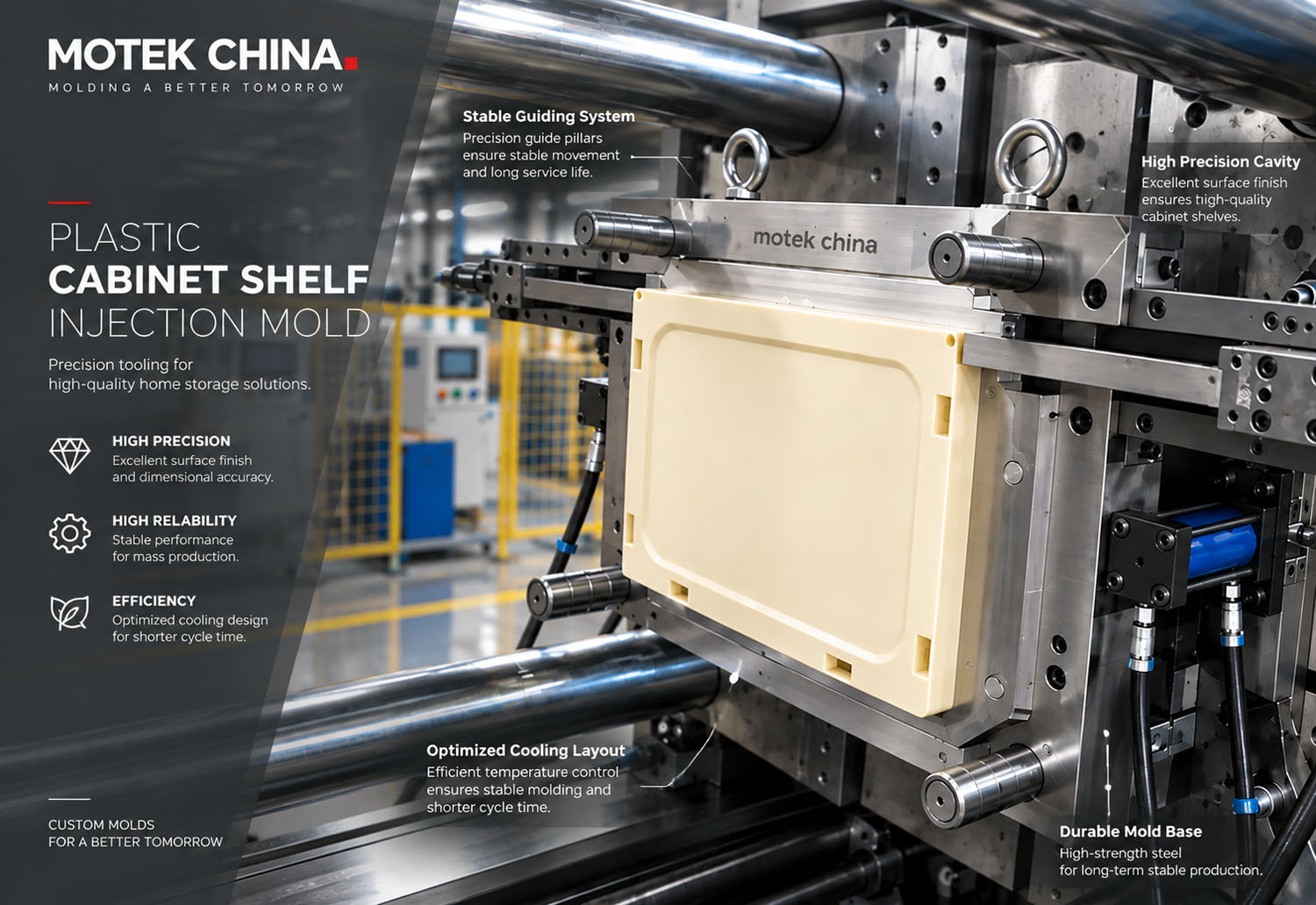
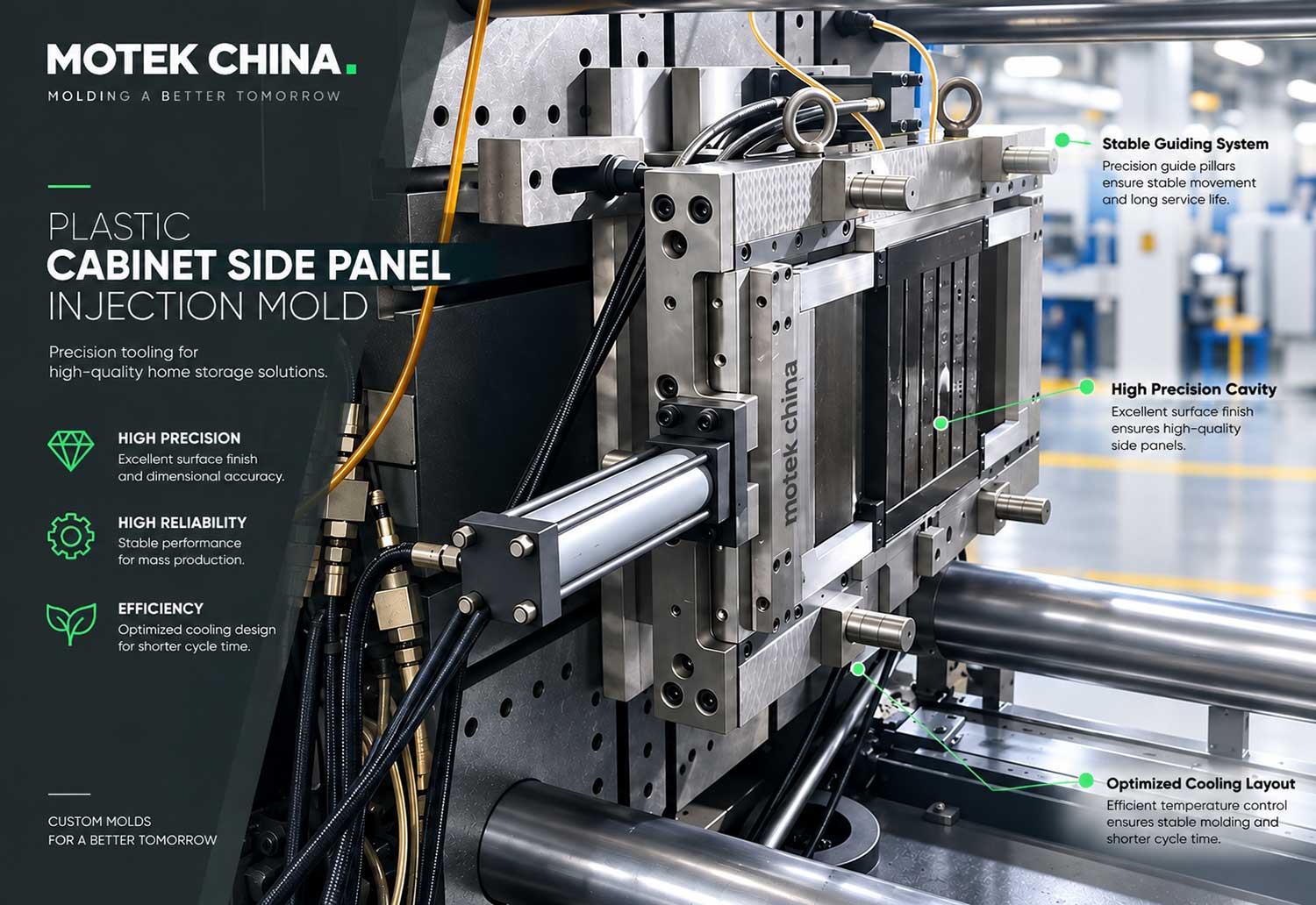
Storage cabinets must bear the weight of multi-layer clothing, with shelf support positions being critical load-bearing areas. Motek forms shelf support ribs and reinforcement rib networks on the inner side of cabinet side panels, with rib thickness controlled at 50%–60% of main wall thickness to enhance rigidity while avoiding sink marks on appearance surfaces. Shelf support spacing is design-verified to accommodate standard shelf thickness and height adjustment requirements. Mold flow analysis evaluates filling completeness at support position areas, preventing weak points caused by trapped gas.
Structural Stability Assurance of the Cabinet Frame.
The cabinet frame of a three-door storage cabinet must remain square and undistorted in assembled state. Motek applies dedicated tolerance control to the assembly interfaces of cabinet side panels, top panels, and bottom panels, ensuring cabinet diagonal deviation is controlled within a reasonable range after assembly. Wall thickness transitions are optimized at the cabinet base and four corners to avoid stress concentration cracking under full load. For models requiring wall mounting, the mold can form wall-mounting holes or snap-fit positions.
Appearance Surface Quality and Surface Treatment.
As visible bedroom furniture, storage cabinets require clean, mark-free appearance surfaces. Motek positions gates at the cabinet bottom, back panel interior, or door panel reverse side—non-appearance areas—using hot runners or submarine gates to conceal gate marks. Cavity surfaces can receive mirror polishing (high-gloss models), fine-texture etching (matte/scratch-resistant models), or leather-grain treatment (fabric-grain/wood-grain imitation) according to product positioning, with texture uniformity subject to consistency control. Door panel surfaces can receive decorative texture or pattern etching to enhance product appearance quality.
Demolding Mechanism Optimized for Deep-Cavity Cabinet Bodies and Door Panels.
Both cabinet frames and door panels have deep-cavity or thin-wall structures prone to deformation or scratching from vacuum adhesion during demolding. Motek adopts a stripper plate with ejector pin composite ejection solution, with ejection points preferentially located in non-appearance areas, ensuring uniform ejection force distribution. For deep-cavity cabinet bodies, air-blow assistance can be coordinated to release vacuum adhesion. Door hinge positions, snap-fits, and other undercut features are released through sliders or lifters before ejection, preventing product damage.
Applications
Motek household three-door multi-layer clothing storage cabinet molds are suitable for:
- Bedroom three-door clothing storage cabinets
- Children's room three-door toy/clothing storage cabinets
- Walk-in closet multi-layer shelf storage cabinets
- Rental apartment/condo modular storage cabinets
- Balcony/utility room three-door storage cabinets
Service Process
After the customer provides 3D product drawings, door panel quantity and dimensions, shelf configuration, and appearance requirements, Motek completes mold flow analysis (including door panel consistency verification, shelf support load-bearing analysis, and cabinet assembly precision evaluation) and mold structure confirmation; cavity steel and hot runner systems are procured according to agreed specifications; progress and key milestones are regularly reported during processing. During trial molding, emphasis is placed on verifying door panel interchangeability, hinge opening/closing smoothness, shelf support load-bearing, and cabinet assembly squareness, with samples provided for confirmation. Before shipment, molds undergo anti-rust treatment and action testing, with water circuit diagrams, hot runner wiring diagrams, consumable parts lists, and maintenance instructions provided. Technical support is available during the warranty period, with lifetime maintenance consultation.
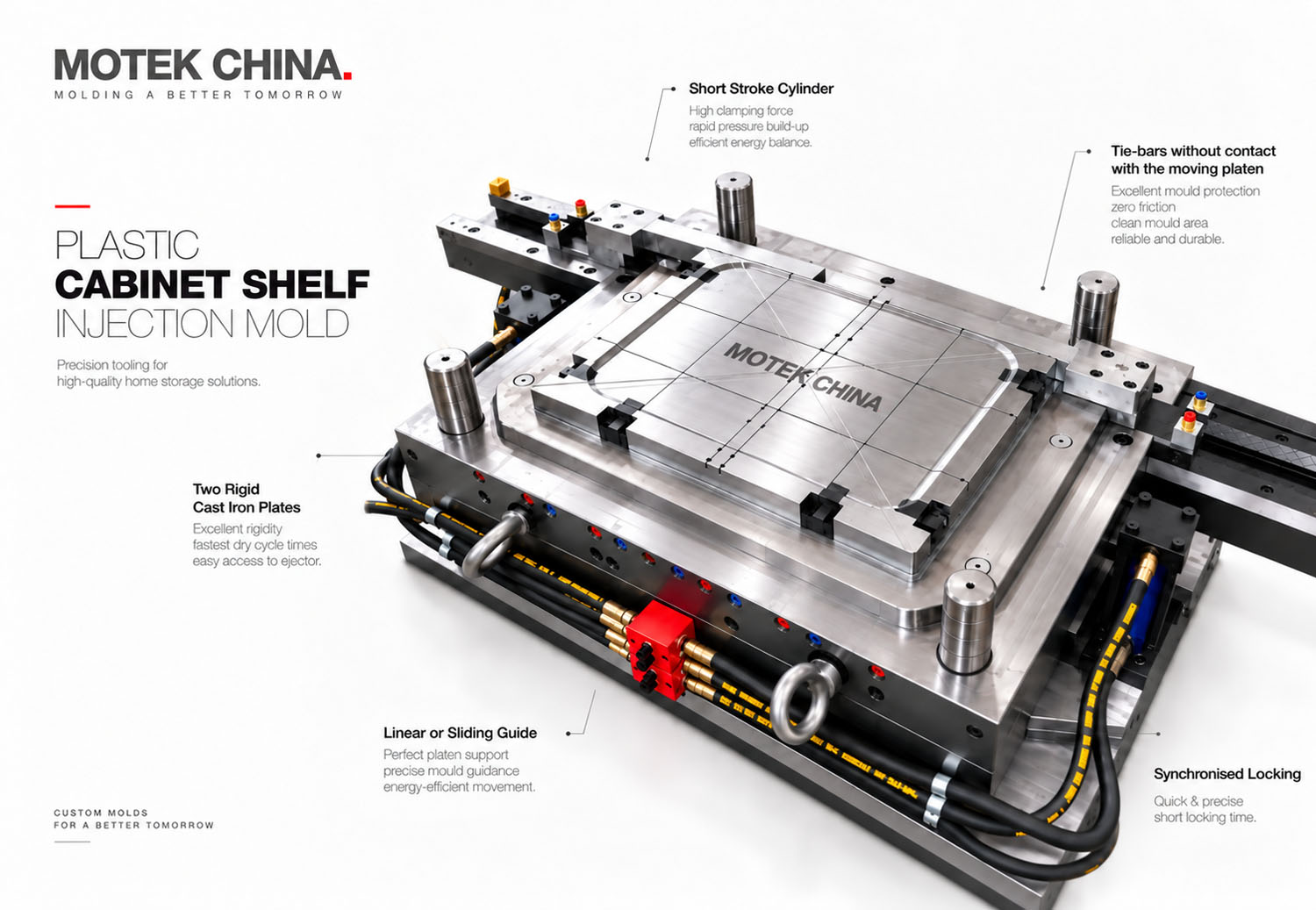
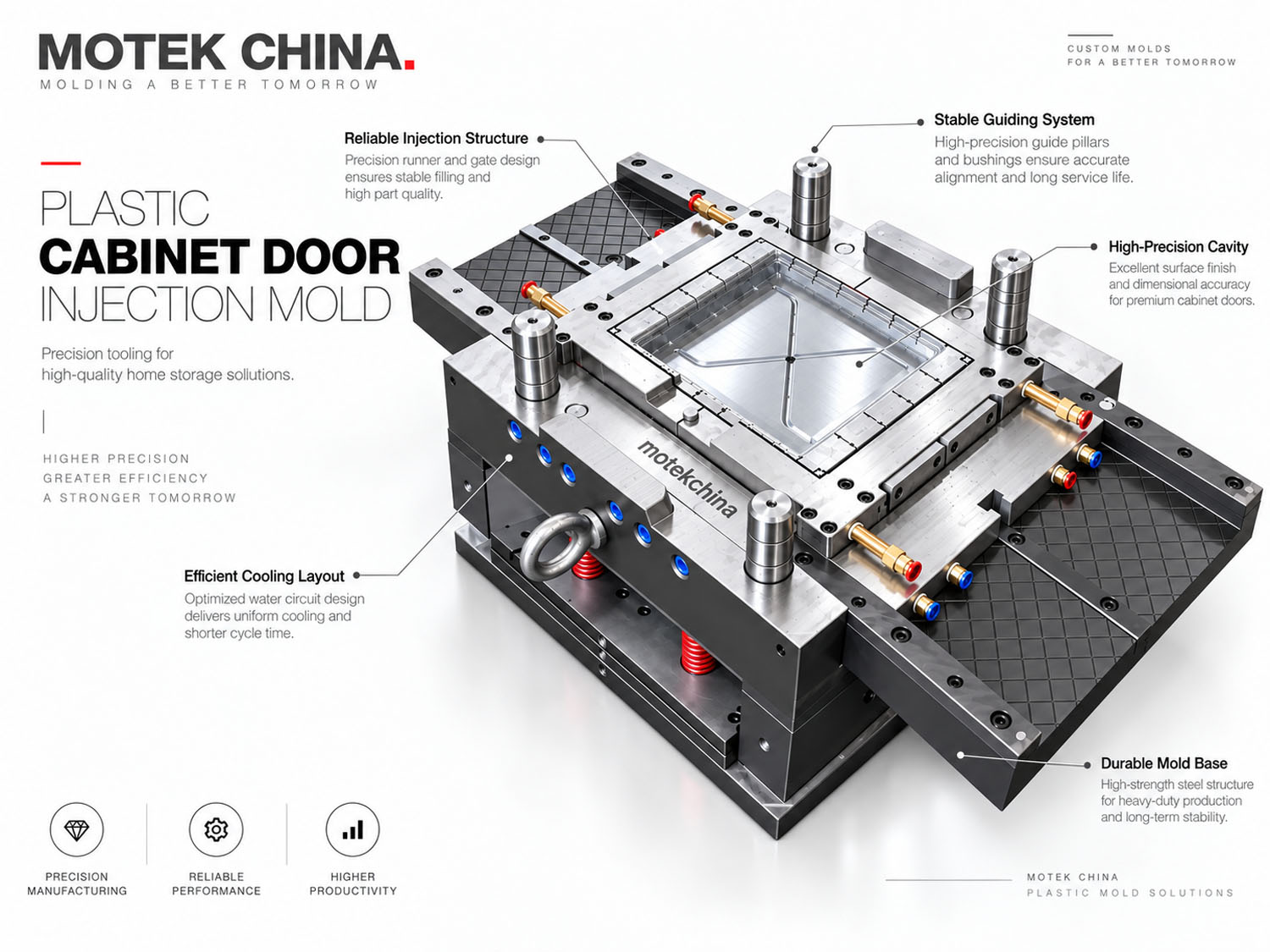
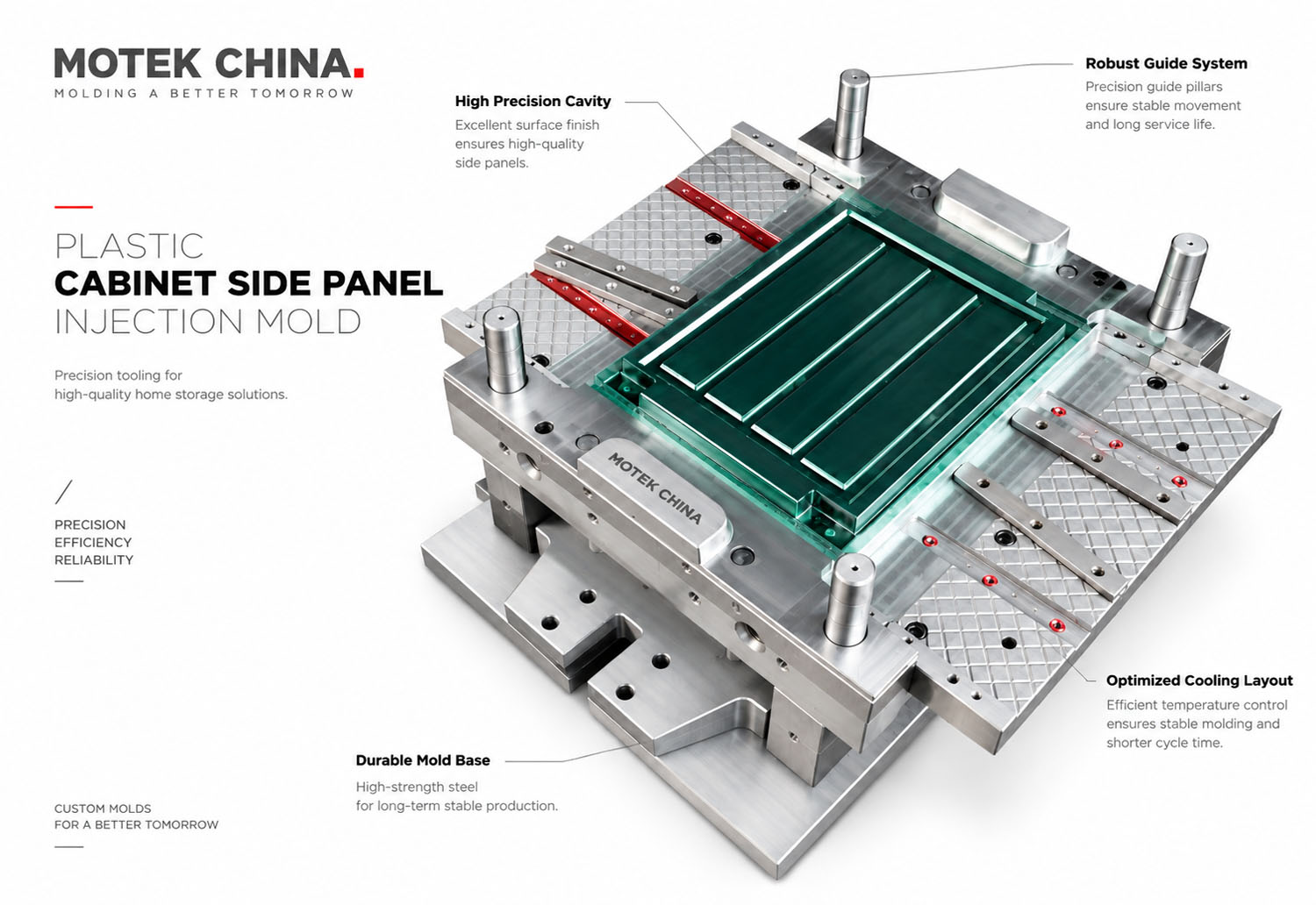
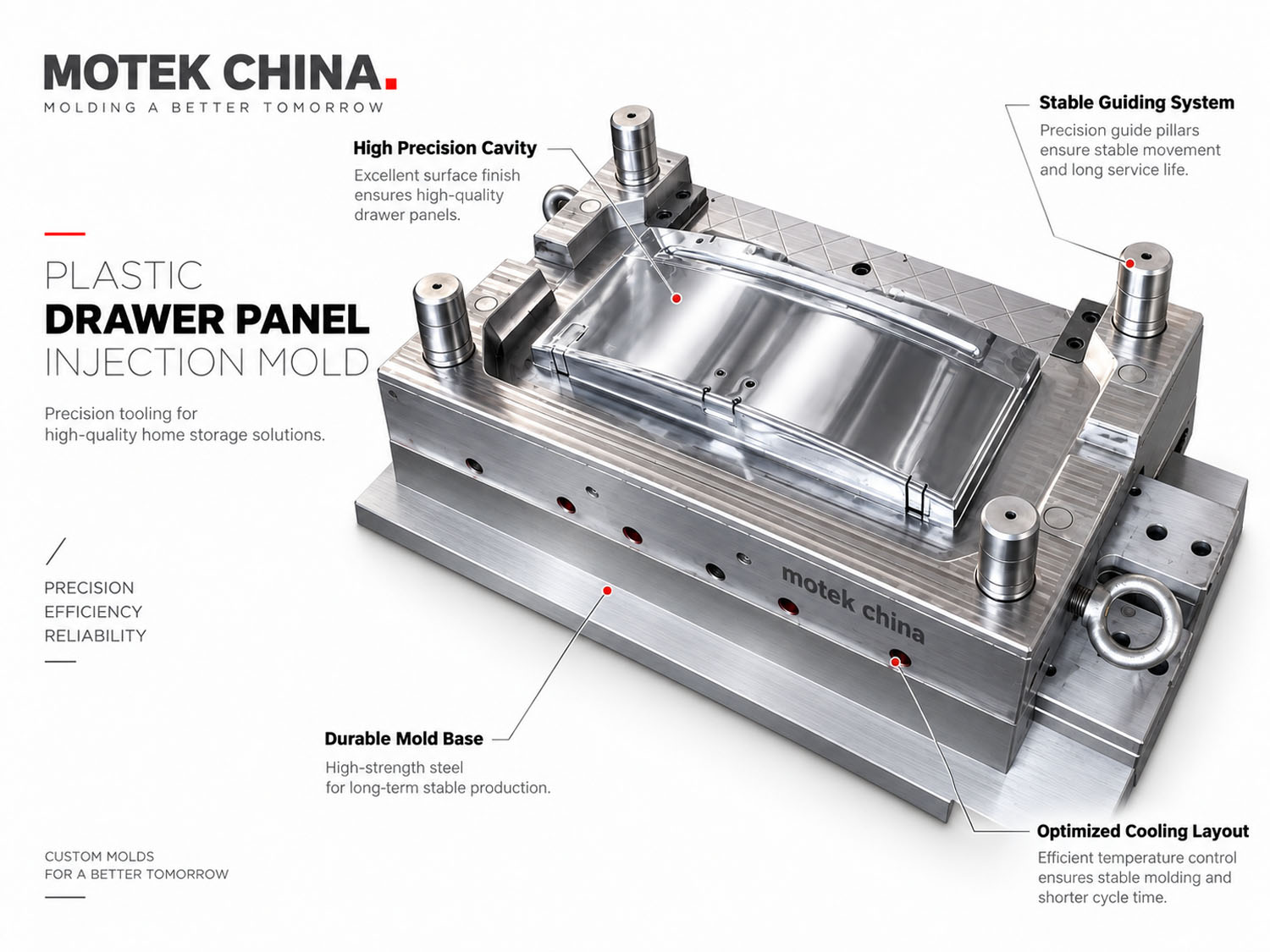
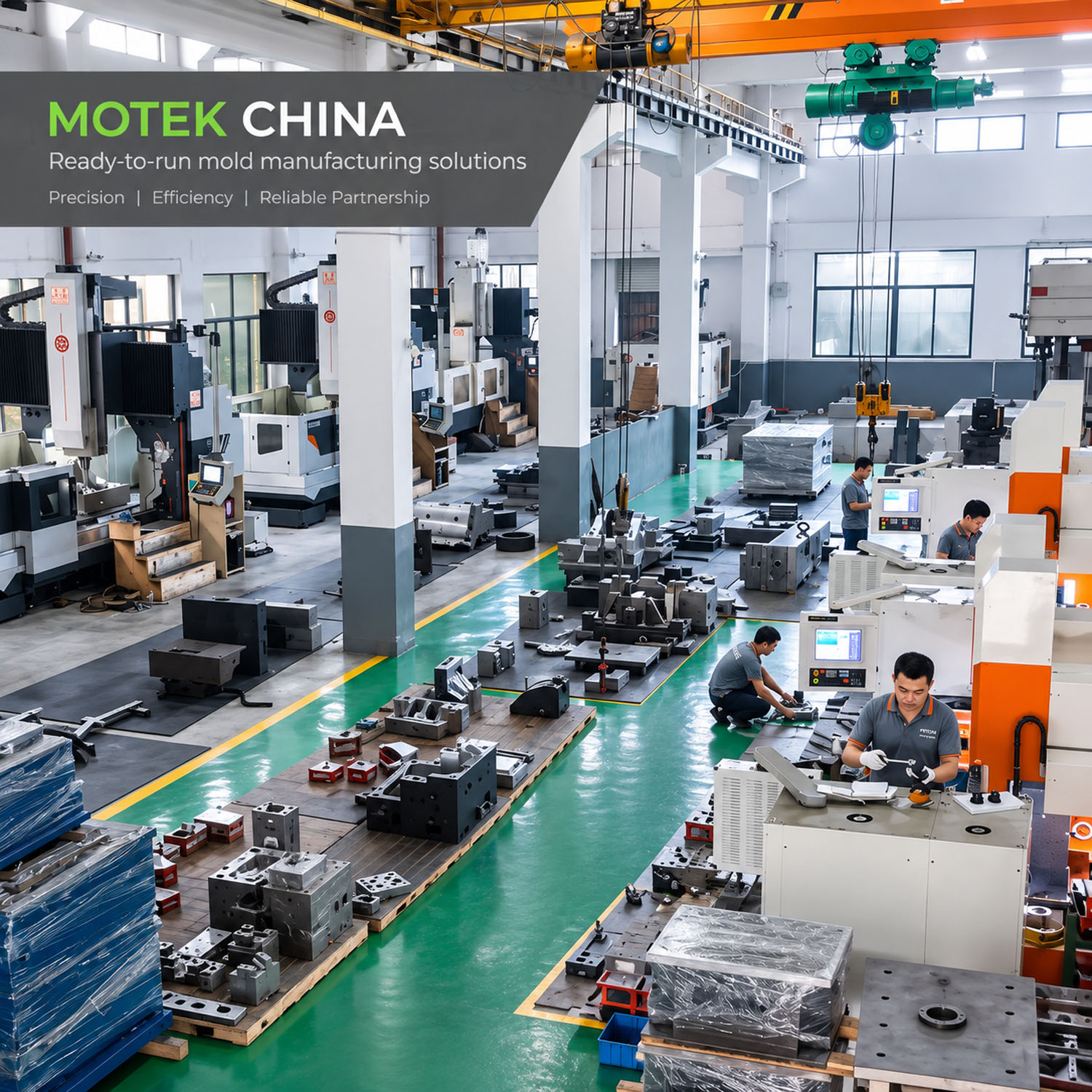
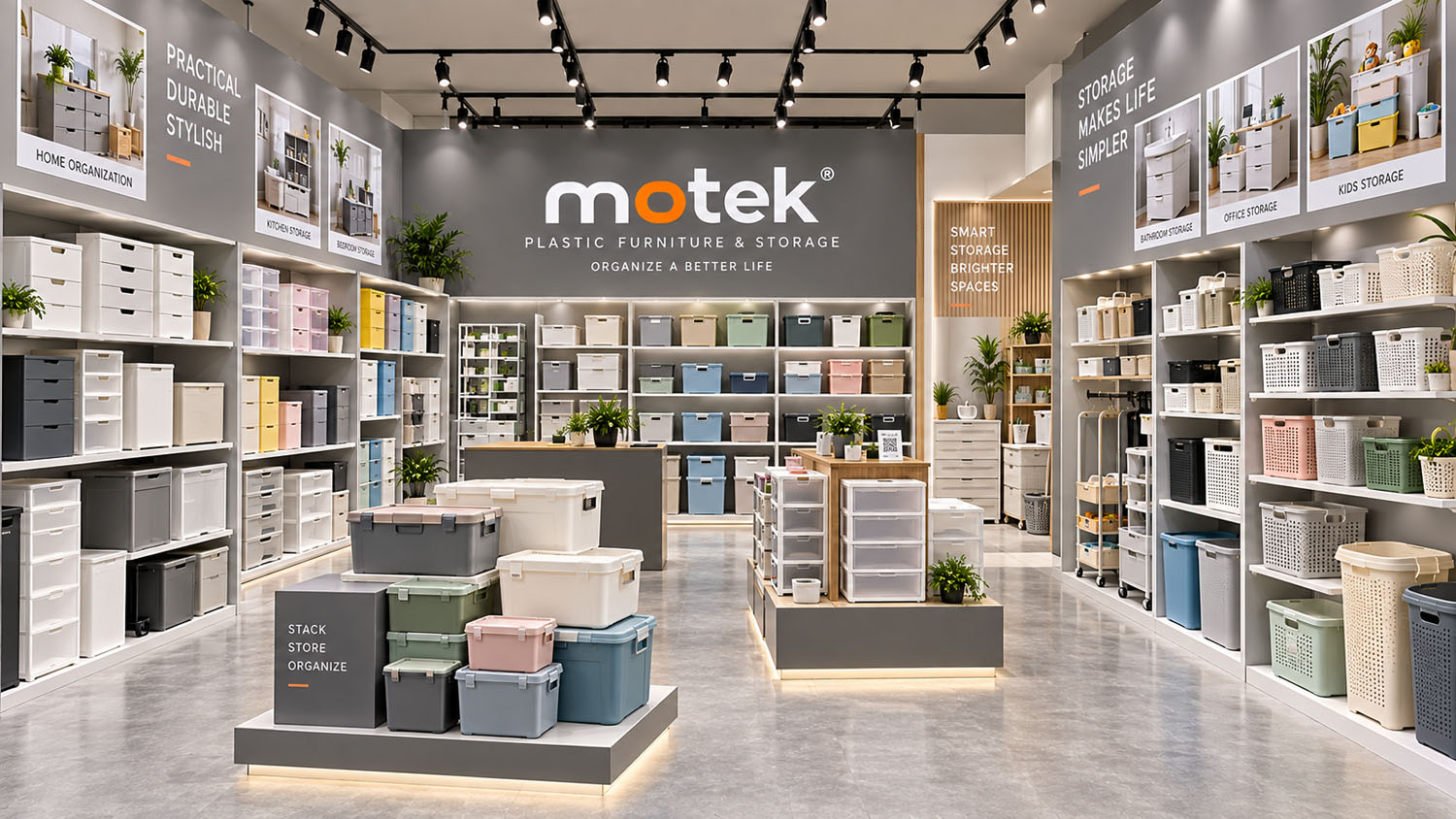
Motek — From single-door wardrobes to three-door multi-layer storage cabinets, providing reliable mold solutions for injection molding of household storage plastic products.
