


Transparent Plastic Folding Box Mold — Product Introduction (Motek Turnover Box Mold Series)
Transparent Plastic Folding Box Mold — Product Introduction (Motek Turnover Box Mold Series)
Product Positioning
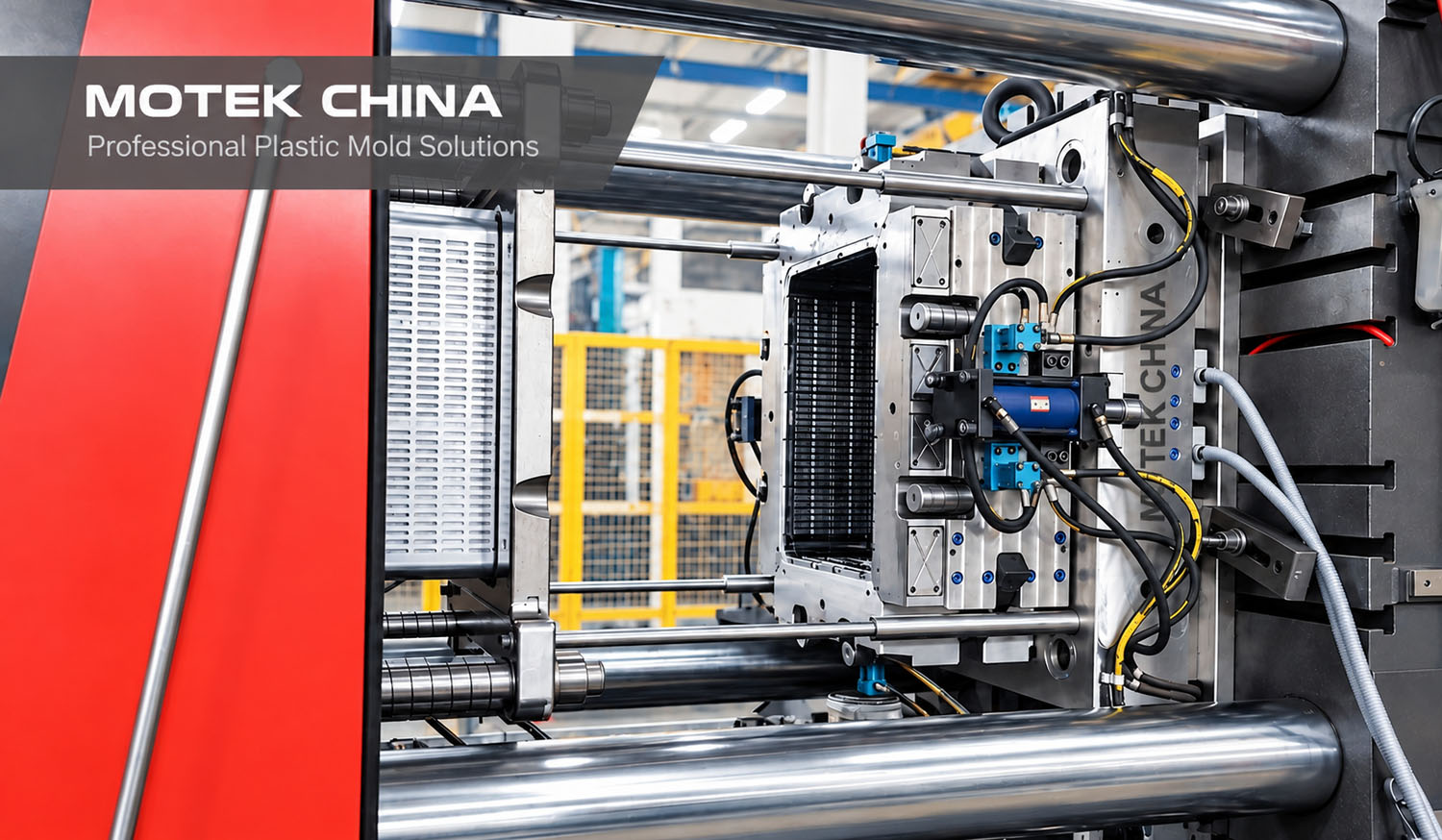
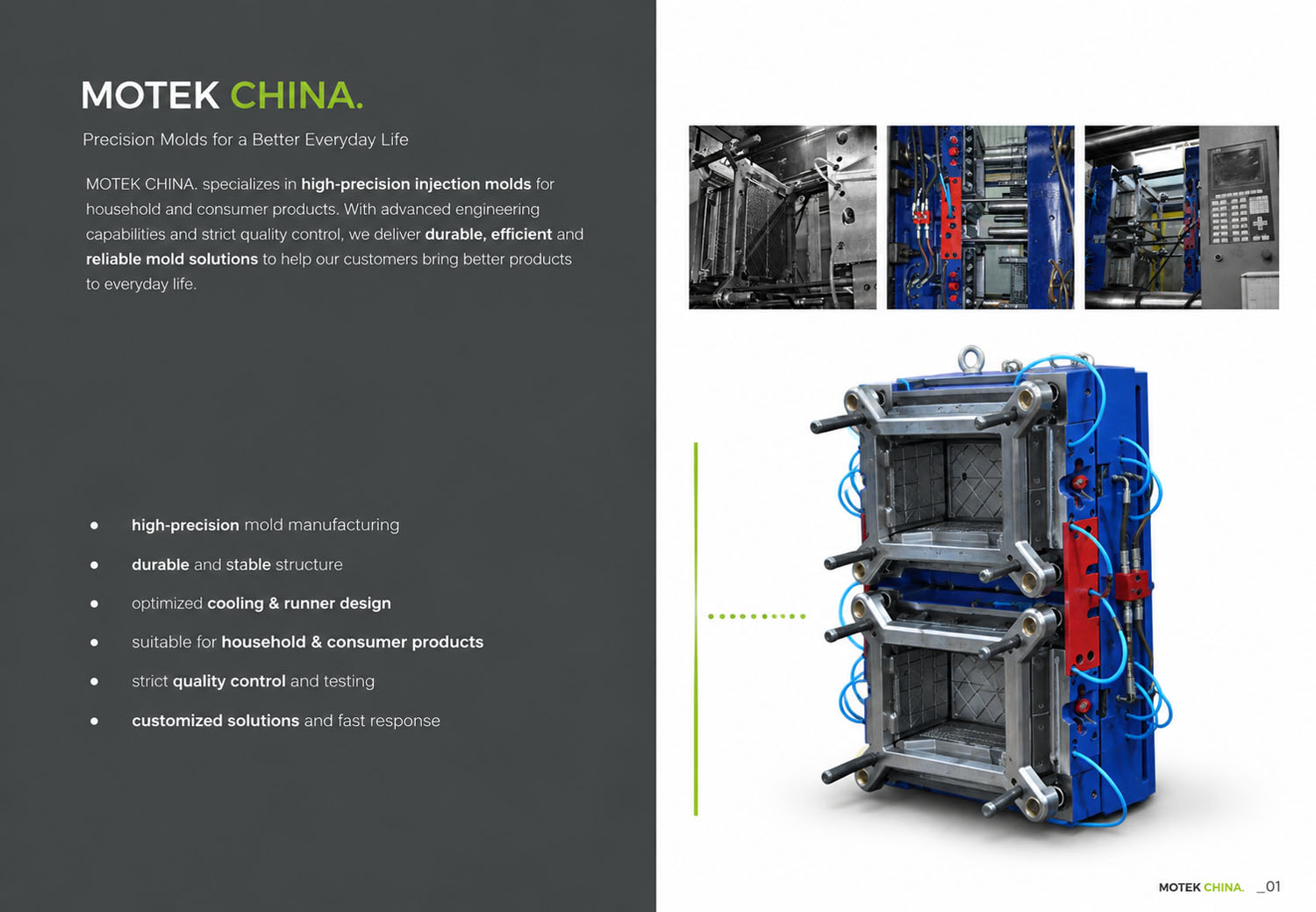
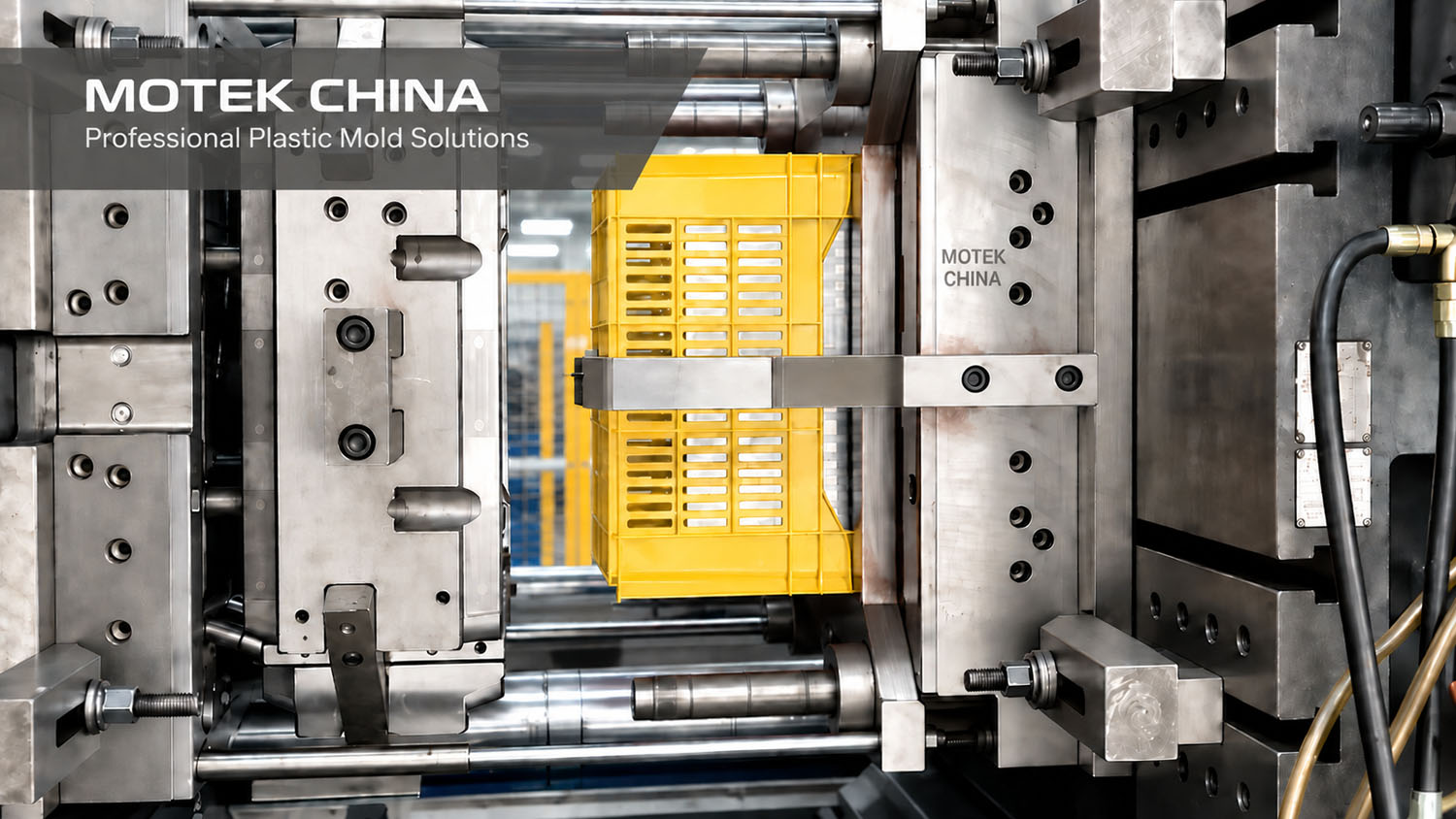
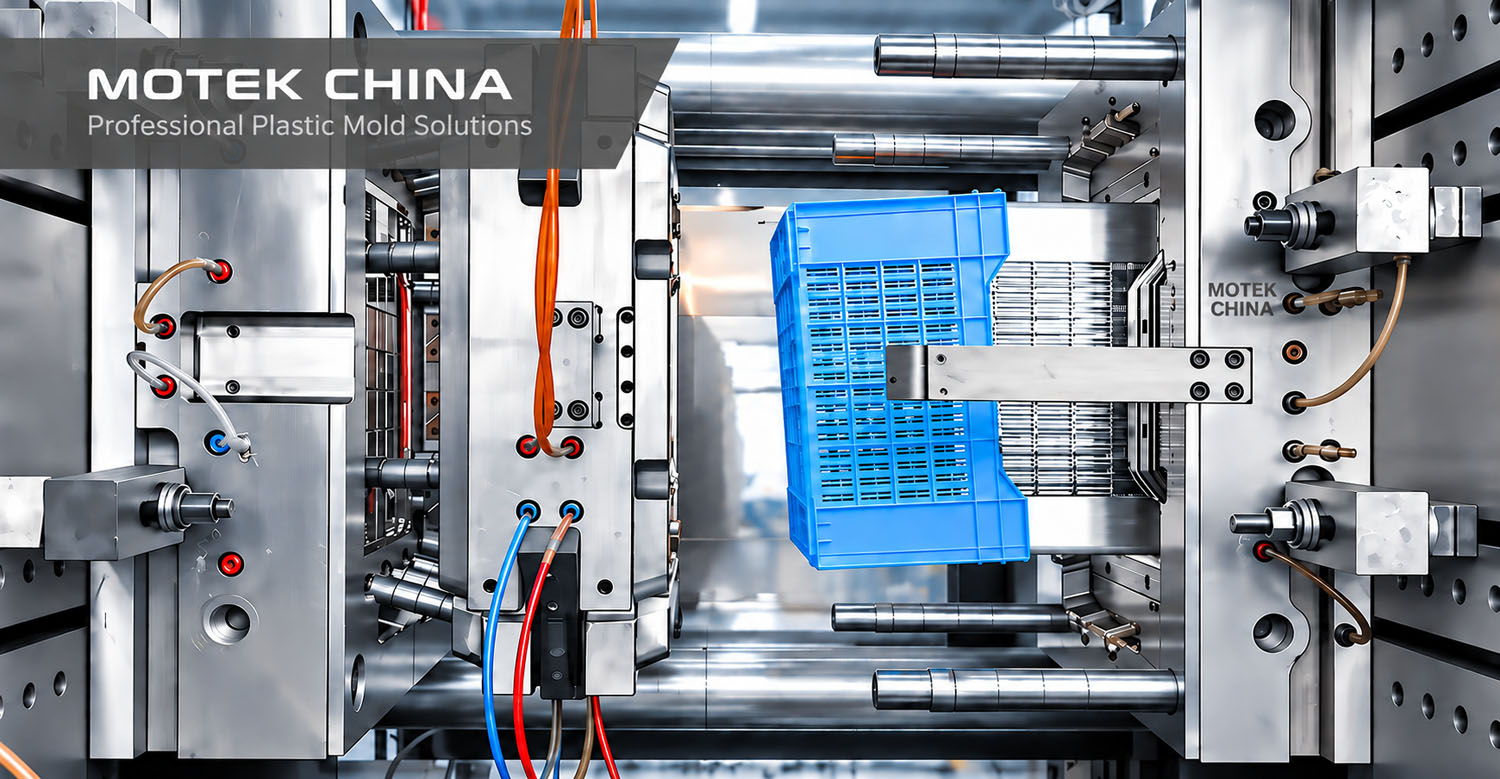
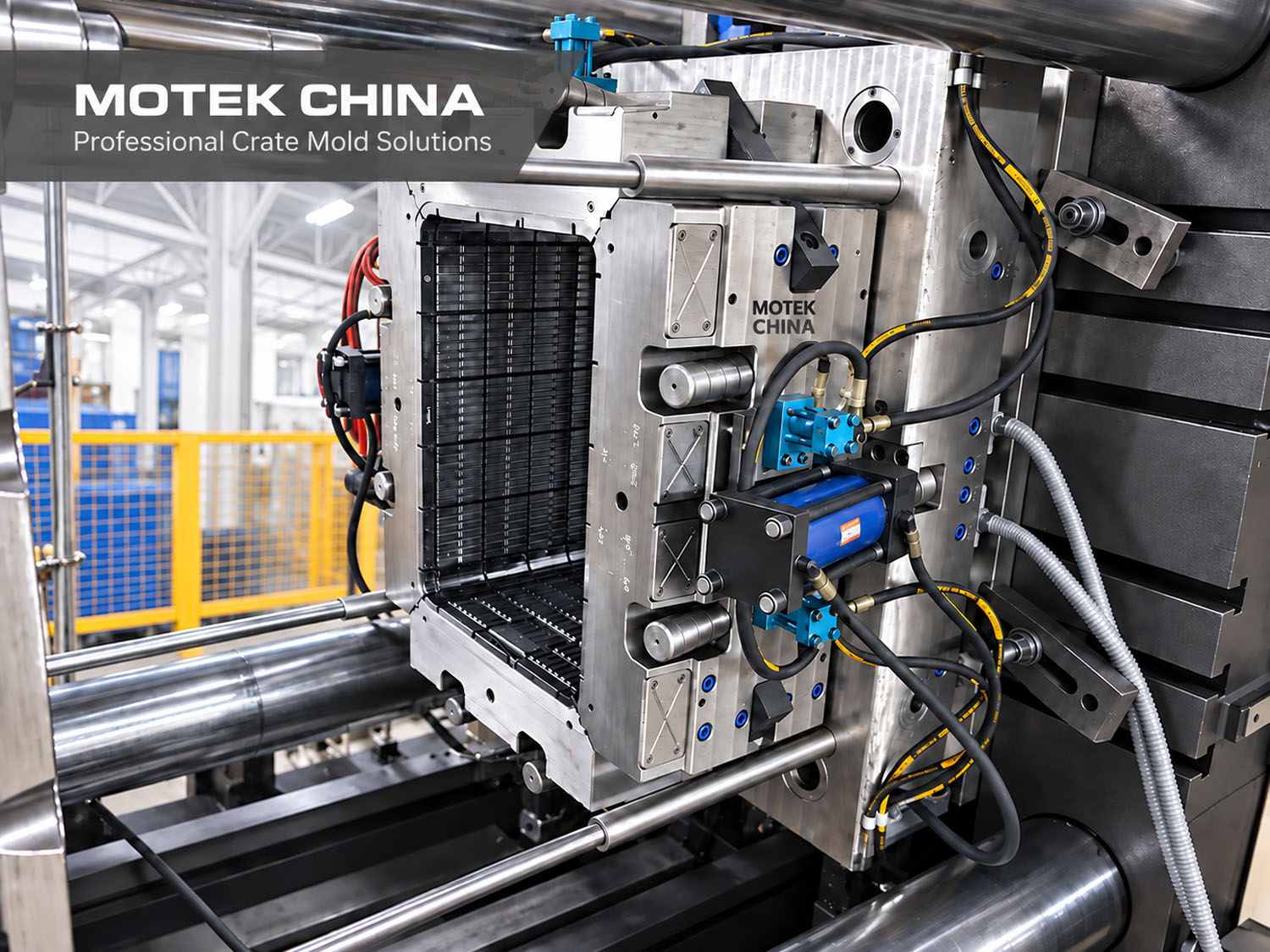
Motek offers dedicated injection mold solutions for transparent plastic folding boxes. These products combine two key functions—"transparent visibility" and "space-saving folding"—and are commonly used in warehousing and logistics, retail display, fresh produce delivery, and home storage. Compared with standard folding box molds, the core challenges of transparent folding box molds lie in optical-grade surface quality of transparent parts, forming and fatigue life assurance of folding hinge structures, and injection process control for transparent materials (PC/PMMA). Motek configures dedicated solutions around high-gloss cavity machining, hinge structure design, and cooling optimization, helping customers achieve stable mass production of transparent folding boxes.
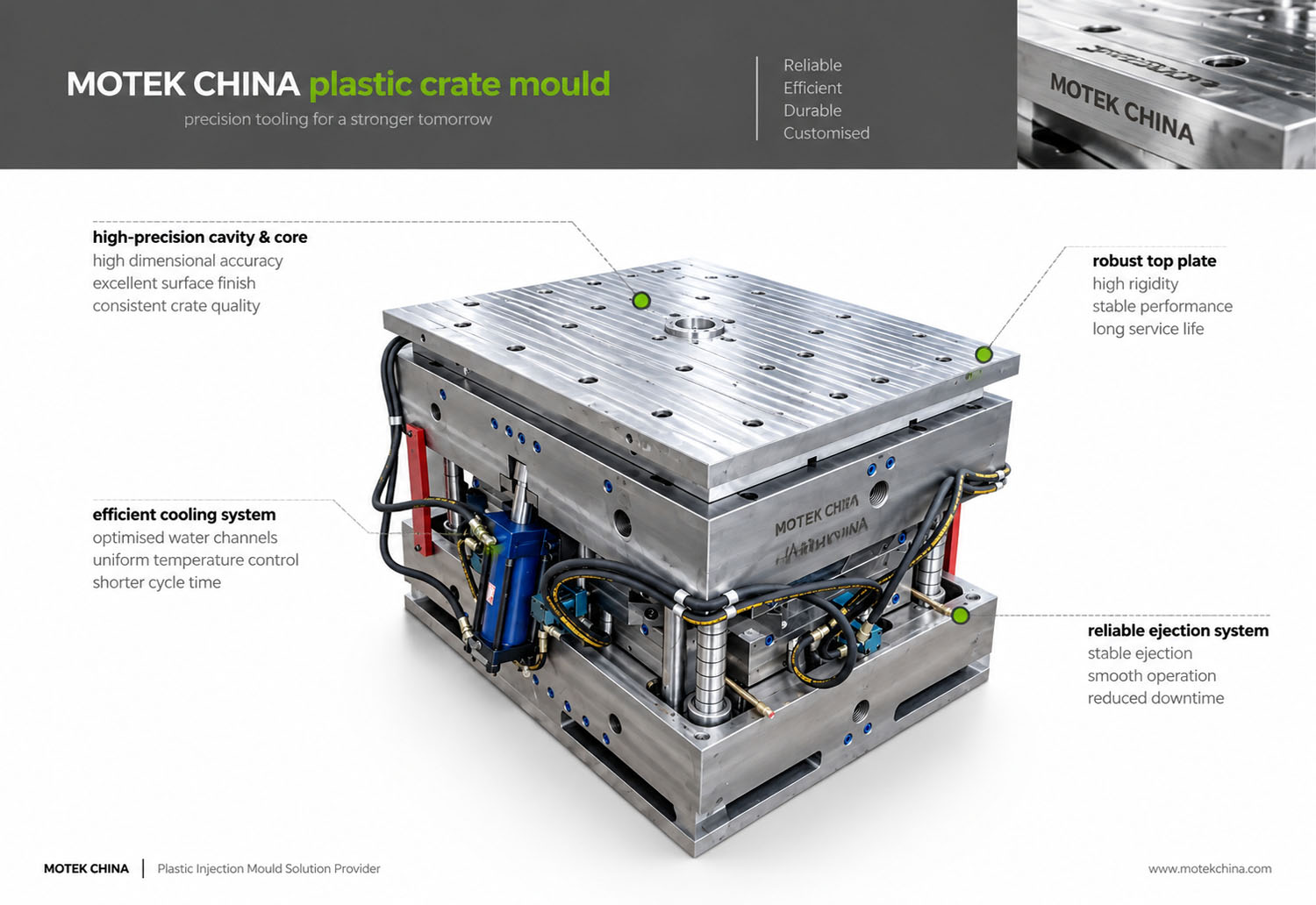
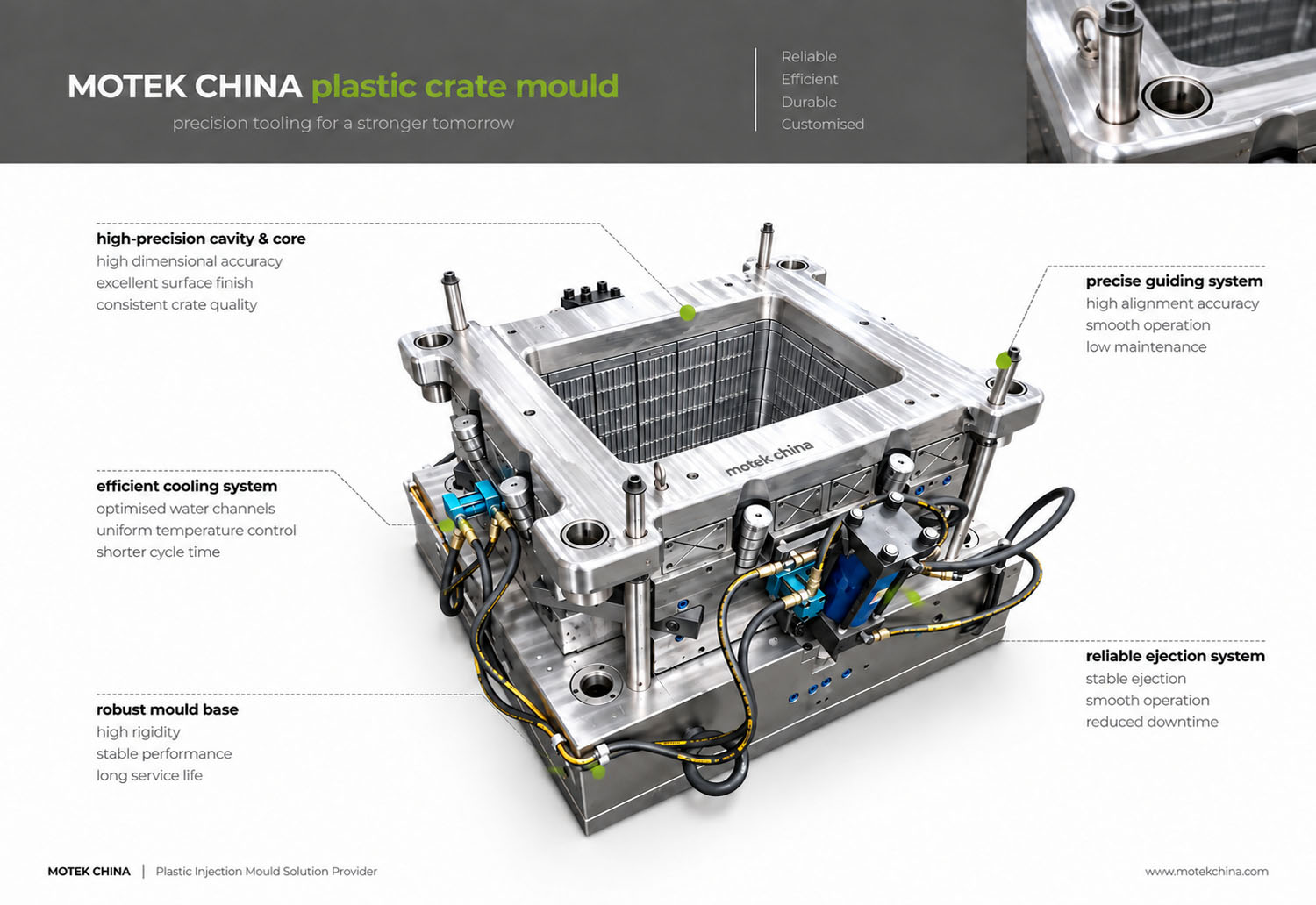
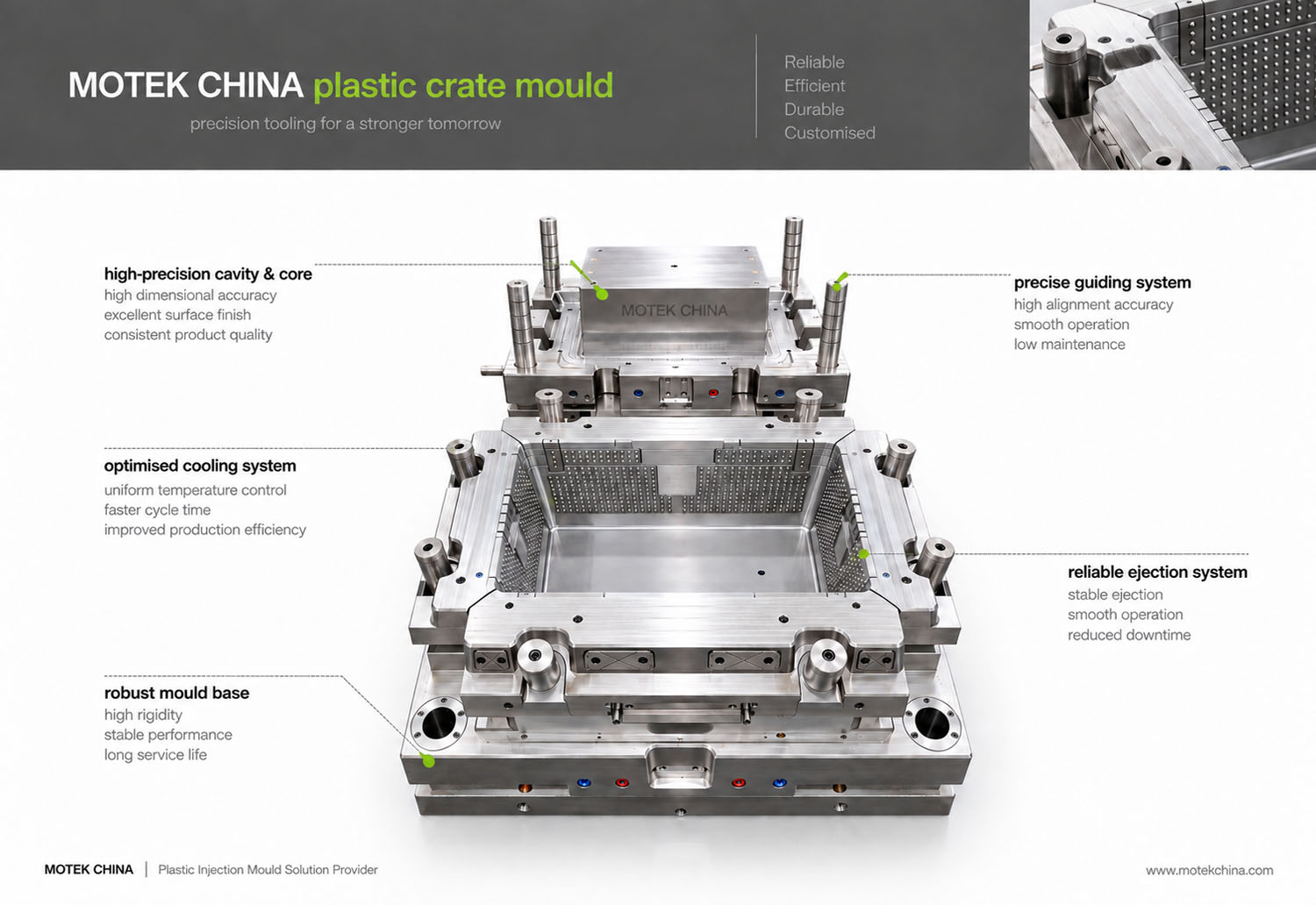
Core Specifications
| Item | Specification |
|---|---|
| Applicable Plastics | PC (transparent, high impact resistance) / PMMA (high transparency) / PP (semi-transparent, cost-priority) |
| Mold Material | S136 / 1.2316 corrosion-resistant mirror steel (cavity and core), H13 optional for slider inserts |
| Number of Cavities | 1×1 primarily (large folding box parts); 1×2 evaluable for small specifications |
| Mold Life | 300,000–800,000 shots (transparent parts are sensitive to cavity surface wear) |
| Cycle Time | 45–75 seconds (depending on box size and cooling design) |
| Mold Base Standard | LKM / HASCO / DME or customer-specified |
| Runner System | Hot runner recommended (reduces cold slugs and flow marks) / Cold runner optional |
| Folding Structure | Hinges integrally formed with thin walls, with sliders for side wall forming |
Product Features
Optical-Grade Cavity Surface Machining.
The visual clarity of transparent folding boxes directly depends on cavity surface quality. Motek uses S136 or 1.2316 corrosion-resistant mirror steels, with cavity surfaces receiving high-grade mirror polishing (SPI A-2/A-3) to eliminate machining marks and polishing traces, preventing light scattering that causes haziness. For large-area transparent side walls, polishing uniformity is particularly critical. Motek performs zoned polishing and inspection of cavity surfaces during machining to ensure consistent gloss across all areas.
Hinge Structure Forming and Life Assurance.
The hinge area is the functional core of folding boxes and must withstand repeated folding without cracking. Motek integrally forms hinge thin-wall structures in the mold, using gradual wall thickness design to distribute stress during folding and avoid stress concentration that causes fatigue fracture. Hinge area steel requires sufficient toughness, with cavity surface treatment balancing demolding smoothness and wear resistance. For multi-segment folding structures, slider and insert action sequences are designed with linkage to ensure synchronous forming and smooth demolding of all folding faces.
Bubble and Flow Mark Control for Transparent Parts.
The most common defects in transparent injection molding are bubbles, silver streaks, and flow marks. Motek coordinates with a hot runner system to reduce cold slugs entering the cavity, with runner and gate layouts optimized through mold flow analysis to prevent melt stagnation and degradation. Venting systems are properly arranged at weld lines and cavity ends to prevent trapped gas from forming bubbles. During the mold design phase, Motek clarifies PC/PMMA raw material drying requirements with customers (PC typically requires thorough drying above 120°C) to coordinate transparent defect control from the process source.
Stacking and Load-Bearing Structure for Folding Boxes.
Folding boxes must have sufficient load-bearing capacity when unfolded and stack compactly when folded. Motek optimizes wall thickness transitions and reinforcement rib layout at the four corners and base load-bearing areas of the box, ensuring box rigidity meets usage requirements in the unfolded state. Stacking slots and folding positioning structures are integrally formed, with tolerance control ensuring smooth folding action and secure locking after unfolding.
Cooling Efficiency and Cycle Time Control.
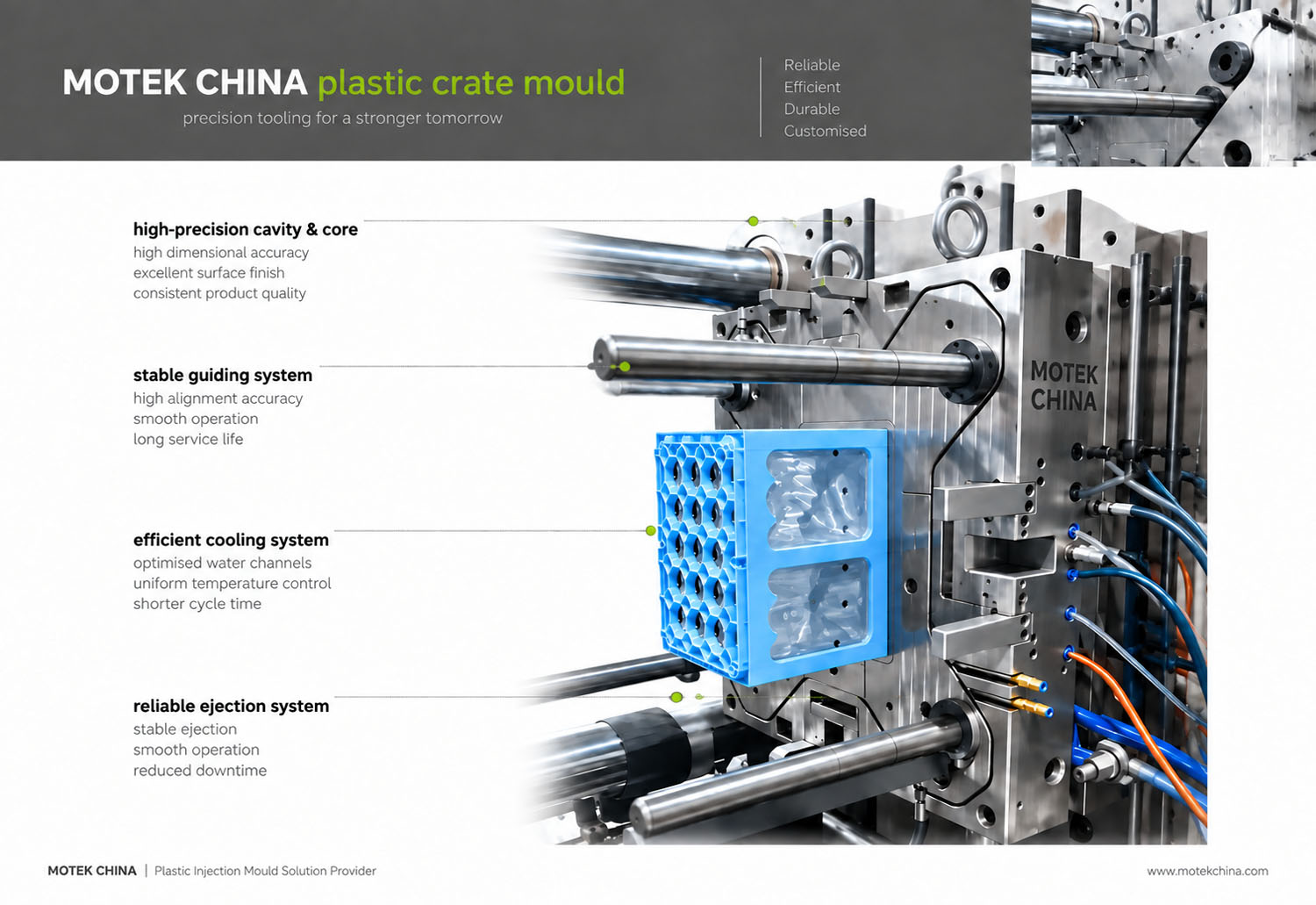
Transparent folding boxes have uneven wall thickness distribution (thin hinge areas, thick box wall areas), and uneven cooling can easily cause warpage or hinge deformation. Motek adopts zoned cooling channels, focusing on thick-wall areas and hinge transition zones to equalize cooling rates across regions. For transparent parts, uniform cooling also helps reduce stress marks caused by internal stress.
Applications
Motek transparent plastic folding box molds are suitable for:
- Transparent PC/PMMA folding turnover boxes
- Transparent folding display boxes for retail display
- Transparent folding boxes for fresh produce delivery
- Transparent folding storage boxes for home use
- Foldable transparent logistics boxes (hinge structure evaluation required)
Service Process
After the customer provides 3D product drawings, transparency grade, and folding function requirements, Motek completes mold flow analysis (including transparent part filling, venting, and hinge structure evaluation) and mold structure confirmation; cavity steel is selected per optical-grade requirements, with surface samples provided for customer confirmation before polishing; during trial molding, Motek cooperates with the customer on light transmission inspection, folding function testing, and preliminary hinge life testing, providing samples for final sign-off. Before shipment, molds undergo anti-rust treatment and action testing, with water circuit diagrams, hot runner wiring diagrams, consumable parts lists, and transparent part injection process recommendations provided. Technical support is available during the warranty period, with lifetime maintenance consultation.
Motek — From standard folding boxes to optical-grade transparent folding boxes, providing reliable mold solutions for injection molding of high-appearance turnover containers.
