


60L–120L Public Space Pedal Trash Can Mold — Product Introduction (Motek Daily Necessities Mold Series)
60L–120L Public Space Pedal Trash Can Mold — Product Introduction (Motek Daily Necessities Mold Series)
Product Positioning
Motek introduces dedicated injection molds for 60L–120L pedal-operated trash cans designed for public spaces. These large-capacity bins are deployed in parks, streets, commercial plazas, schools, hospitals, and transit hubs, where hands-free operation, heavy-duty durability, and weather resistance are essential. The pedal mechanism allows hygienic waste disposal without hand contact, while the large volume reduces emptying frequency. The core challenges in mold development lie in structural reinforcement for high-capacity loads and pedal mechanism forces, precision forming of the pedal linkage and lid hinge, weather-resistant material and UV-stable forming, and efficient demolding of deep, large-volume bodies. Motek addresses these through cavity layout, cooling design, and demolding mechanisms, helping customers achieve stable mass production of public pedal trash cans.
Core Specifications
| Item | Specification |
|---|---|
| Applicable Plastics | HDPE / PP (UV-stabilized, impact-resistant, weather-resistant grades) |
| Mold Material | P20 / 718H / 2738 (cavity and core), H13 optional for slider inserts |
| Number of Cavities | 1×1 primarily (large-capacity bodies); 1×2 evaluable for smaller sizes |
| Mold Life | 500,000–1,000,000 shots |
| Cycle Time | 50–85 seconds (depending on body size and cooling design) |
| Mold Base Standard | LKM / HASCO / DME or customer-specified |
| Runner System | Hot runner recommended (reduces cold slugs and cycle time) / Cold runner optional |
| Ejection Method | Stripper plate + ejector pins + air ejection composite ejection |
Product Features
Structural Reinforcement for High-Capacity Loads and Pedal Forces.
60L–120L public bins must withstand heavy waste loads, repeated pedal actuation, and rough handling during emptying. Motek reinforces corner posts, base runners, and the pedal mechanism mounting area through optimized wall thickness and rib layout, ensuring the bin maintains rigidity under full-load conditions and repeated pedal cycles. Mold flow analysis verifies filling completeness at corner nodes and pedal mounting areas where wall sections converge.
Precision Forming of Pedal Linkage and Lid Hinge.
The pedal mechanism transmits force through a linkage to open the lid. Motek forms pedal pivot points, linkage mounting features, and lid hinge positions with tight dimensional tolerance, ensuring smooth pedal actuation and reliable lid opening/closing over repeated use. For metal-reinforced pedal mechanisms, insert seating features are designed with proper clearances to accommodate metal components.
Weather Resistance and UV-Stable Forming.
Public bins are exposed to sunlight, rain, and temperature fluctuations year-round. Motek coordinates with customers on UV-stabilized HDPE/PP grades and adjusts cavity dimensions to account for the shrinkage characteristics of modified materials. Wall thickness at impact-prone areas (corners, base edges, pedal area) is appropriately increased to enhance durability.
Efficient Demolding of Deep, Large-Volume Bodies.
Large-capacity bins have deep cavity structures where cooling and demolding are challenging. Motek adopts conformal cooling channels focusing on the bin bottom and side wall transition areas to equalize cooling rates. The demolding system uses a stripper plate combined with ejector pins and air ejection for composite ejection, ensuring large bodies release smoothly after constraints are fully released, preventing scratching or deformation.
Ventilation and Drainage for Outdoor Use.
Public bins may be exposed to rain, and waste may contain liquids. Motek forms drainage holes and ventilation slots directly in the cavity, ensuring water drains completely and odors are minimized. Drainage channels are smooth and free of dead corners where debris could accumulate.
Easy-Empty and Maintenance-Friendly Design.
Sanitation crews frequently empty public bins. Motek forms smooth interior surfaces and rounded corners to facilitate quick emptying and cleaning. The pedal mechanism and lid are designed for easy detachment where required, and all edges are deburred to prevent injury during handling.
Applications
Motek 60L–120L public space pedal trash can molds are suitable for:
- Park and street pedal-operated trash cans
- Commercial plaza public waste bins
- School and hospital pedal trash cans
- Transit hub and station pedal waste bins
- Large-capacity outdoor public litter bins
Service Process
After the customer provides 3D product drawings, capacity specifications, pedal mechanism plans, and UV exposure conditions, Motek completes mold flow analysis (including deep cavity filling evaluation, warpage compensation, and pedal mounting verification) and mold structure confirmation; cavity steel and hot runner systems are procured according to agreed specifications; progress and key milestones are regularly reported during processing. During trial molding, emphasis is placed on verifying pedal actuation smoothness, lid opening/closing reliability, body demolding quality, and structural strength, with samples and inspection reports provided. Before shipment, molds undergo anti-rust treatment and action testing, with water circuit diagrams, consumable parts lists, and maintenance instructions provided. Technical support is available during the warranty period, with lifetime maintenance consultation.
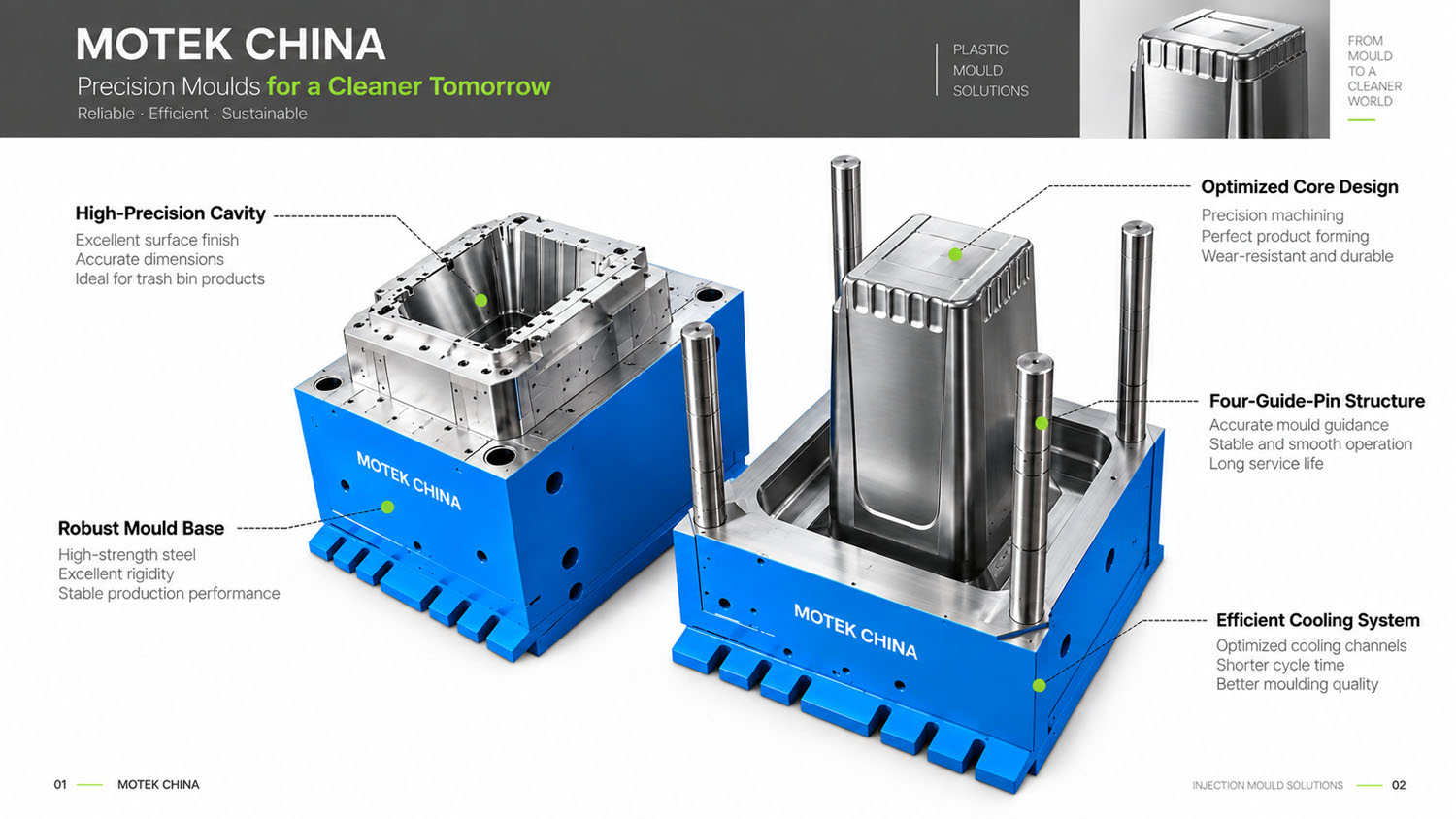
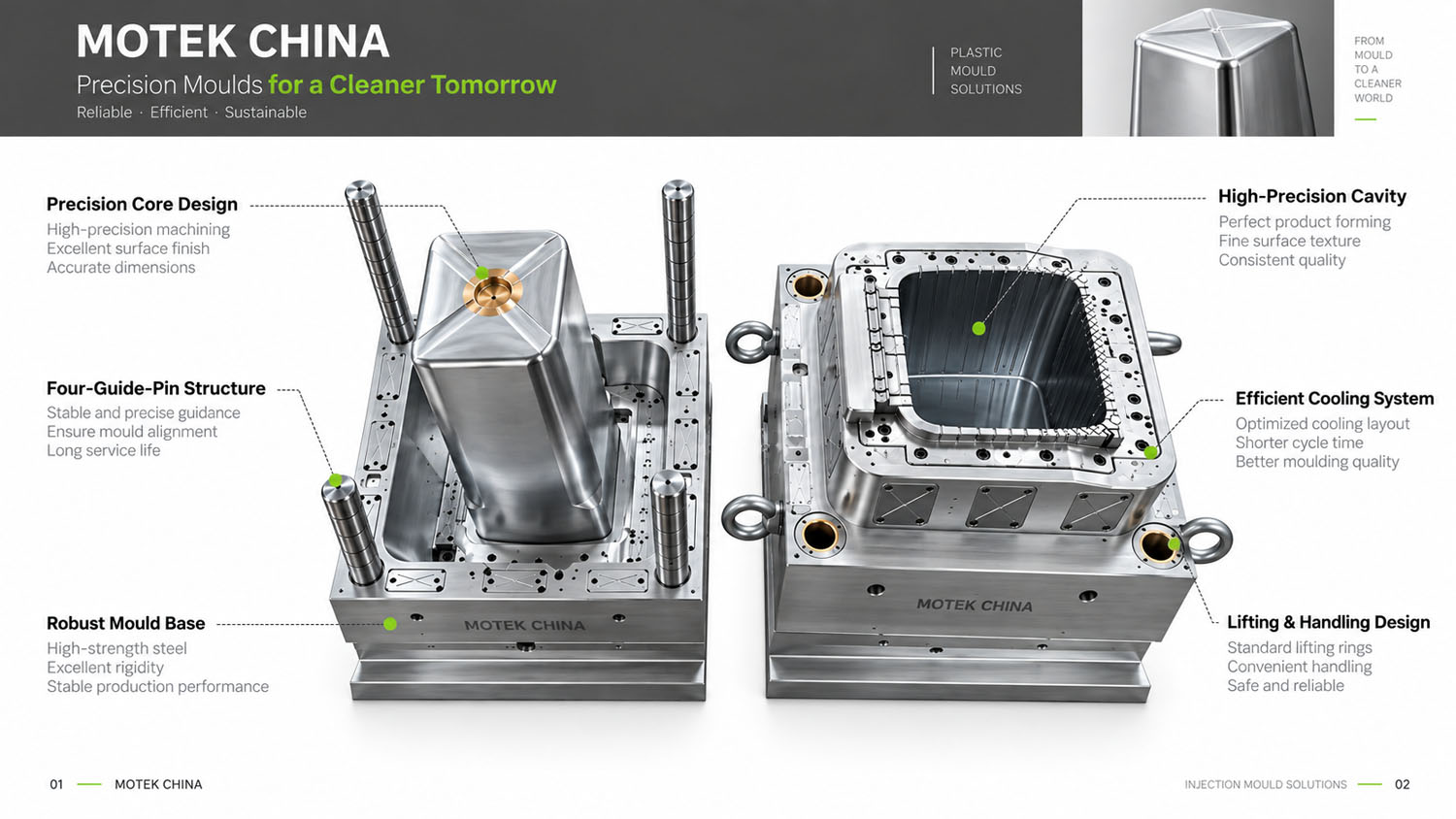
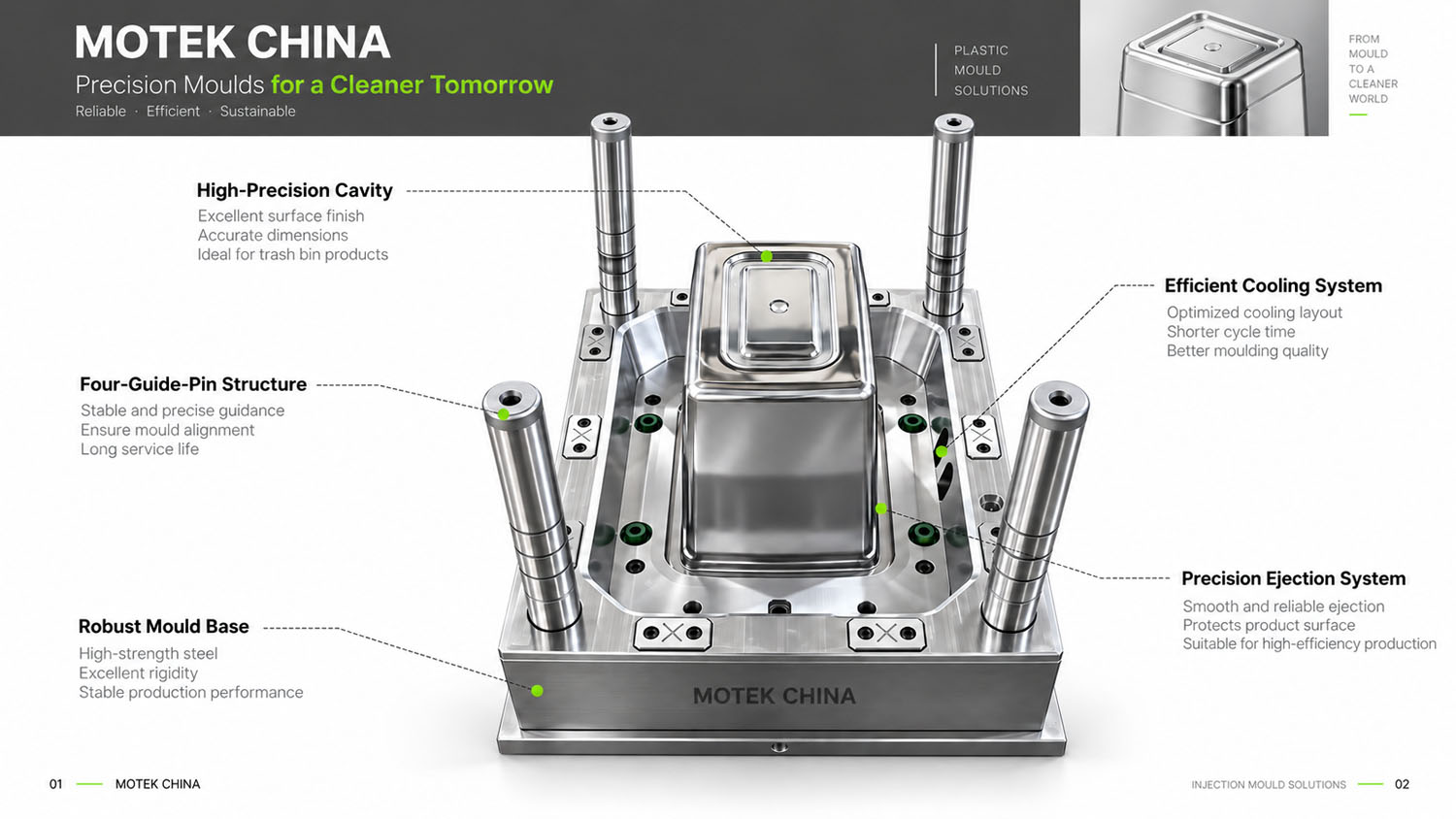
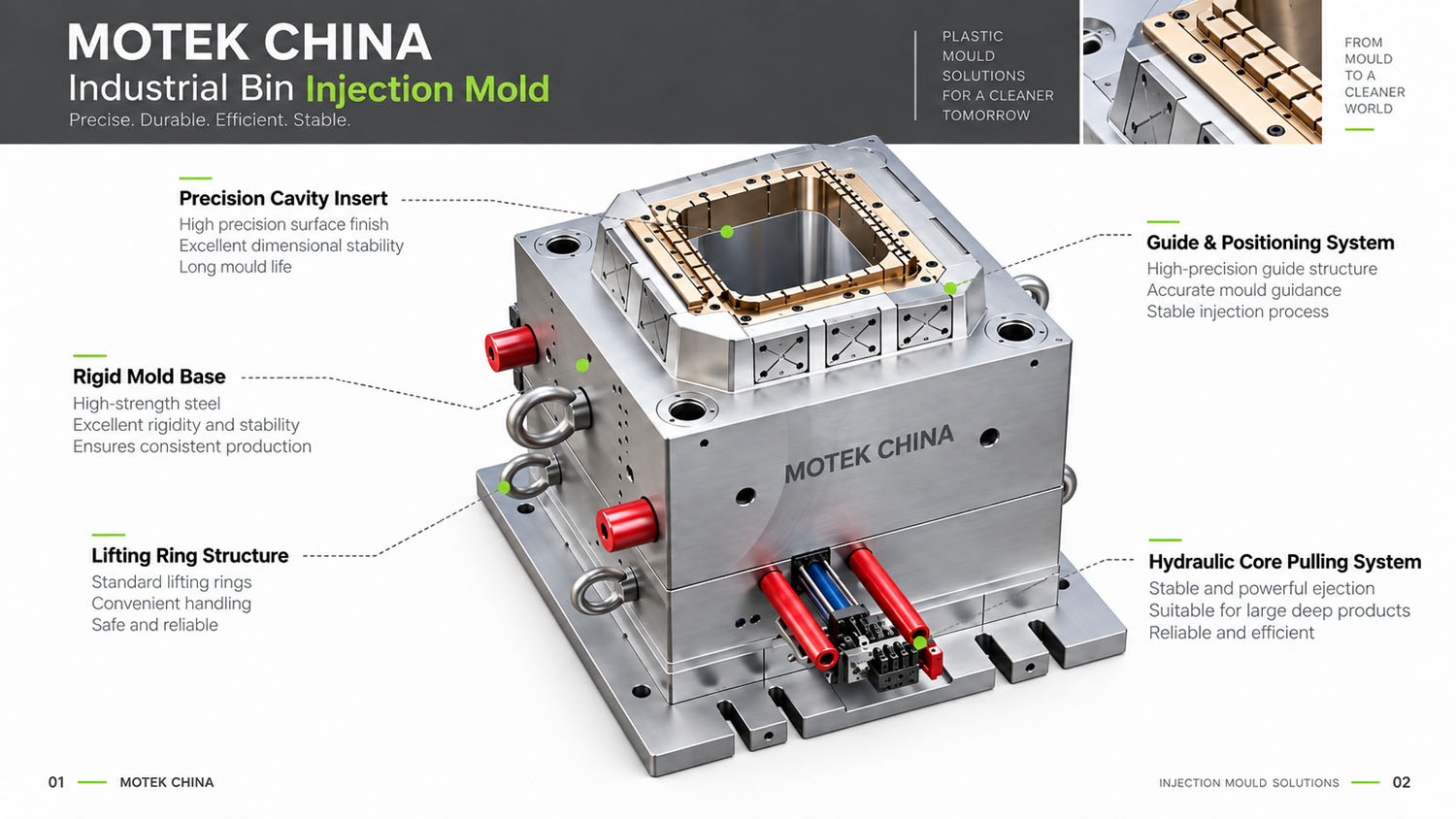
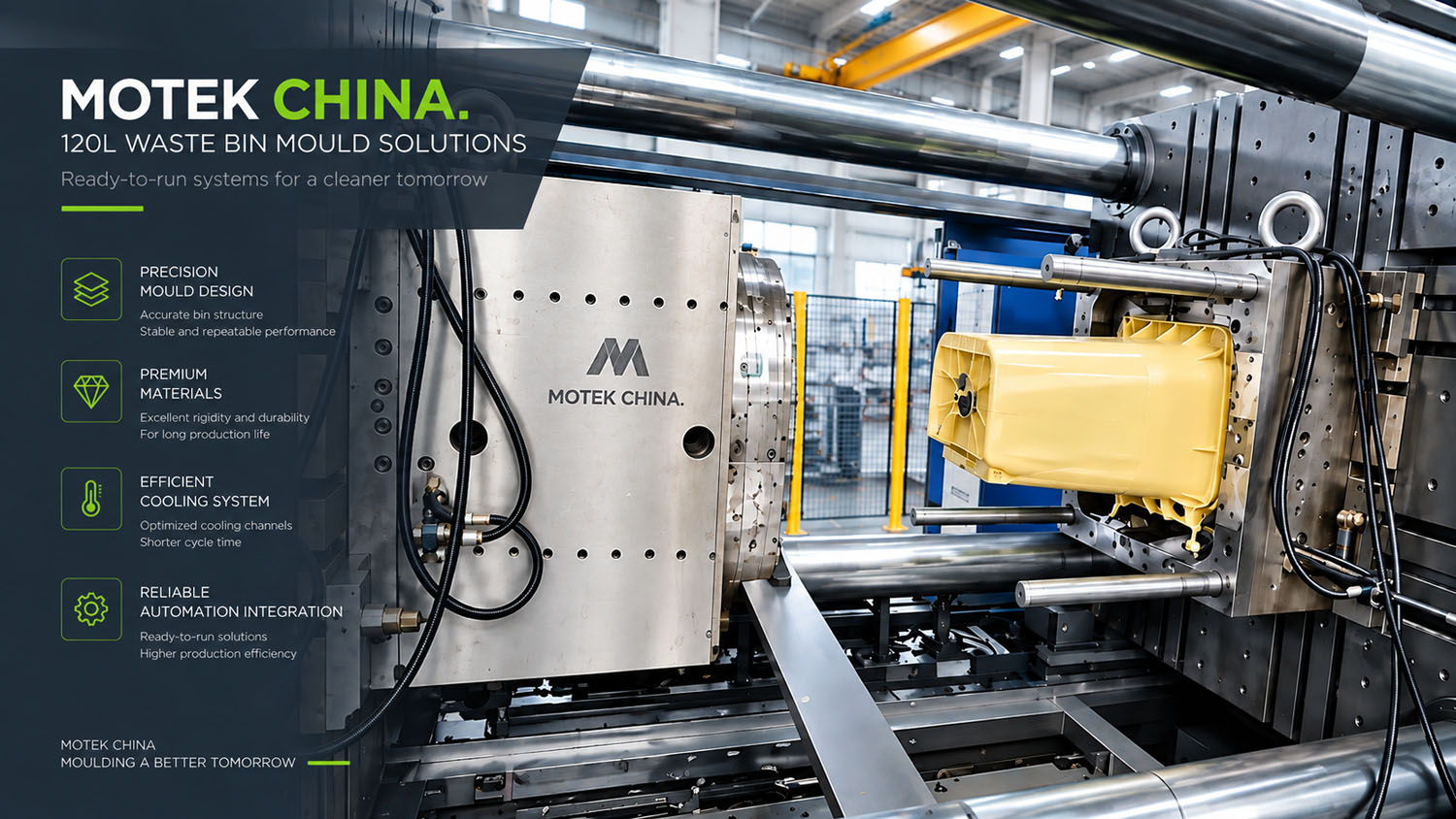
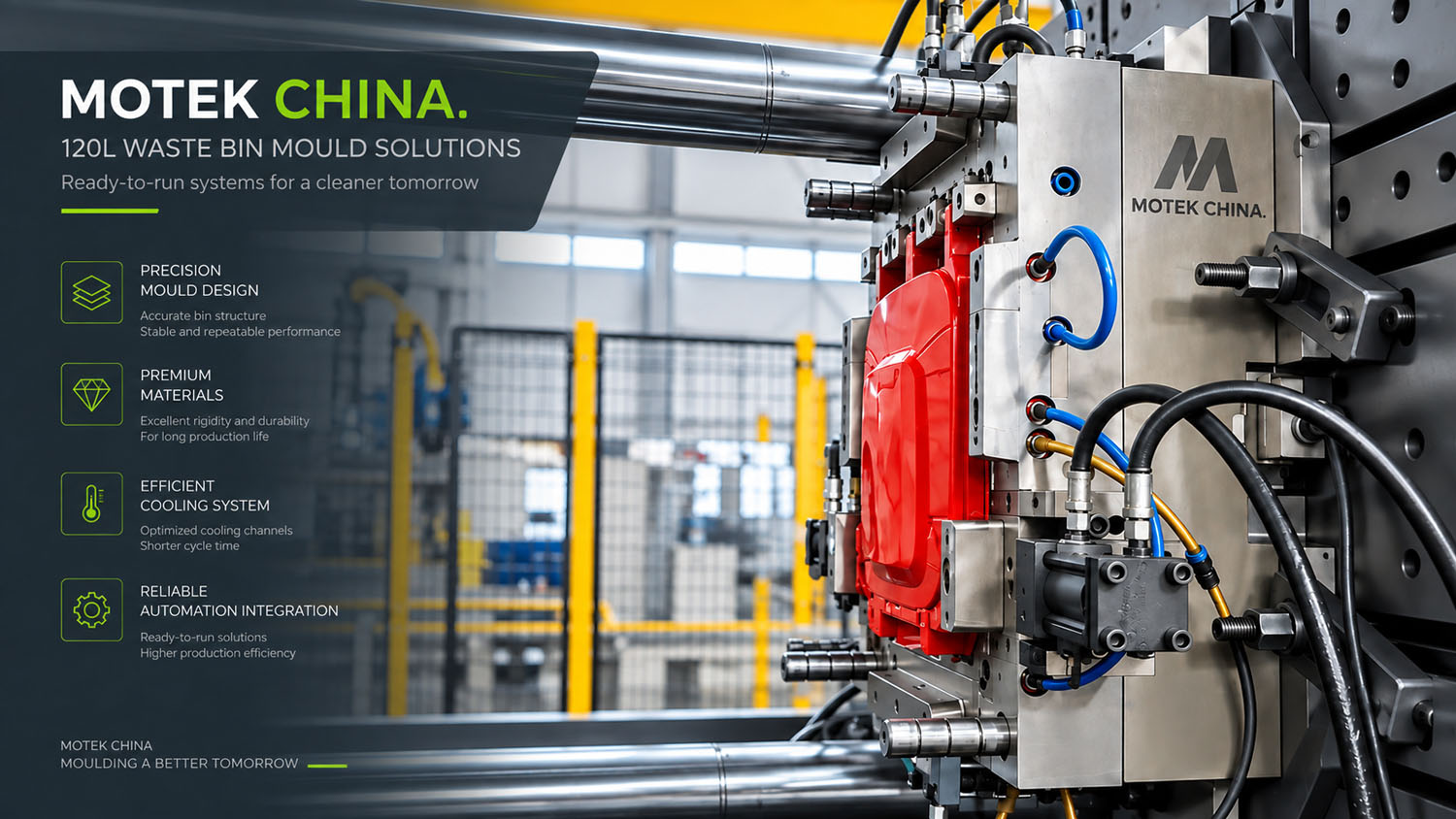
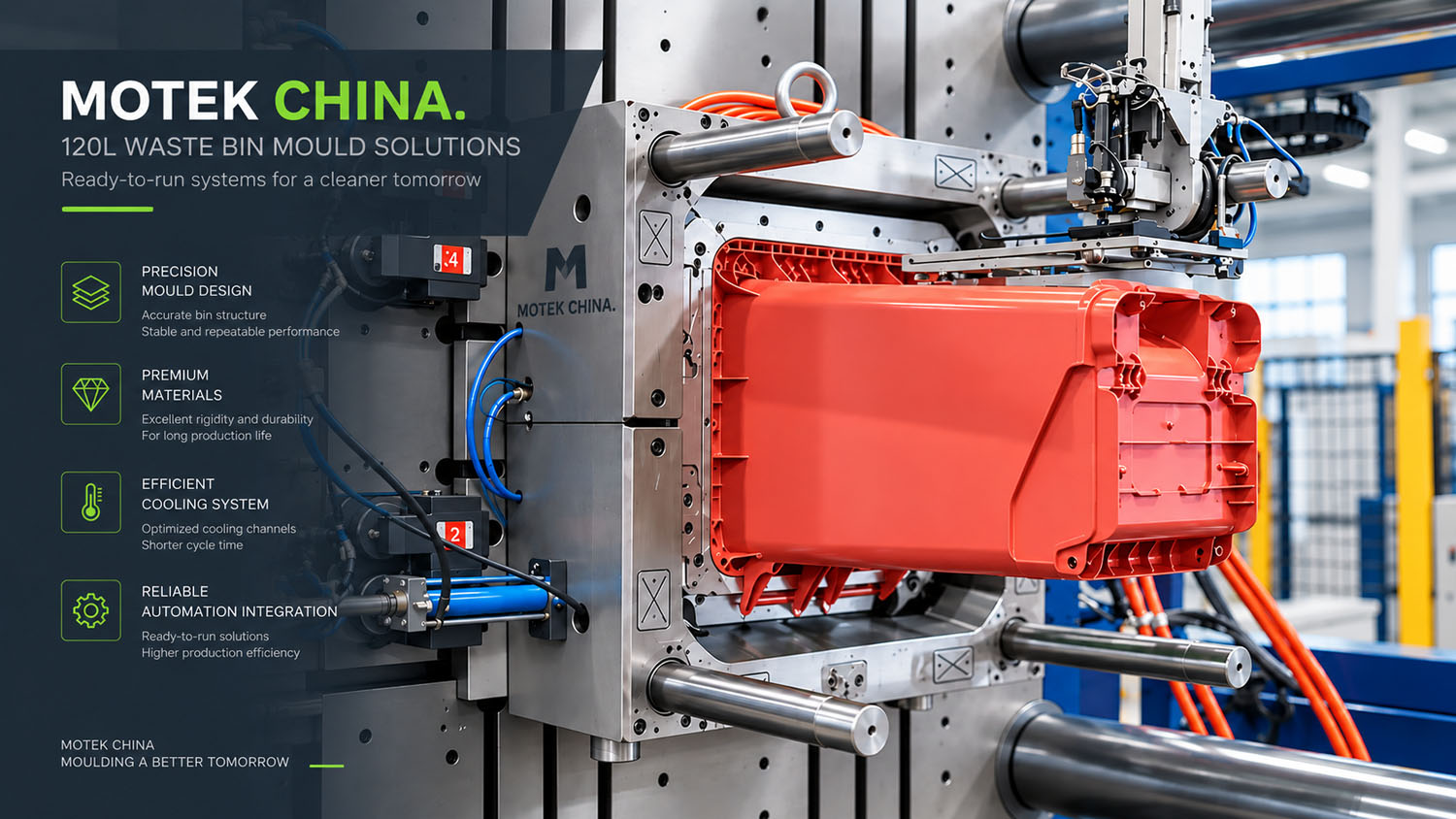
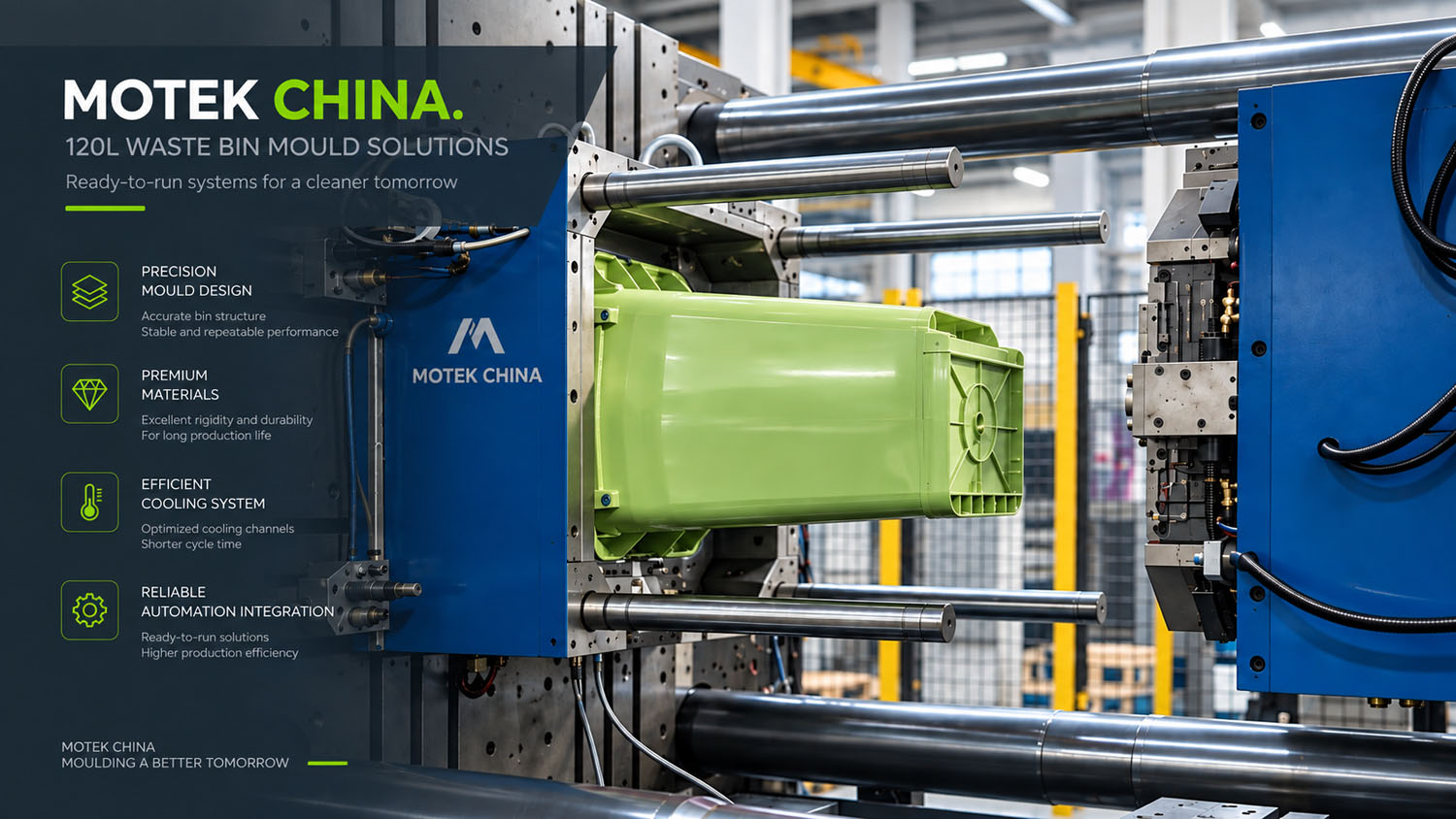
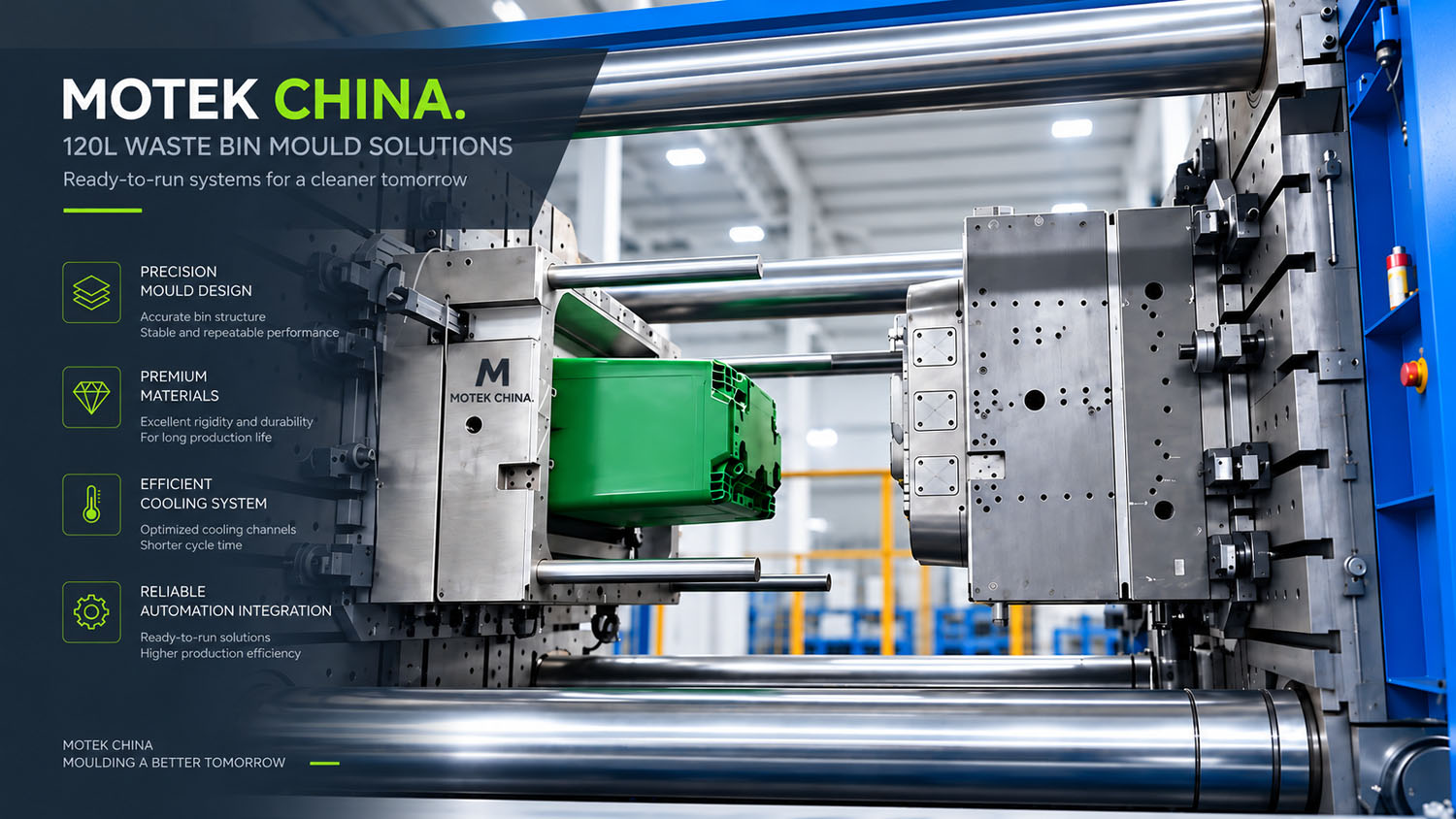
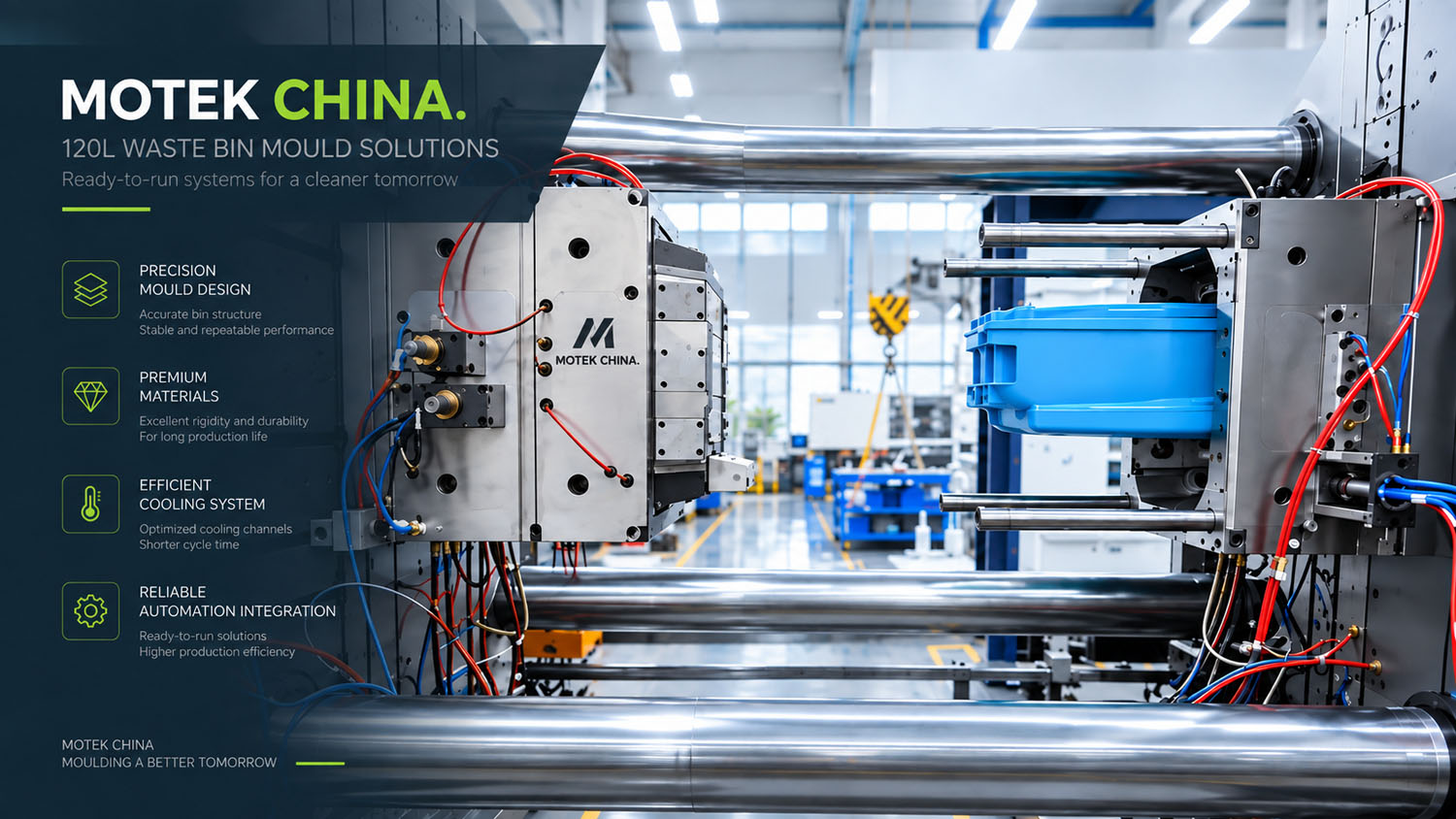
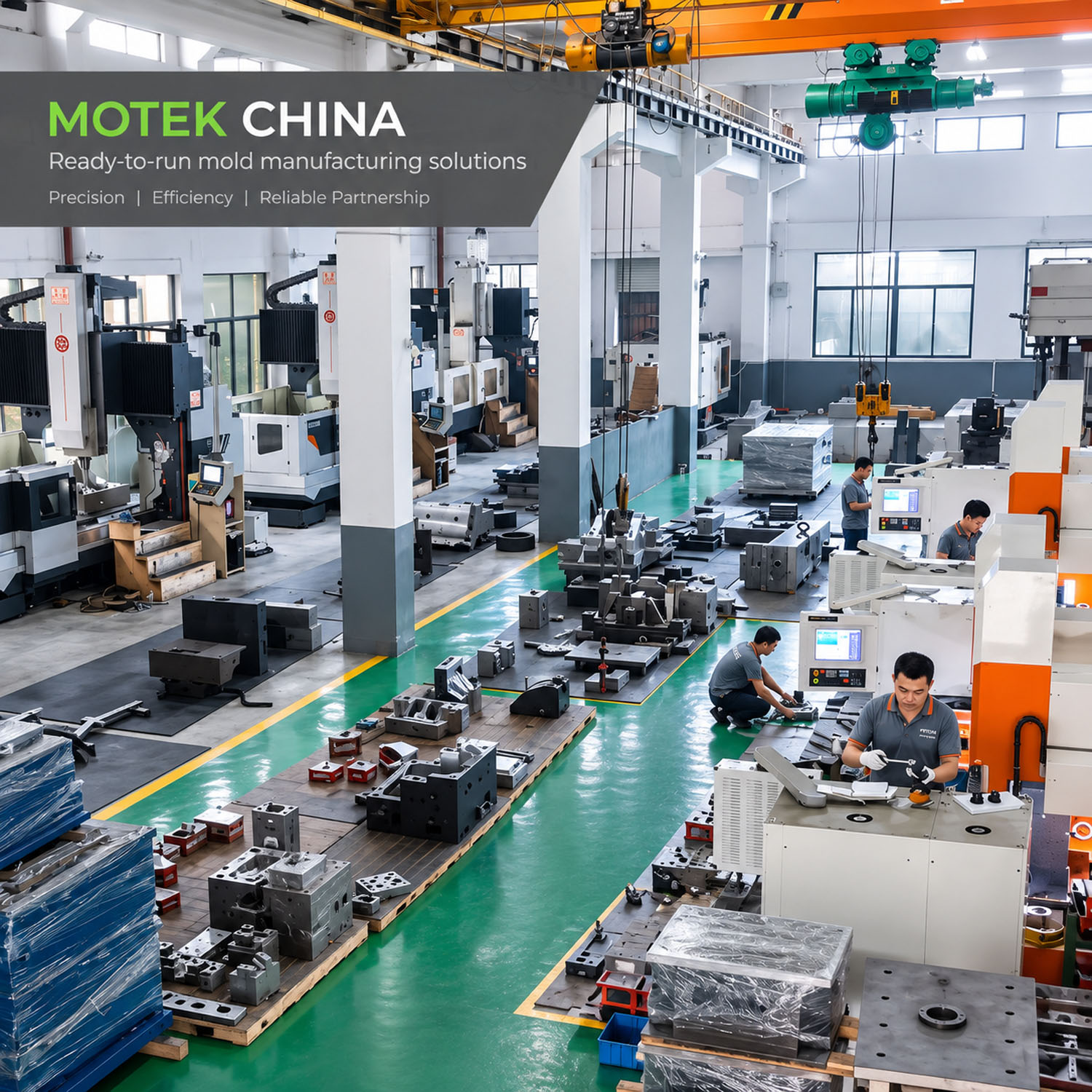
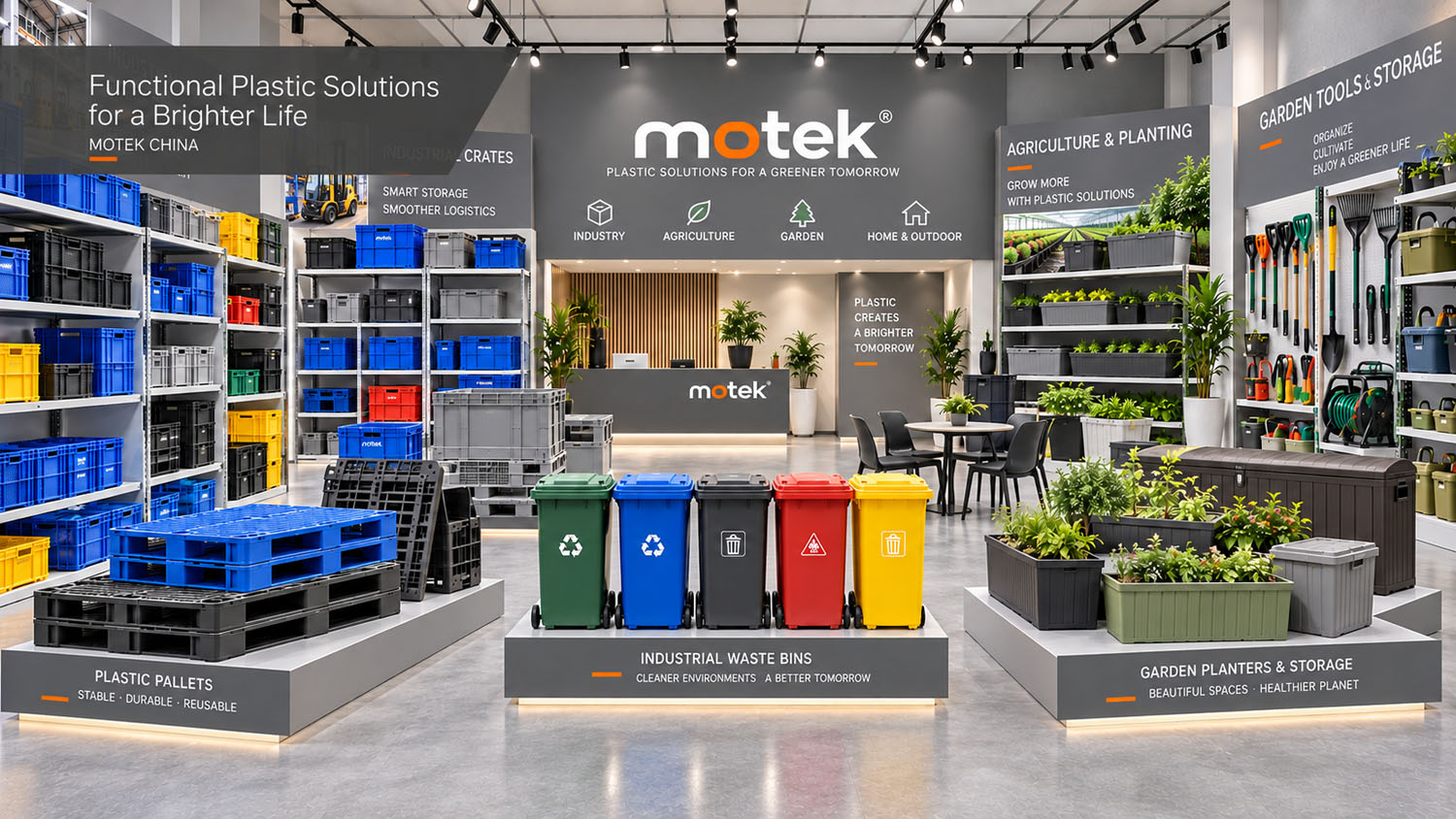
Motek — From household to public-space waste bins, providing reliable mold solutions for large-capacity pedal-operated trash can production.
