


Water Plant & Seafood Aquaculture Dedicated Lidded Plastic Logistics Box Mold — Product Introduction (Motek Turnover Box Mold Series)
Water Plant & Seafood Aquaculture Dedicated Lidded Plastic Logistics Box Mold — Product Introduction (Motek Turnover Box Mold Series)
Product Positioning
Motek introduces dedicated injection molds for lidded plastic logistics boxes used in water plant and seafood aquaculture operations. These products differ from standard aquaculture turnover boxes in several key respects: the lidded design provides enclosed protection and prevents live aquatic escape, the box body requires efficient drainage and aeration ventilation structures, and the material must resist corrosion in humid, salt-spray environments. Water plant aquaculture involves the temporary holding and transfer of fry, shrimp, crabs, shellfish, and other live aquatic organisms. The lid prevents live organisms from jumping out and reduces external contamination, while vent features in the lid maintain oxygen exchange inside the box. The core challenges in mold development lie in fit precision control between lid and box body, zero-flash forming of dense drainage holes, and cooling efficiency and demolding smoothness in deep cavity structures.
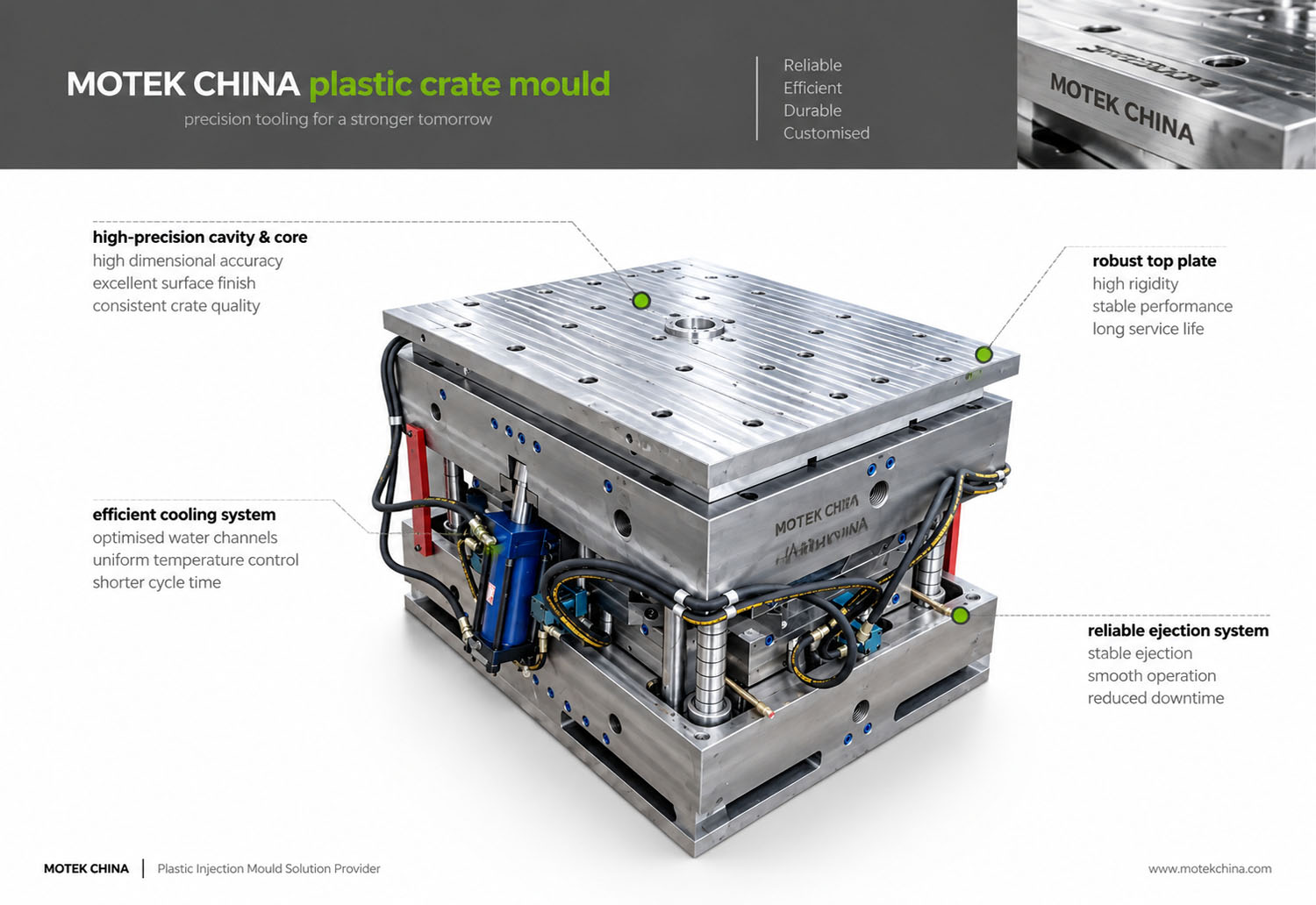
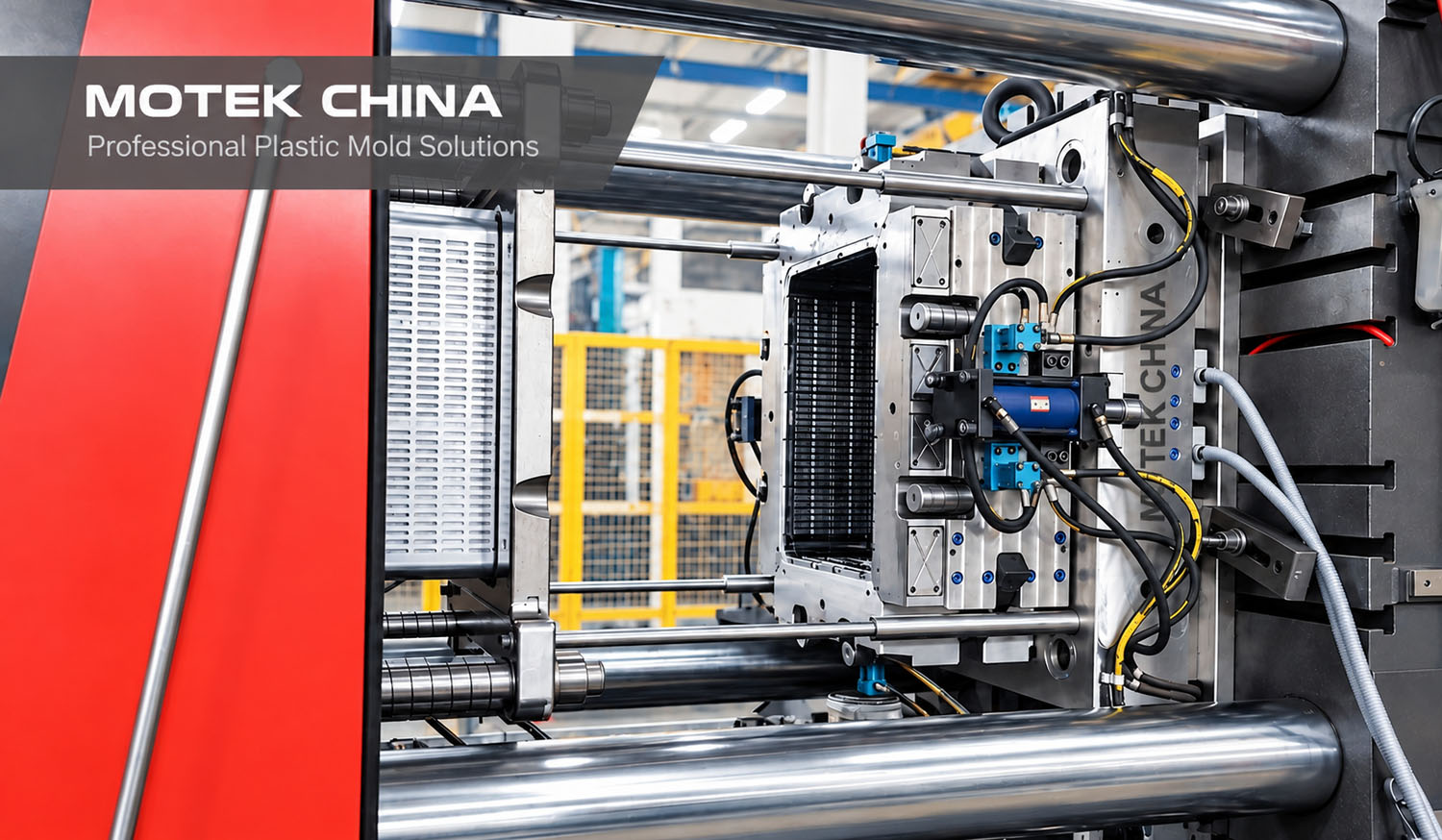
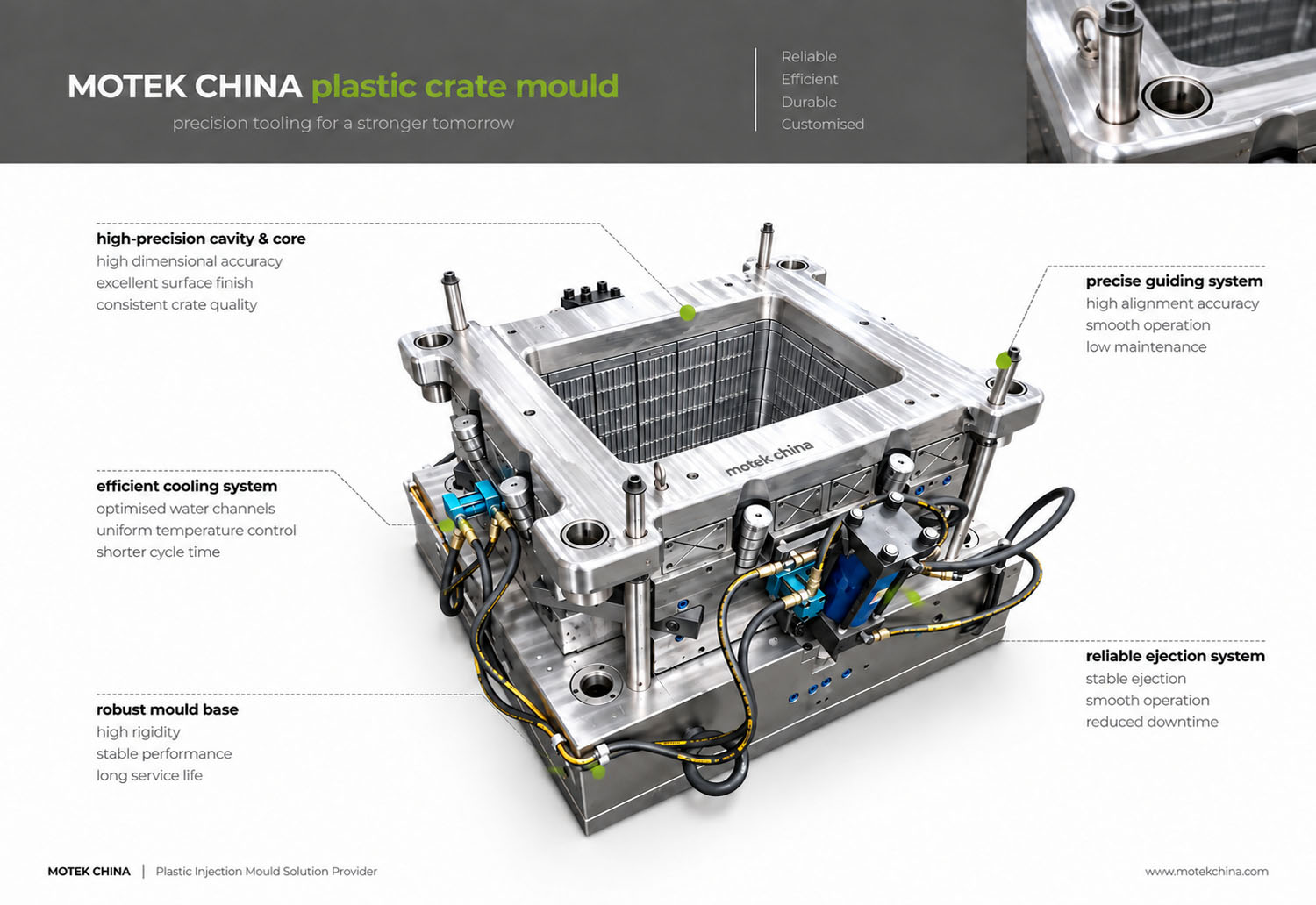
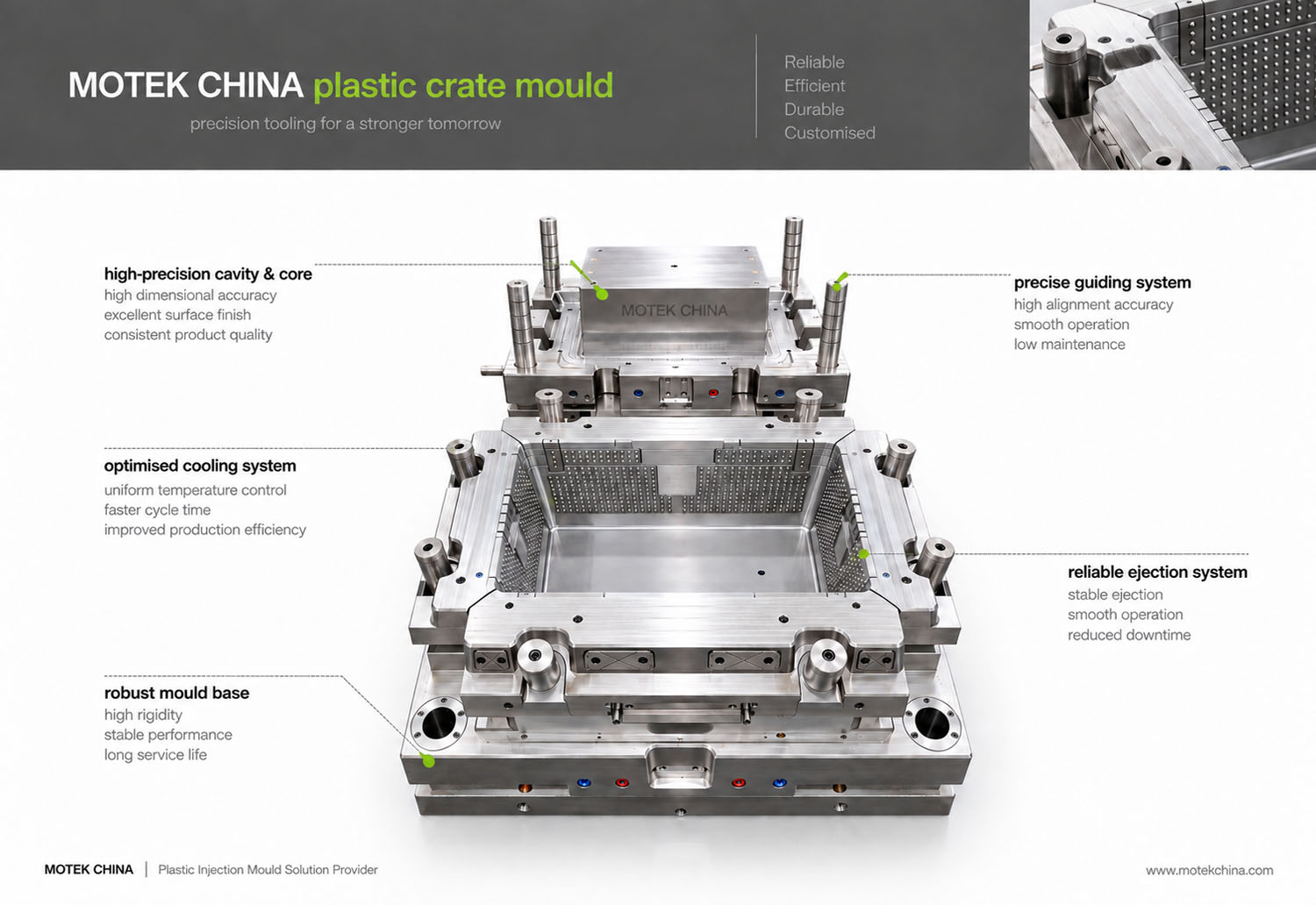
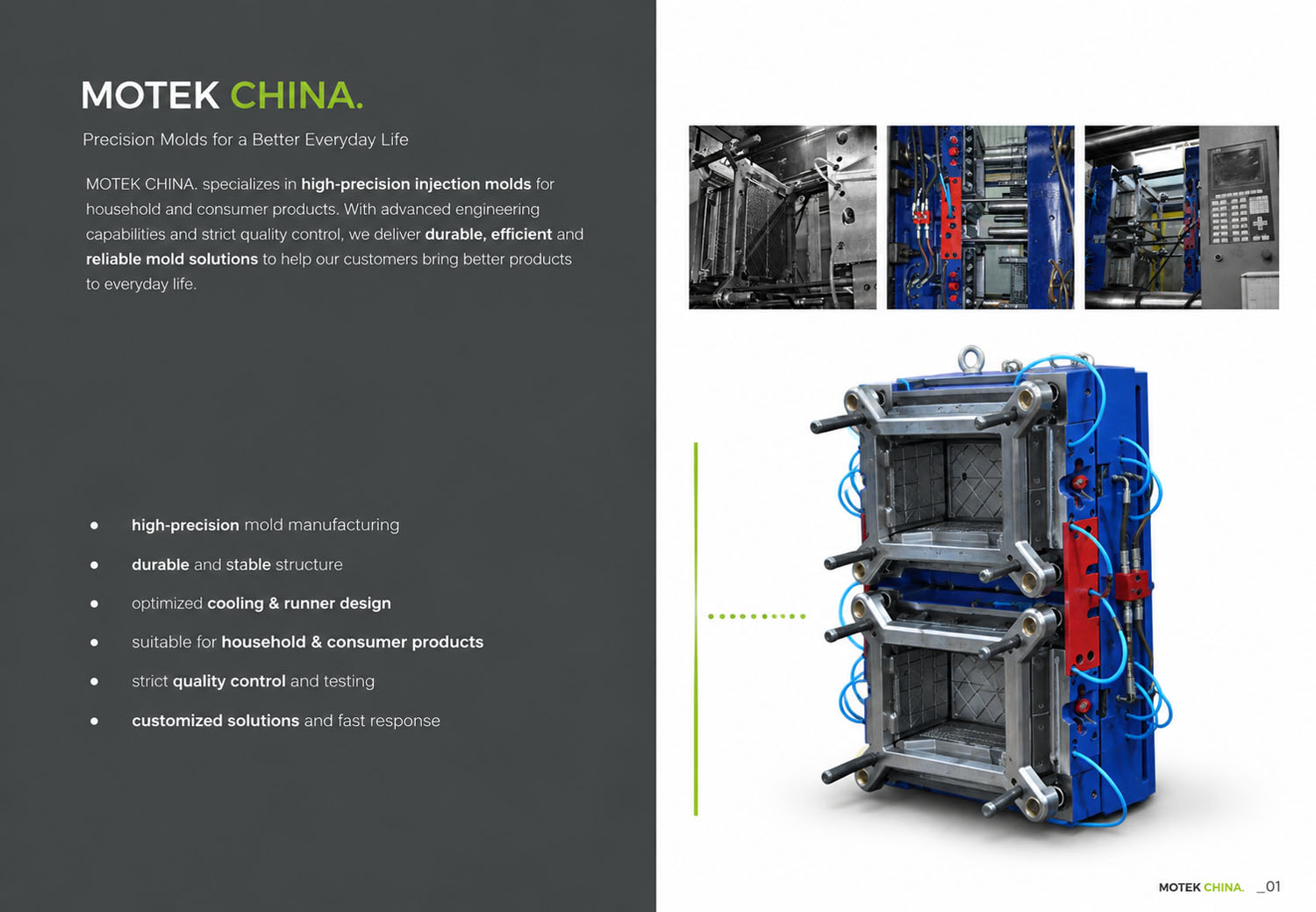
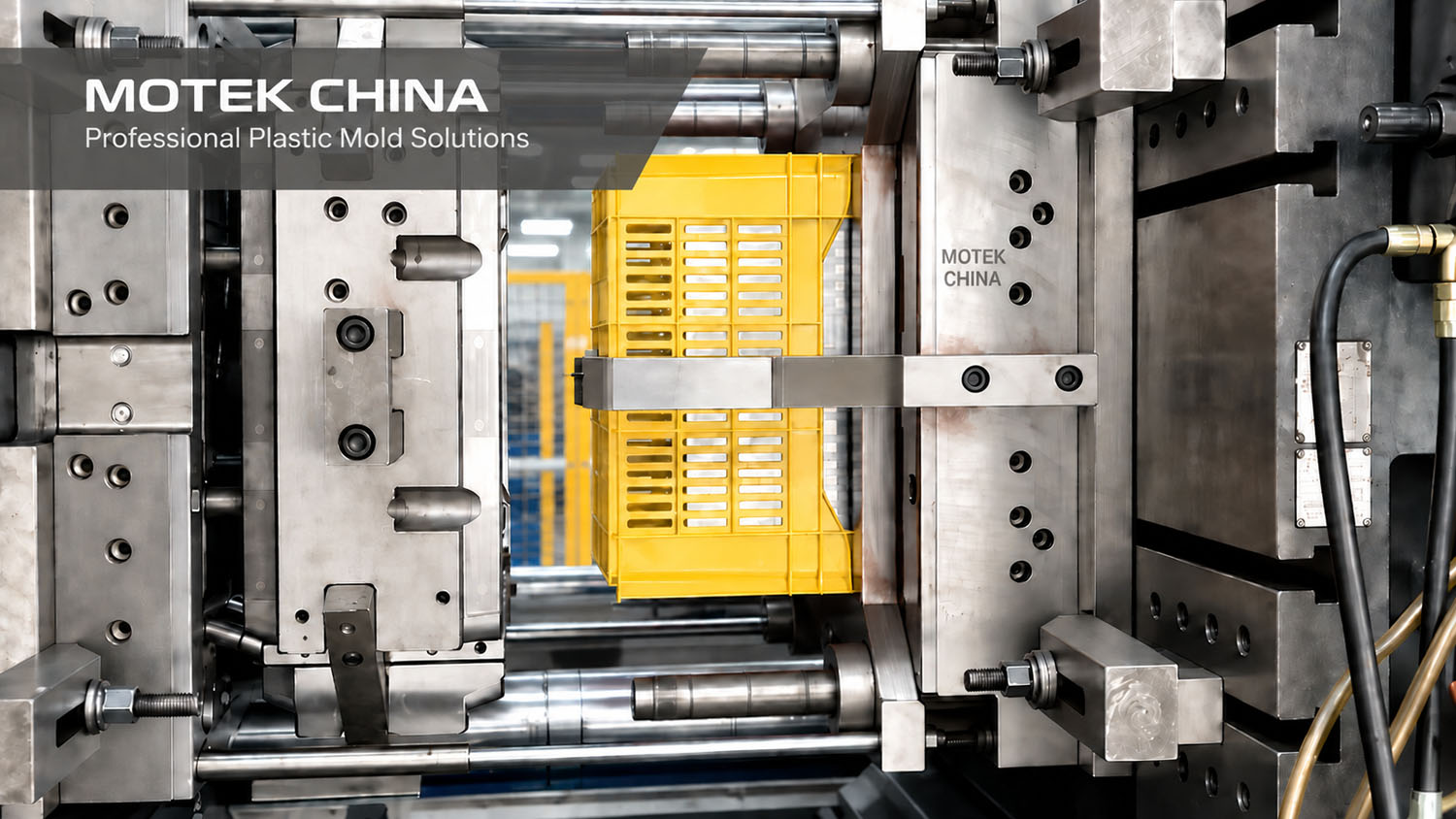
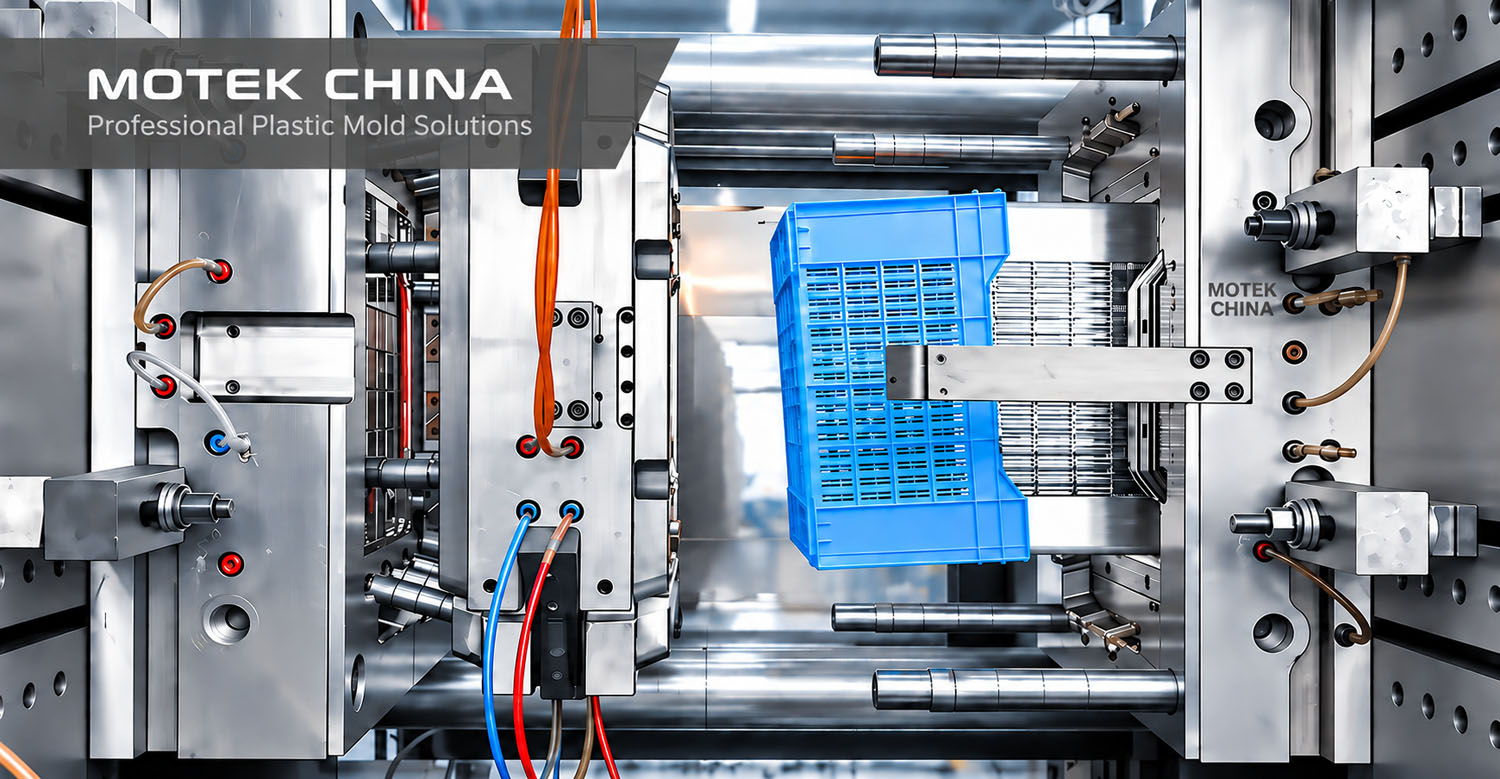
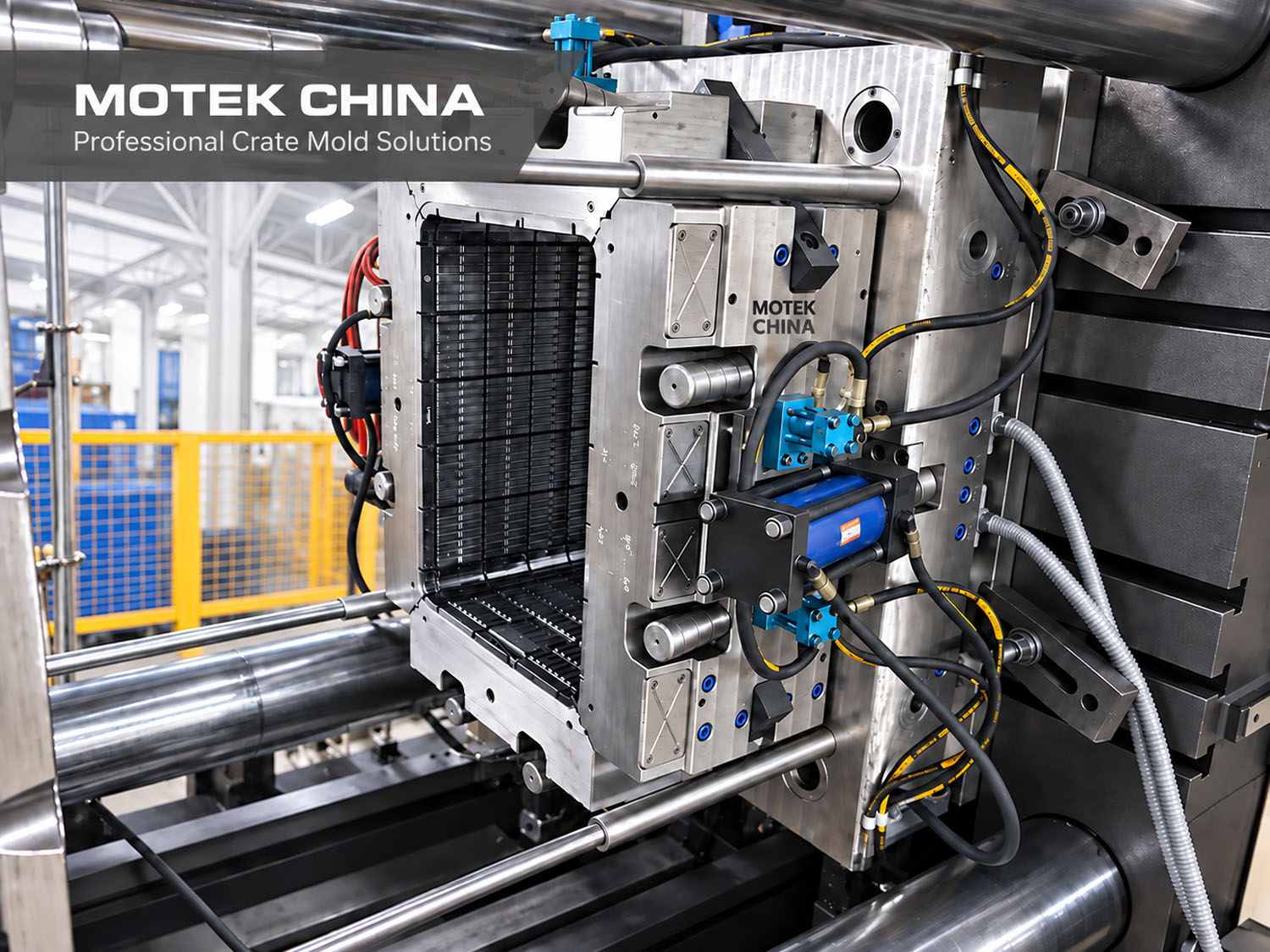
Core Specifications
| Item | Specification |
|---|---|
| Applicable Plastics | HDPE / PP (food-contact grade, low-temperature resistant, salt-spray corrosion resistant) |
| Mold Material | S136 ESR stainless steel for cavity/core (high corrosion resistance); S50C/Q235 heavy-duty mold base |
| Number of Cavities | Single cavity primarily (large one-piece/collapsible boxes); 1×2 evaluable for small specifications |
| Mold Life | 500,000–1,000,000 shots (critical wear components designed as quick-change inserts) |
| Cycle Time | 25–50 seconds (depending on box size and cooling design; 15–30 seconds achievable with optimized 3mm wall thickness) |
| Injection Machine Tonnage | 650T–2800T (depending on deep-cavity clamping requirements) |
| Runner System | Multi-point sequential valve gate hot runner (recommended for balanced filling of deep cavity areas) |
| Drainage Hole Design | Dense through-holes at base, precision hole-to-hole interlocking inserts, zero-flash forming |
| Demolding Method | Hydraulic cylinder-driven lifters + high-strength ejector pins + two-stage ejector plate ejection |
Product Features
Fit Precision Control Between Lid and Box Body.
The core function of lidded logistics boxes lies in the sealing fit and locking reliability between lid and box body. Motek applies dedicated tolerance control to lid snap-fits, hinge positions, and corresponding mating surfaces on the box body, ensuring secure locking after closing without disengagement during transport, while maintaining smooth open-close operation. For stackable box types, stacking locating structures are designed on the lid top to form stable stacking fit with the box base, preventing wobbling or collapsing during multi-layer stacking.
Zero-Flash Forming of Dense Drainage Holes.
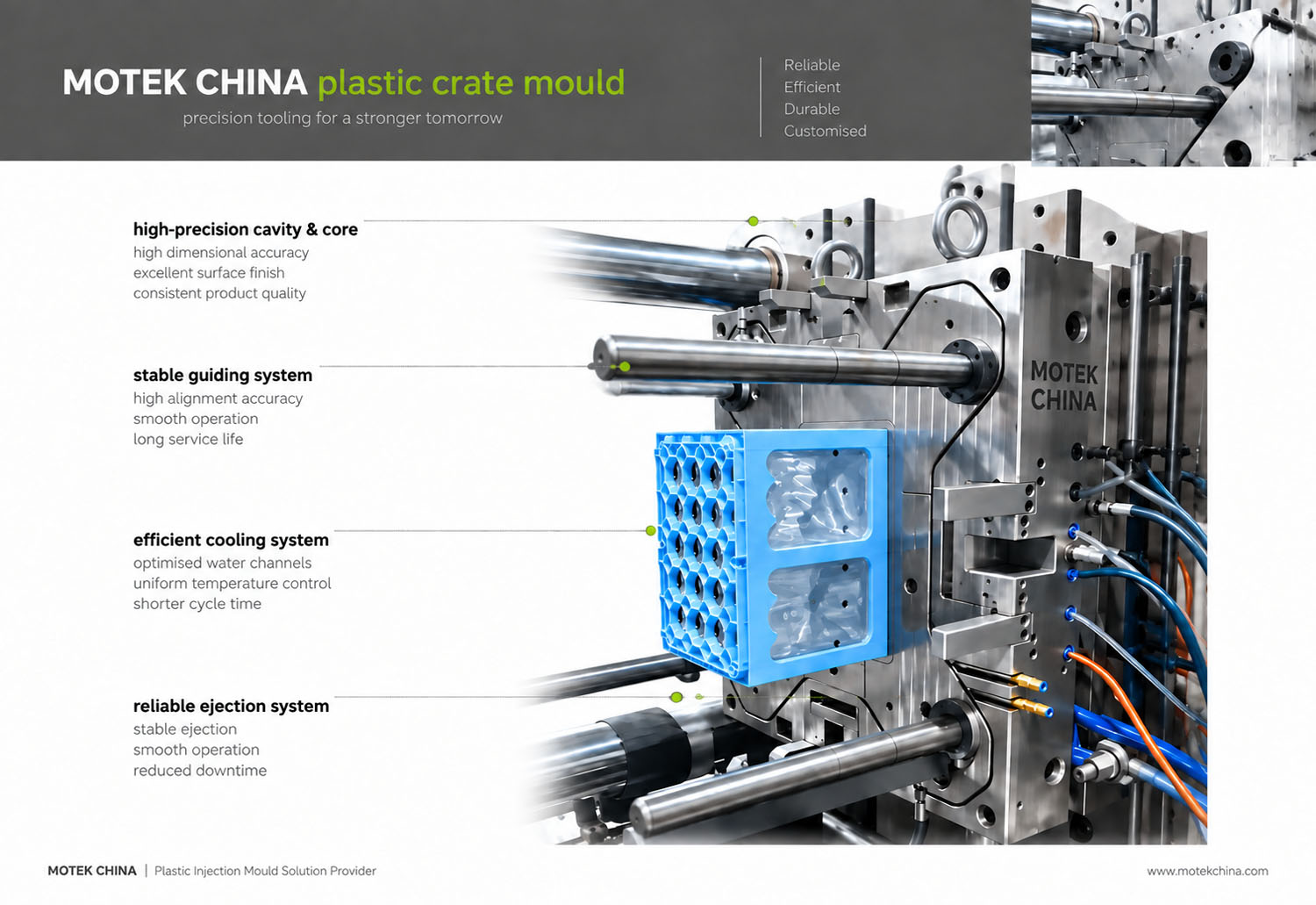
Aquaculture box bases require densely distributed drainage holes for rapid water drainage and prevention of water accumulation and oxygen deprivation. The mature industry solution adopts precision hole-to-hole interlocking core inserts, combined with male/female taper locking blocks to achieve ultra-high rigidity zero-clearance fit, with through-hole flash rates controlled at extremely low levels—ensuring drainage holes are fully open upon demolding without secondary processing. Motek configures insert quantity and layout based on box dimensions and drainage requirements, balancing drainage efficiency with mold maintenance convenience.
Cooling and Demolding Optimization for Deep Cavity Structures.
Aquaculture logistics boxes typically have deep box structures, and uneven cooling in deep cavity areas can easily cause warpage or demolding difficulties. Motek adopts conformal cooling channels focusing on the box base and side wall transition areas, with beryllium copper inserts embedded in deep cavity corners where necessary to accelerate heat dissipation. The demolding system uses hydraulic cylinder-driven lifters combined with high-strength ejector pins and two-stage ejection, ensuring deep cavity boxes release smoothly after constraints are fully released, preventing scratching or deformation.
Salt-Spray Corrosion Resistance and Food-Grade Surface Treatment.
Water plant aquaculture environments involve long-term contact with saltwater, feed residue, and microorganisms, requiring excellent corrosion resistance from mold cavities. Motek selects S136 ESR stainless steel for cavity/core materials, combined with food-grade anti-rust treatment, ensuring long-term service without rusting or product contamination. Cavity interior surfaces are polished smooth without dead corners, facilitating cleaning and disinfection while reducing bacterial growth risk.
Balancing Ventilation and Escape Prevention in Lidded Structures.
The lid must balance escape prevention with ventilation and aeration. Motek forms ventilation slots or mesh structures on the lid, ensuring air circulation inside the box while keeping vent hole dimensions smaller than the minimum size of cultured organisms to prevent escape. Reasonable sealing and venting channels are provided at the lid-to-box mating edges, preventing water from sloshing out through lid gaps during transport.
Stackability and Handling Convenience.
Thickened and extended carrying handles are designed on both sides of the box for easy manual handling when fully loaded. Stacking locating structures on the box base and lid top are design-verified to ensure stable multi-layer stacking, adapting to space utilization requirements in aquaculture farms, water plant workshops, and cold-chain transport vehicles.
Applications
Motek water plant & seafood aquaculture dedicated lidded plastic logistics box molds are suitable for:
- Fry/shrimp fry temporary holding and transfer lidded boxes
- Live adult fish transport lidded logistics boxes
- Crab/shellfish aquaculture turnover lidded containers
- Water plant workshop live holding lidded boxes
- Cold-chain live seafood delivery lidded logistics boxes
Service Process
After the customer provides 3D product drawings, capacity specifications, drainage/ventilation requirements, and stacking layer requirements, Motek completes mold flow analysis (including deep cavity filling evaluation, drainage hole insert plans, and lid fit precision verification) and mold structure confirmation; cavity steel is selected per corrosion resistance requirements (S136 ESR), with hot runner systems configured for balanced deep cavity filling; progress and key milestones are regularly reported during processing. During trial molding, emphasis is placed on verifying lid locking fit, flash-free drainage holes, stacking stability, and smooth deep cavity demolding, with samples provided for confirmation. Before shipment, molds undergo anti-rust treatment and action testing, with water circuit diagrams, hot runner wiring diagrams, insert lists, and maintenance instructions provided. Technical support is available during the warranty period, with lifetime maintenance consultation.
Motek — From standard aquaculture boxes to lidded aquaculture logistics boxes, providing
