


Lightweight & Strong: Custom Gas-Assisted Plastic Chair Molds for Advanced Structural Design
Low-Back Plastic One-Piece Gas-Assisted Chair Mold — Product Introduction (Motek Furniture Mold Series)
Product Positioning
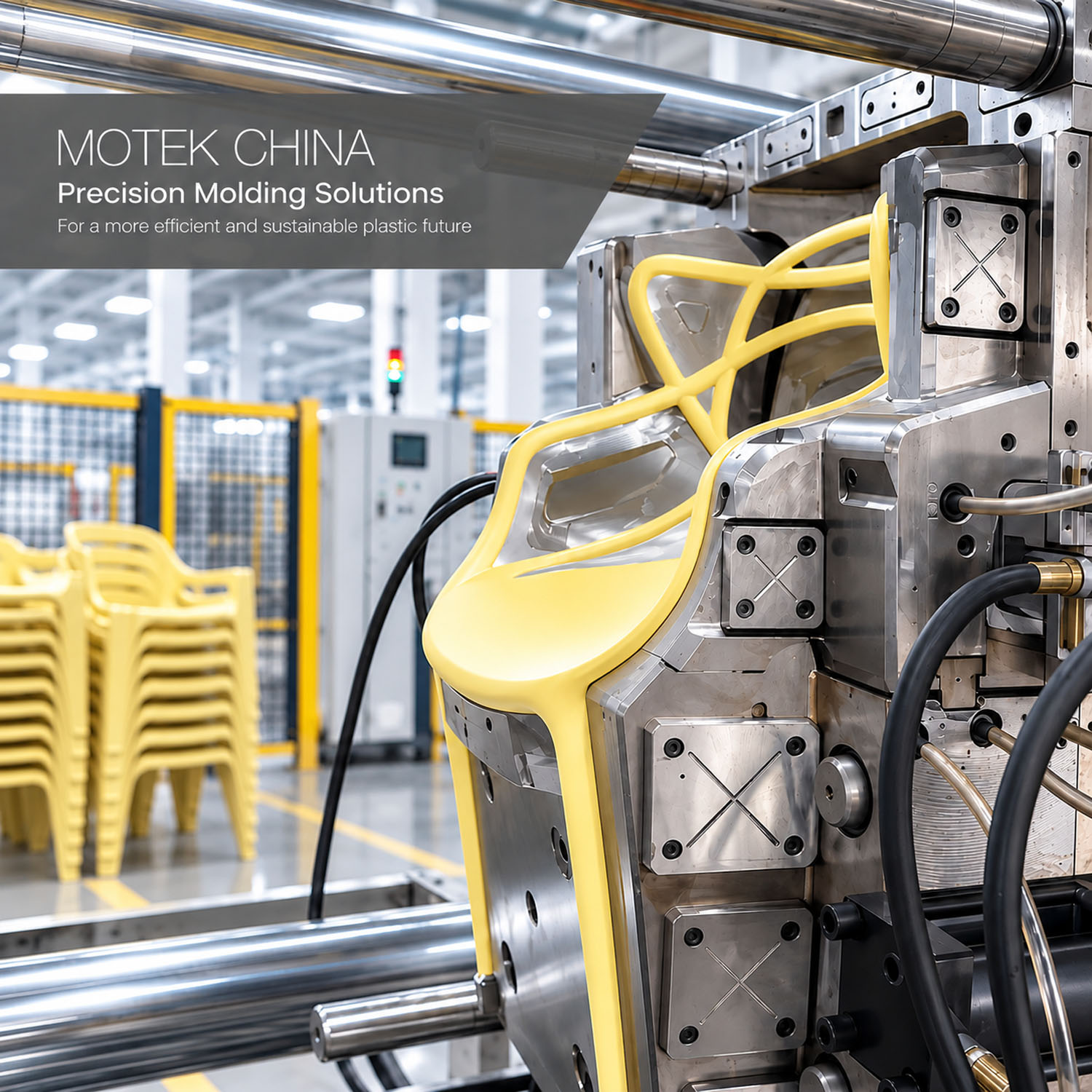
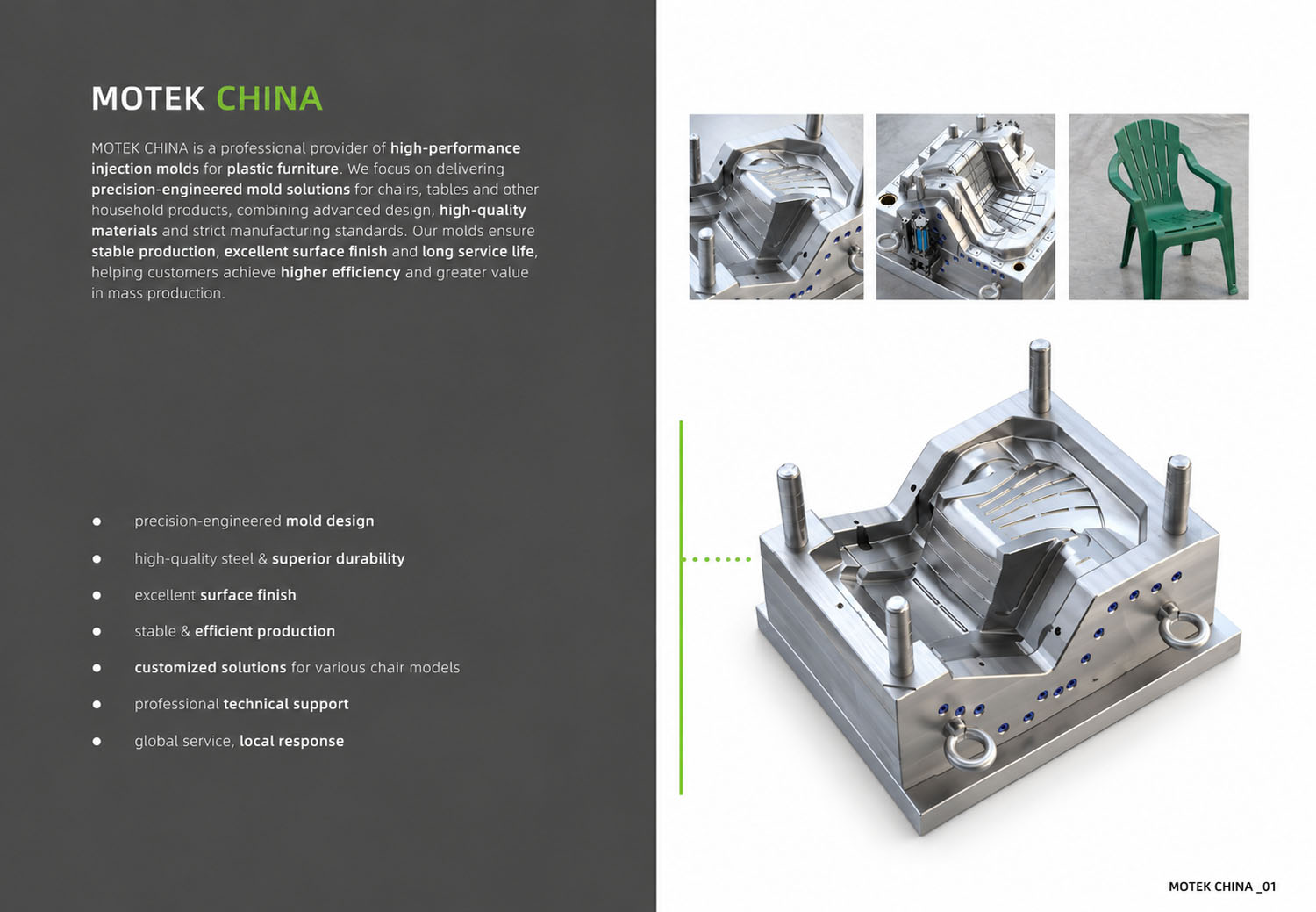
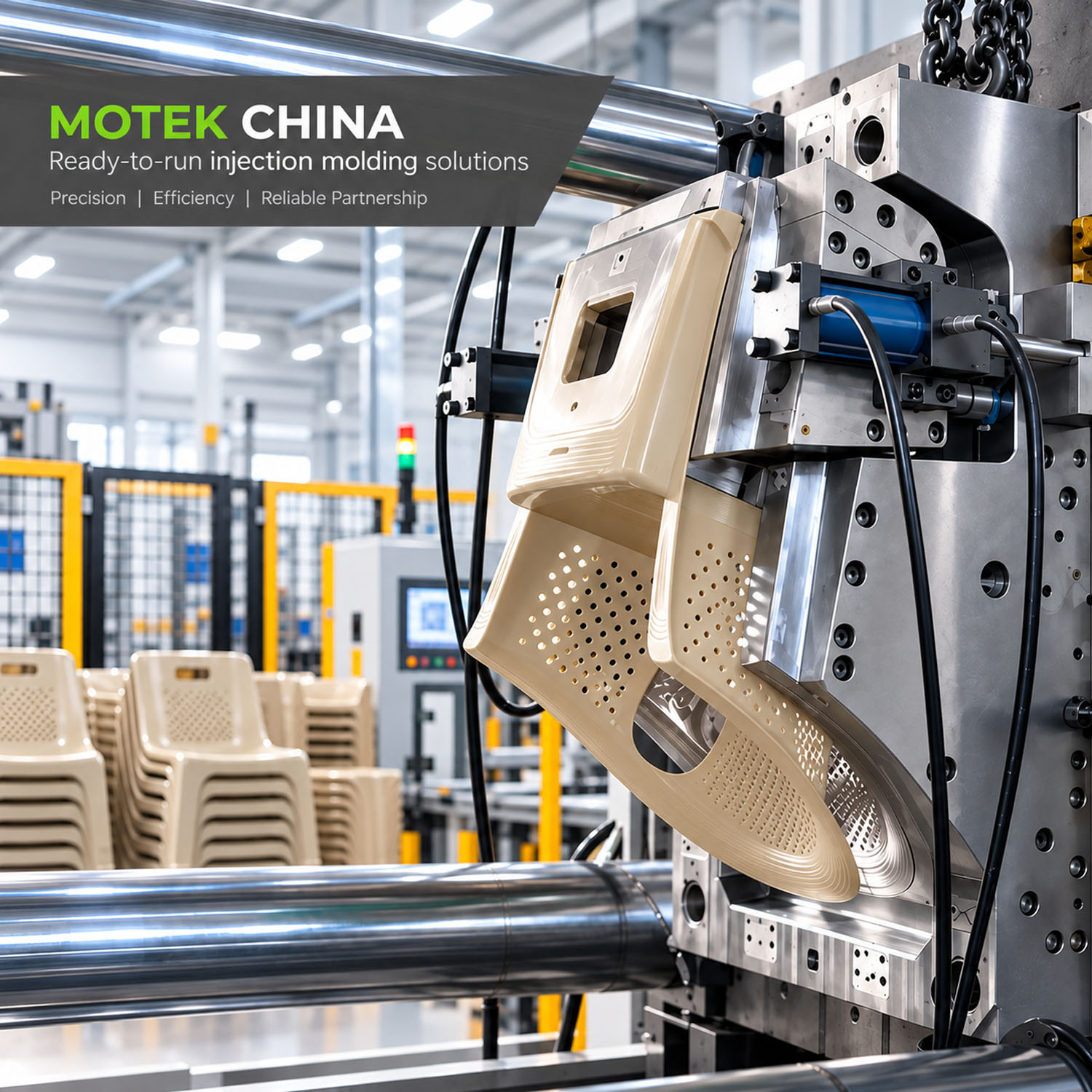
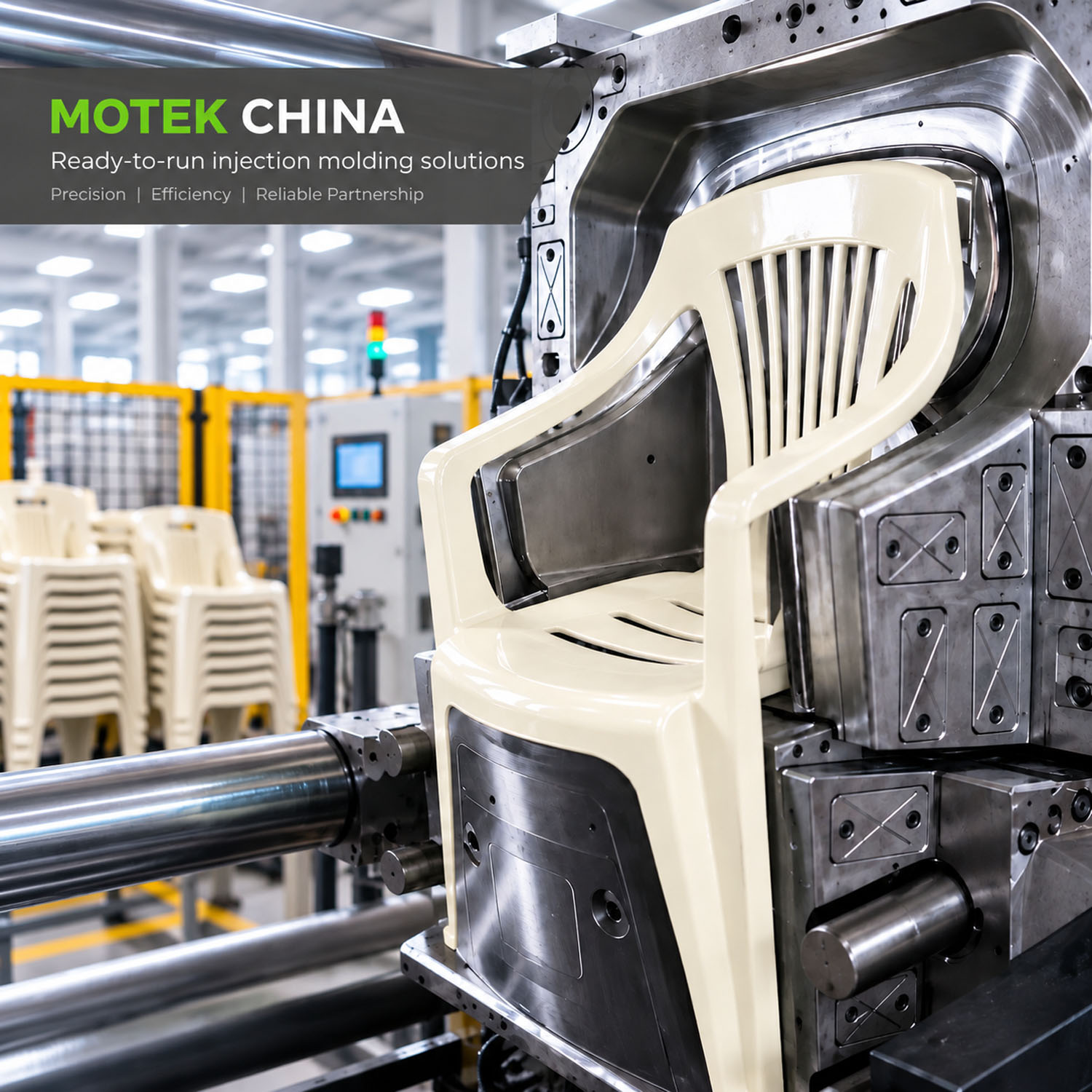
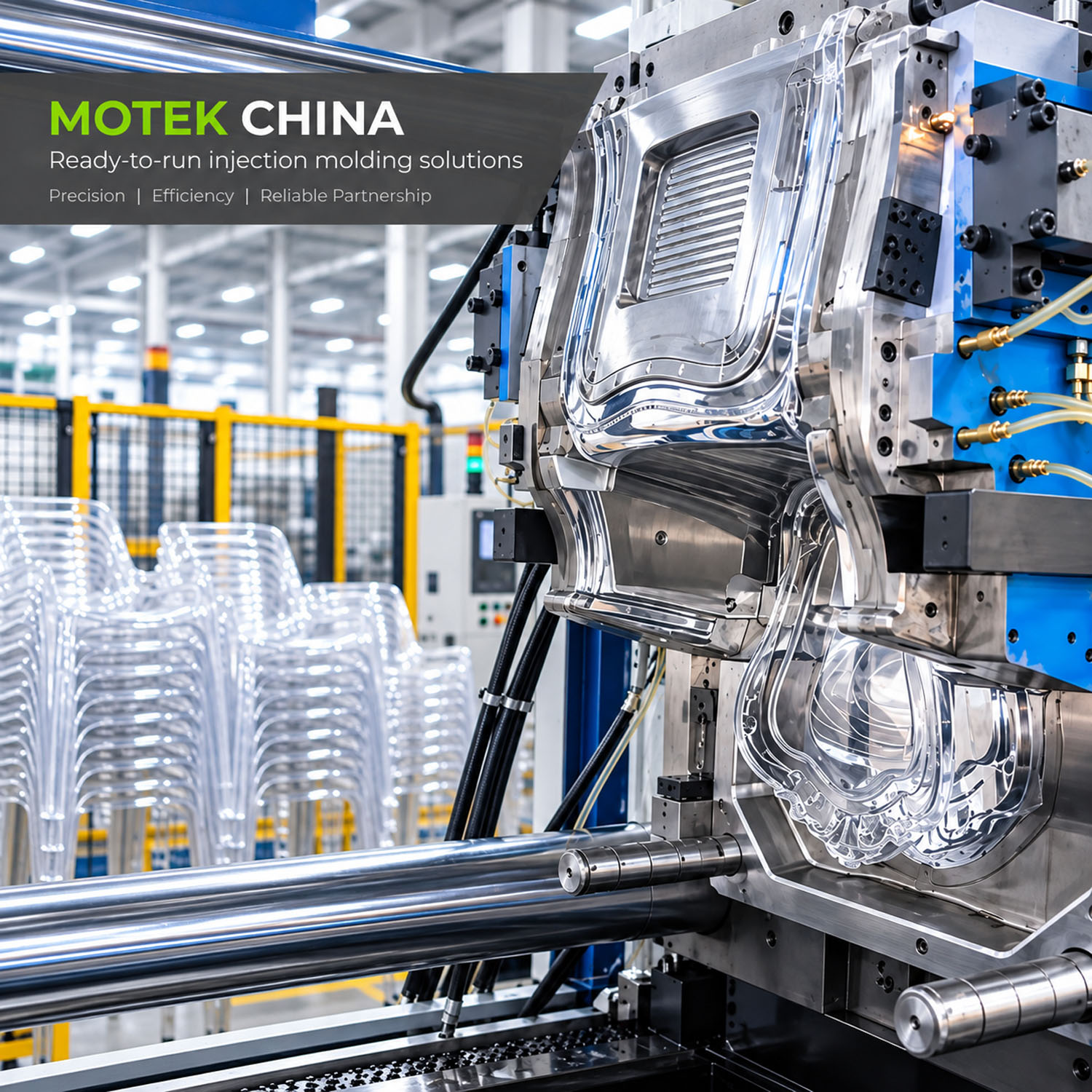
Motek introduces dedicated gas-assisted injection molding (GAIM) molds for low-back one-piece plastic chairs. This chair category features a low backrest that provides basic lumbar support without the visual bulk of a full-height back—offering a clean, modern profile well suited to restaurants, cafes, waiting areas, and outdoor leisure settings. The low-back configuration also facilitates stacking and overhead visibility in commercial spaces. The core challenges in mold development lie in gas channel layout for the shortened backrest and seat structure, gas penetration control at the leg-to-seat connection nodes, and warpage and surface quality management of the one-piece thin-wall body. Motek configures dedicated solutions around gas-assisted simulation, cooling optimization, and demolding mechanisms, helping customers achieve stable mass production of low-back gas-assisted chairs.
Core Specifications
| Item | Specification |
|---|---|
| Applicable Plastics | PP (gas-assisted grade, high-flow, low-warpage grades) |
| Mold Material | P20 / 718H / 2738 (cavity and core), beryllium copper inserts optional in deep cavity areas |
| Number of Cavities | Single cavity primarily |
| Mold Life | 500,000–1,000,000 shots |
| Cycle Time | 35–50 seconds (gas-assisted process shortens cycles versus solid thick-wall parts) |
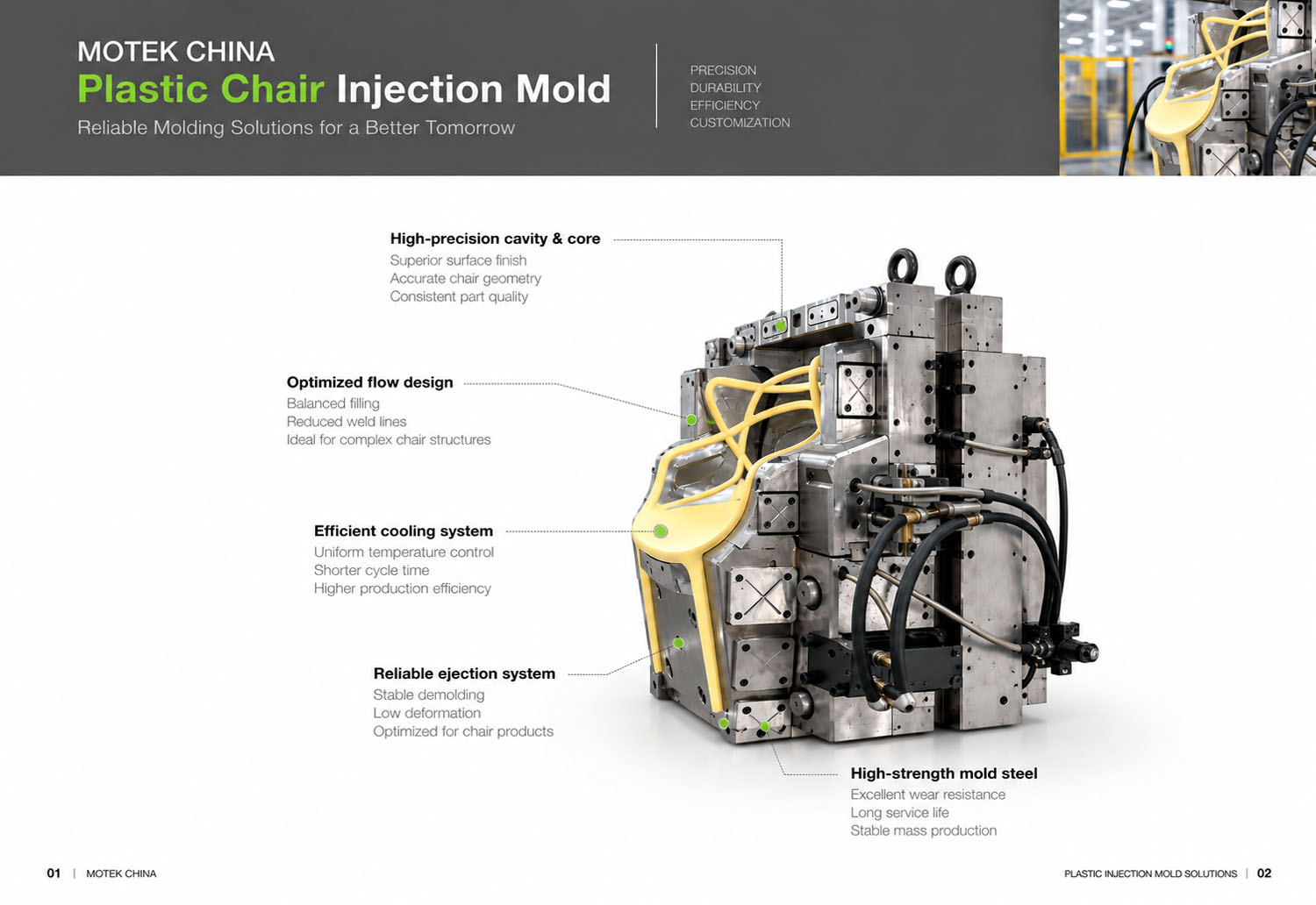
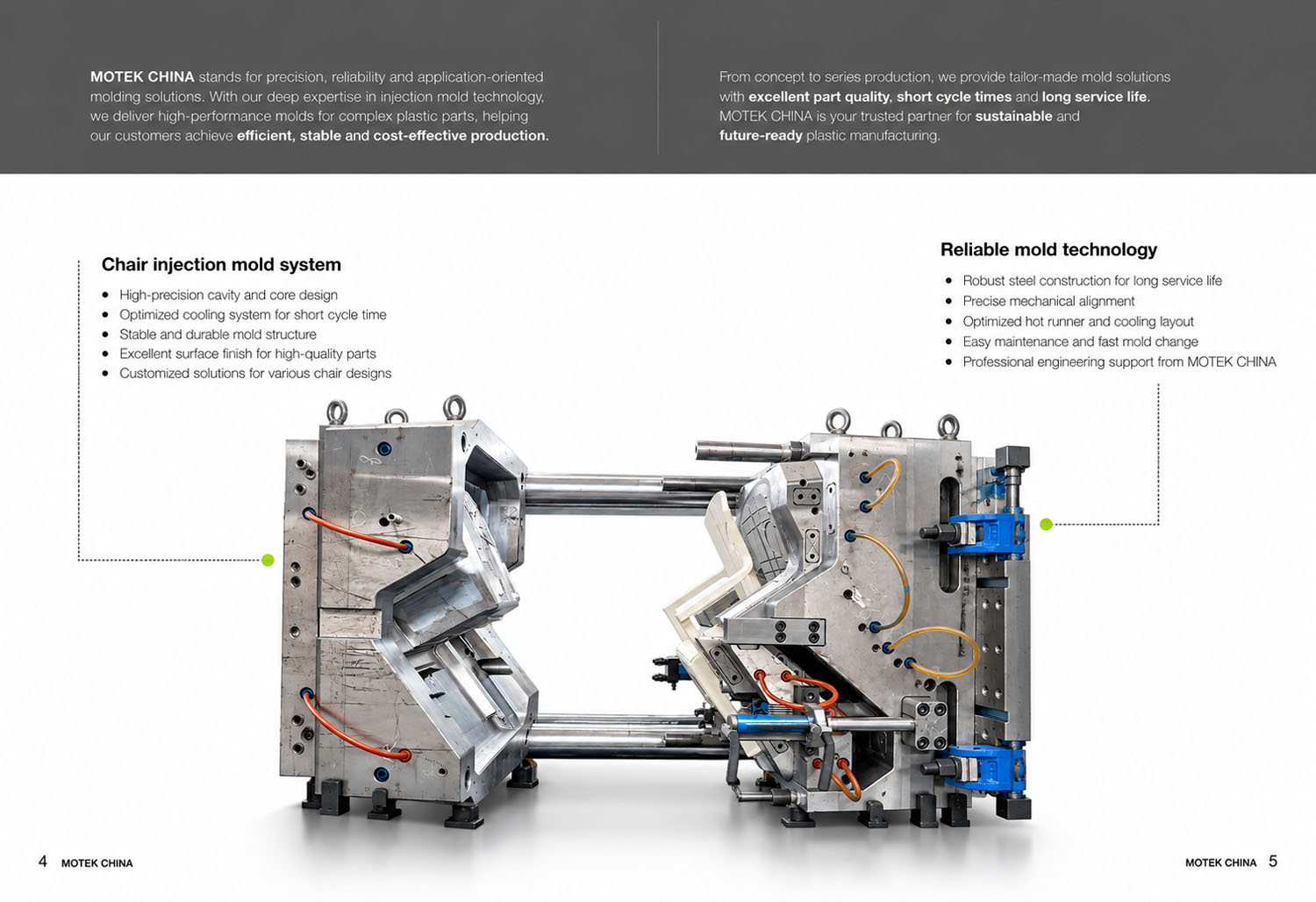
| Gas-Assisted System | Nitrogen generator + multi-channel gas injection needle valves, positions determined by mold flow simulation |
| Gate Type | Submarine/pin-point or hot runner valve gate, away from appearance surfaces |
| Demolding Method | Sliders/lifters first out + balanced ejection |
| Surface Treatment | Fine-texture or matte etching, polished appearance surfaces |
Product Features
Gas Channel Layout for the Low-Back Structure.
The shortened backrest changes the load path compared with full-height chairs—the seat and legs carry more of the structural demand, while the low back provides localized lumbar support. Motek simulates gas penetration paths through mold flow analysis, routing gas channels along the load-bearing tubular structures of the legs and seat, with the low backrest channel branching from the seat-to-back transition node. Gas channels are arranged in a balanced manner, aligned with the main material flow direction, with larger fillet radii at corners to avoid loops. Gas injection nozzles are placed at thick-wall nodes farthest from the last filling point, maintaining sufficient distance from the gate.
Gas Penetration Control at Leg-to-Seat Connection Nodes.
The leg-to-seat connections are the primary force concentration areas in low-back chairs. Motek sets gas injection needle valves at these thick-wall nodes or on the seat underside, stabilizing the gas front position by adjusting short-shot size and gas delay time. If gas channel control is improper, gas may break through the visual surface causing blow-through defects. Motek verifies penetration completeness at each connection node through simulation and trial molding, ensuring continuous and uniform hollow structures.
Sink Mark and Warpage Control for the One-Piece Thin-Wall Body.
Low-back chairs typically have thin walls with no reinforcement on the visible side, making them susceptible to shrinkage warpage. Gas-assisted holding pressure replaces plastic holding pressure, forming hollow structures in thick-wall areas to eliminate surface sink marks. Motek applies pre-deformation compensation to the cavity based on mold flow analysis and adopts symmetrically balanced cooling channels to equalize cooling rates across the seat and backrest. Where structural reinforcement is needed, ribs are concealed on the underside with thickness controlled below the main wall thickness to prevent visible sink marks.
Appearance Surface Protection for Modern Minimalist Design.
The low-back profile pursues visual simplicity. Motek positions parting lines along chair edges or concealed undersides, with gates and gas injection needle valves placed away from visual areas. Appearance surfaces receive fine-texture or matte etching to enhance wear resistance and scratch resistance while concealing minor flow marks from the gas-assisted process. For premium models, cavities can be polished to high-gloss finish.
Balancing Lightweighting and Structural Strength.
Gas-assisted technology achieves lightweighting through hollow tubular structures while maintaining bending stiffness. Motek strictly controls gas penetration depth and residual wall thickness. For low-back chairs, the seat-to-leg connection and the low backrest root are key force areas requiring focused verification of gas penetration integrity and structural rigidity. Industry data shows that proper gas channel design can enable chairs to pass standard load-bearing tests with high mass production yield.
Applications
Motek low-back plastic one-piece gas-assisted chair molds are suitable for:
- Low-back restaurant/cafe dining chairs (gas-assisted one-piece forming)
- Low-back leisure chairs for waiting areas and lounges
- Outdoor low-back chairs (UV-modified PP)
- Stackable low-back gas-assisted chairs (stacking structure evaluation required)
- Modern minimalist low-back seating for commercial spaces
Service Process
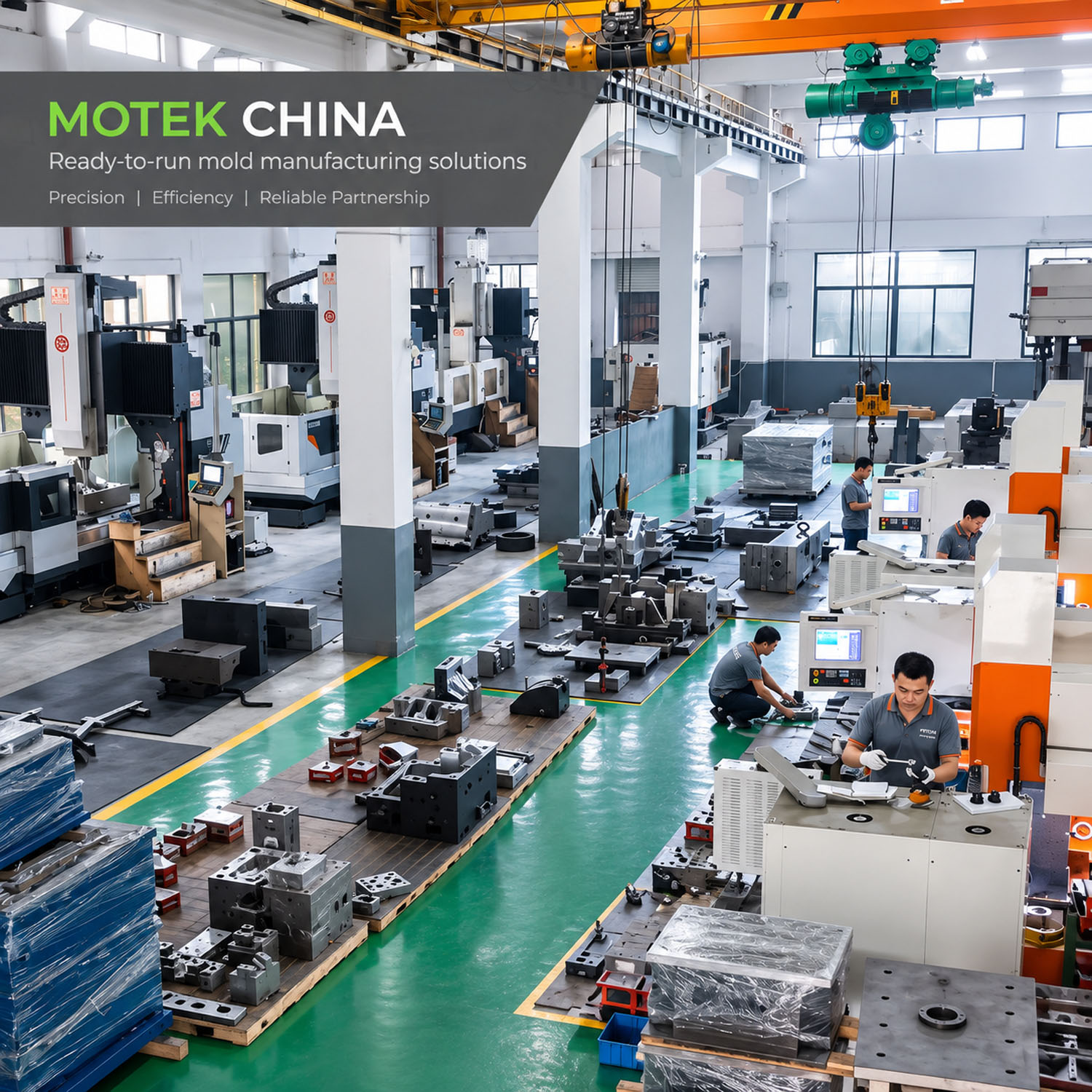
After the customer provides 3D product drawings, load-bearing requirements, and use scenarios, Motek completes gas-assisted mold flow analysis (gas channel layout simulation, gas penetration evaluation, and cooling optimization) and mold structure confirmation; cavity steel and gas-assisted injection systems are configured according to agreed specifications; progress and key milestones are regularly reported during processing. During trial molding, emphasis is placed on verifying gas penetration completeness, absence of blow-through or sink marks on appearance surfaces, and structural integrity at leg-to-seat connections and the low backrest root, with samples provided for confirmation. Before shipment, molds undergo anti-rust treatment and gas-assisted system action testing, with water circuit diagrams, gas injection position diagrams, consumable parts lists, and gas-assisted process parameter recommendations provided. Technical support is available during the warranty period, with lifetime maintenance consultation.
Motek — From full-back to low-back gas-assisted chairs, providing reliable mold solutions for lightweight one-piece seating in commercial and outdoor settings.
