


PC & PP Combined Plastic Chair Mold — Product Introduction (Motek Furniture Mold Series · Living/Dining Room Universal)
PC & PP Combined Plastic Chair Mold — Product Introduction (Motek Furniture Mold Series · Living/Dining Room Universal)
Product Positioning
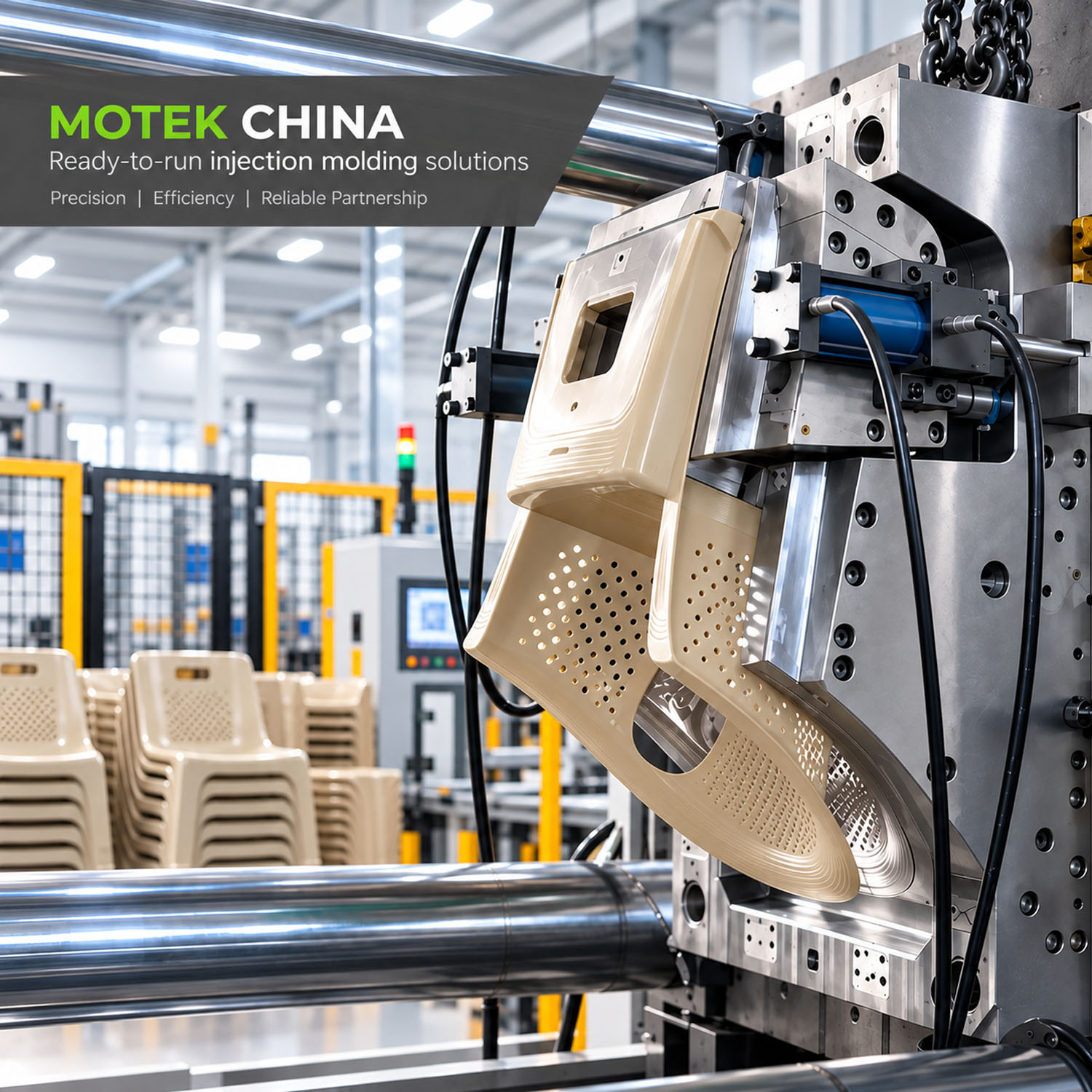
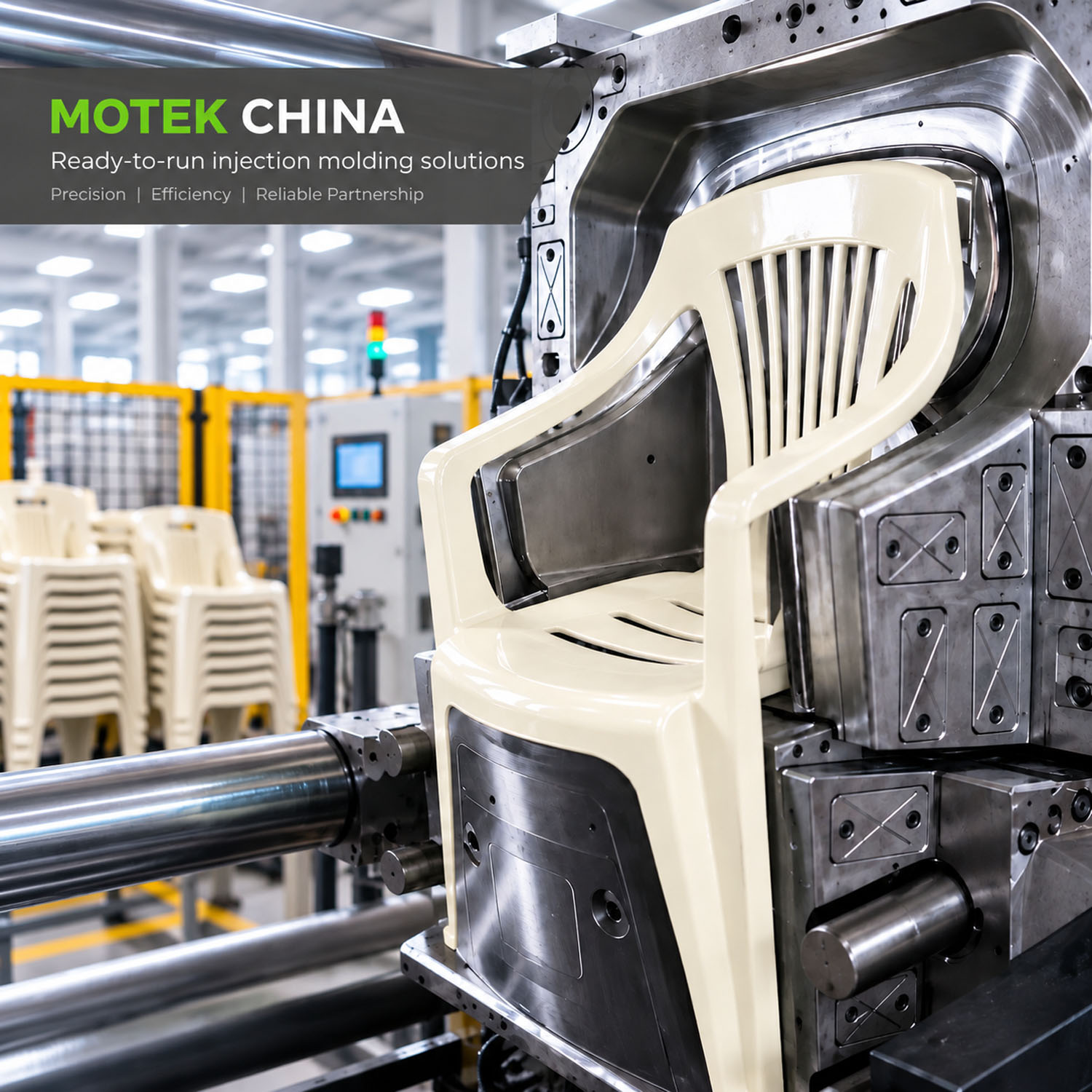
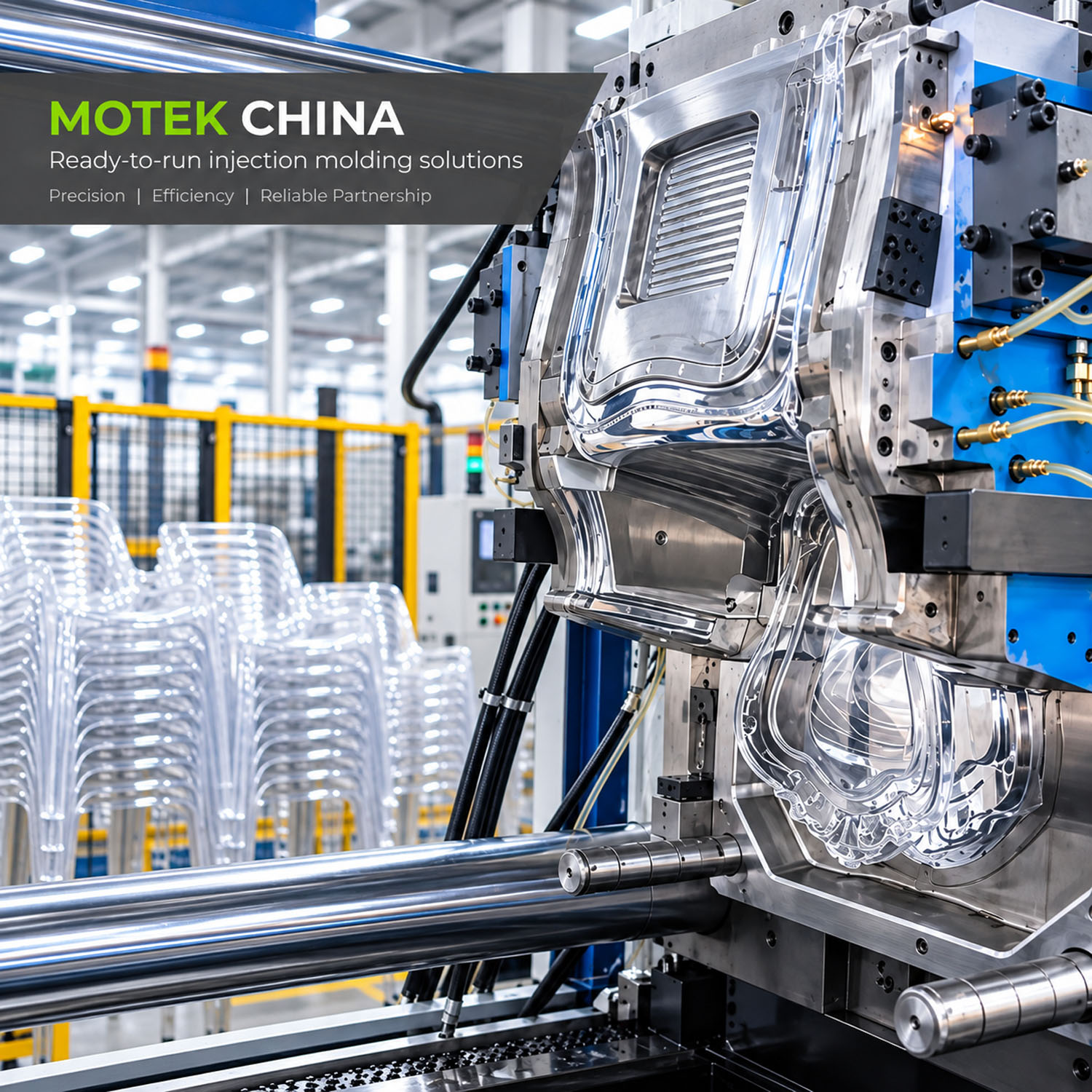
Motek offers dedicated injection mold solutions for PC and PP dual-color/dual-material combined plastic chairs for universal living and dining room use. These products leverage the complementary properties of two materials: PC provides transparent or high-gloss aesthetic quality and rigidity, while PP offers toughness, lightweighting, and cost advantages. Common combinations include a transparent PC outer layer with a PP inner layer, or a PC body with localized PP reinforcement. Universal living/dining room scenarios require chairs that balance the load-bearing stability of dining chairs with the comfortable appearance of leisure chairs. The core challenges in mold development lie in interface bonding control between PC and PP, cavity-switching mechanism design for dual-color injection, and prevention of warpage and interface defects caused by shrinkage differences between the two materials.
Core Specifications
| Item | Specification |
|---|---|
| Applicable Plastics | PC (transparent/high-gloss outer layer) + PP (inner/structural layer) |
| Mold Material | P20 / 718H / 2738 for cavity; S136 mirror steel recommended for PC transparent surfaces |
| Number of Cavities | Single cavity primarily |
| Mold Life | 300,000–800,000 shots |
| Cycle Time | 50–80 seconds (including two injections and cooling) |
| Injection Equipment | Dual-color injection molding machine (two injection units) or vertical sub-machine arrangement |
| Interface Bonding | Mechanical interlocking primarily (PC and PP have poor chemical compatibility; undercuts/grooves required) |
| Gate Type | Hot runner valve gate for PC outer layer (protecting appearance surface); submarine gate for PP inner layer |
Product Features
Interface Bonding Design Between PC and PP.
PC and PP are a material combination with poor chemical compatibility, and direct dual-color injection yields limited interface bonding strength. Industry data rates PC-to-PP bonding performance as "poor." Motek designs mechanical interlocking structures (such as undercuts, dovetail grooves, and surface-roughened textures) on the bonding surfaces between PC and PP parts during the design phase, compensating for insufficient chemical bonding through physical interlocking. For the PC outer layer with PP inner layer combination, the PP inner layer embeds into grooves reserved in the PC outer layer during filling, forming reliable mechanical locking.
Cavity-Switching Mechanism for Dual-Color Injection.
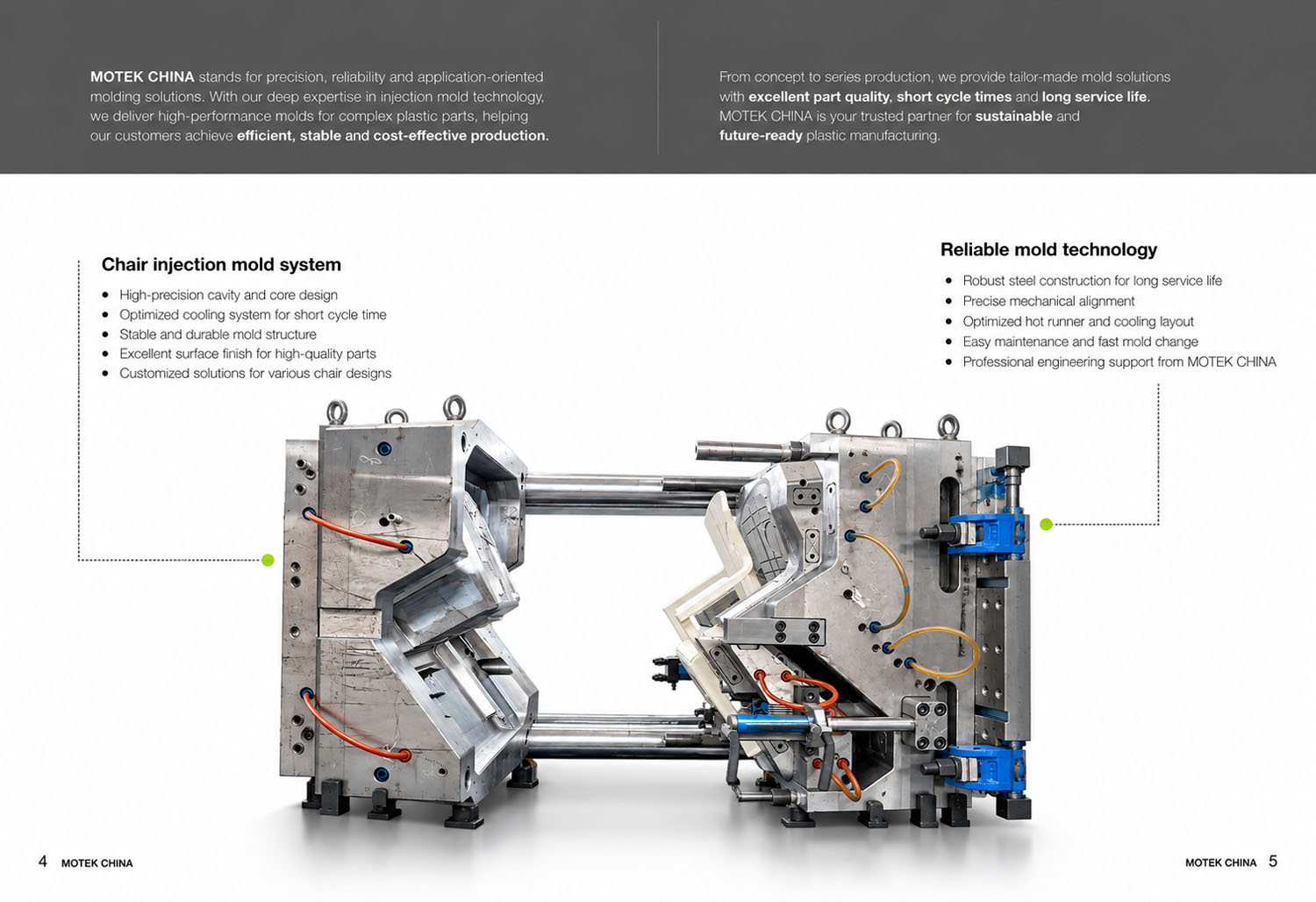
Dual-color molding of PC and PP requires two injections and cavity space switching. Referencing industry dual-color chair mold solutions, Motek adopts a movable insert with angled slider structure: after the first injection forms the PC outer layer wall thickness, a pushing cylinder drives the angled slider to displace the movable insert by one inner-layer wall thickness distance, forming the second mold cavity, after which the sub-machine injects the PP inner layer. Insert displacement distance is typically controlled in the 3–5 mm range, precisely set according to chair body wall thickness and shrinkage rates of the two materials. The mold must coordinate with the dual-color injection molding machine's two injection units; when the injection sub-machine centerline is arranged perpendicular to the main machine, the sub-machine nozzle faces the mold's second gate directly.
Warpage and Interface Defect Control Caused by Shrinkage Differences.
PC and PP have significantly different molding shrinkage rates (PC approximately 0.5%–0.7%, PP approximately 1.0%–2.0%), and dual-color composites are prone to warpage or interface delamination due to uneven shrinkage. Motek evaluates shrinkage distribution of each material in their respective cavities separately through mold flow analysis, applying pre-deformation compensation to both the PC outer layer cavity and PP inner layer cavity, with reasonable shrinkage allowances reserved in interface areas. The cooling system uses zoned control, enabling PC and PP layers to reach uniform temperatures during their respective cooling stages, reducing interface stress caused by temperature differences.
Optical-Grade Machining of PC Transparent/High-Gloss Appearance Surfaces.
Universal living/dining room scenarios have certain appearance requirements. If the PC outer layer is transparent or high-gloss, cavity surfaces require high-grade polishing (A2 or above) to eliminate machining marks and polishing traces. PC material must be thoroughly dried before injection (drying at 100–120°C for over 24 hours); Motek specifies drying parameters in process recommendations to prevent silver streaks or bubbles in the PC layer caused by moisture. Gate positions avoid visual areas to prevent cold slug marks from affecting appearance.
Structural Strength and Stability for Living/Dining Room Scenarios.
Universal living/dining room chairs must balance load-bearing capacity during dining with comfort for daily leisure. Motek arranges reinforcement ribs in the PP inner layer structure, with rib thickness controlled at 50%–60% of main wall thickness to avoid sink marks on the PC appearance surface. The leg-to-seat connection, as a force concentration area, achieves strength assurance through PP inner layer thickening and PC outer layer local reinforcement. Concealed reinforcement rib networks can be designed on the seat underside to enhance overall rigidity without affecting appearance.
Applications
Motek PC & PP combined plastic chair molds are suitable for:
- Living/dining room dining chairs with transparent PC outer layer + PP inner layer
- Leisure chairs with PC high-gloss appearance + PP structural layer
- Modern style dining/study chairs with distinct dual-color boundaries
- Living/dining room universal dual-color plastic chairs (dual-color injection molding machine required)
- PC/PP composite lightweight seating
Service Process
After the customer provides 3D product drawings, PC/PP material grades, and appearance requirements, Motek completes dual-color mold flow analysis (including shrinkage compensation for both materials, interface bonding evaluation, and cavity-switching plans) and mold structure confirmation; cavity steel is selected per PC appearance requirements, with samples provided for confirmation before polishing PC transparent surfaces; the mold must match the customer's dual-color injection molding machine parameters, with Motek confirming equipment interfaces and injection unit layout during the mold design phase. During trial molding, emphasis is placed on verifying PC/PP interface bonding strength, appearance surface quality, and warpage deformation, with samples provided for confirmation. Before shipment, molds undergo anti-rust treatment and dual-color action testing, with water circuit diagrams, dual-color injection timing instructions, and maintenance notes provided. Technical support is available during the warranty period, with lifetime maintenance consultation.
Motek — From single-material chairs to PC/PP dual-color composite chairs, providing reliable mold solutions for multi-material forming and interface bonding of living/dining room seating.
